From the PortugalHousesForSale Property Desk
Lisbon – The City that Glows
Few cities in Europe possess the rare harmony of light, architecture and optimism that defines Lisbon. Built on seven hills overlooking the wide sweep of the River Tagus, Portugal’s capital has become a symbol of European renewal — a place where the old world meets the new without losing its soul.
For international investors, the phrase “property for sale in Lisbon” now carries the weight of both aspiration and assurance. The city has established itself as a cornerstone of stability, lifestyle and value in a volatile global market. It combines political calm, low taxes, and robust infrastructure with the simple allure of a city that seems to glow.
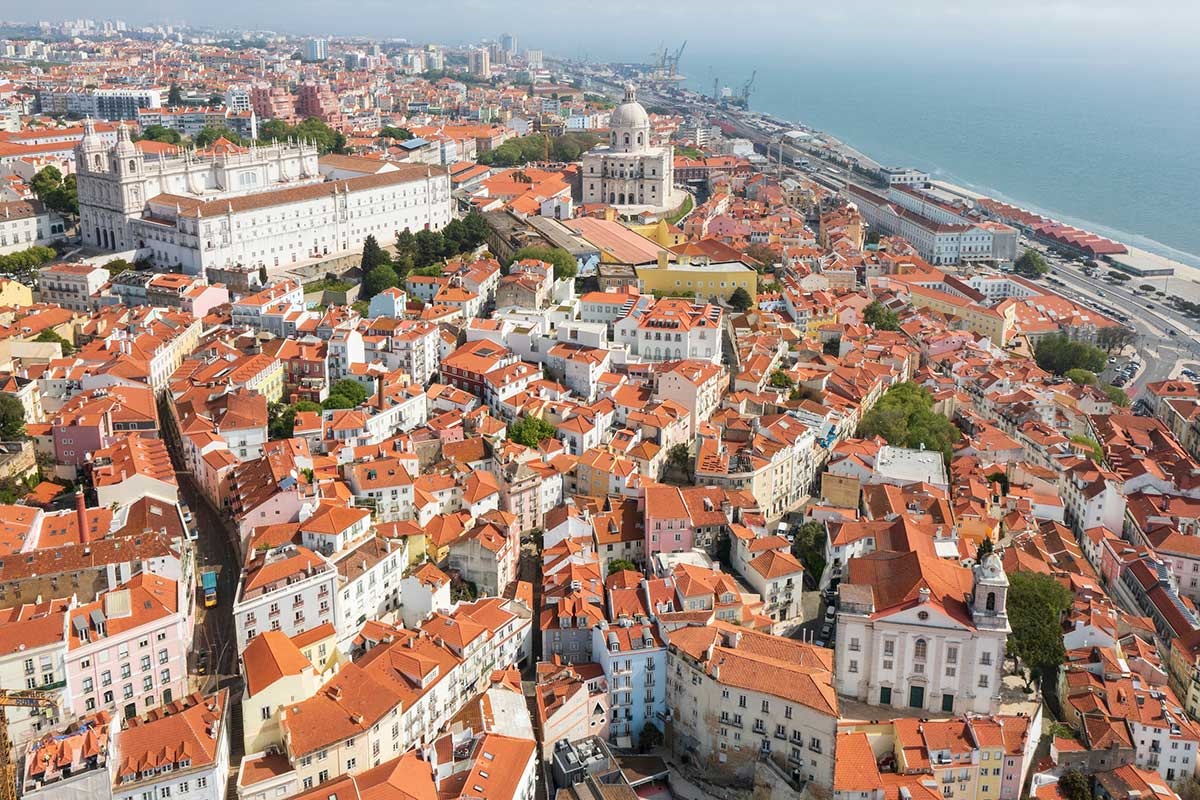
Lisbon’s beauty, both natural and man-made, is undeniable. Its tiled façades shimmer in sunlight; its skyline of terracotta rooftops and whitewashed domes cascades towards the water. Yet behind this aesthetic charm lies a more pragmatic truth: Lisbon is one of Europe’s most investable real estate markets, where steady price growth and consistent foreign demand have created a model of long-term sustainability.
A City Reinvented
Over the past decade, Lisbon has undergone a transformation that many European capitals can only envy. Once a picturesque backwater, it has become a thriving hub for tourism, technology, and international finance. Its property market, long undervalued, has surged in tandem with its economic revival.
According to the Instituto Nacional de Estatística (INE), the average price of residential property in Lisbon stands at around €5,200 per square metre, with prime districts such as Chiado, Príncipe Real, and Avenida da Liberdade commanding well over €8,000 per sqm. In ultra-luxury new developments overlooking the Tagus, prices can exceed €10,000 per sqm.
Despite these figures, Lisbon remains competitive by European standards. Comparable properties in Paris, Milan, or Barcelona routinely fetch double. This affordability, coupled with Portugal’s strong legal protections for property owners, has drawn a diverse international audience of buyers seeking both lifestyle and yield.
The market is characterised by balanced growth rather than volatility. Annual price increases of 5–7% have been typical — sustainable and underpinned by genuine demand rather than speculation.
Who’s Buying in Lisbon
Lisbon’s international buyer base has expanded dramatically. British, French, and German purchasers still form the core, but Americans, Canadians, Swedes, and Dutch buyers now feature prominently.
Leading agencies such as Savills Portugal, Spot Blue International Property, and Fine & Country Lisbon report that foreign clients account for 35–40% of prime market transactions. Many are attracted by Lisbon’s Non-Habitual Resident (NHR) tax programme, its Golden Visa legacy, and the country’s reputation for safety and political stability.
Portugal’s real estate remains open to all — with no restrictions on foreign ownership — and transaction costs are modest compared with most Western European jurisdictions. Purchase expenses typically amount to 8–10% of the agreed price, including the property transfer tax (IMT), stamp duty, and legal fees.
The combination of easy access, transparent regulation, and relatively low carrying costs has turned Lisbon into an investment haven for those seeking both a home and a hedge.
The Neighbourhoods that Define the Capital
Lisbon’s appeal lies not only in its architecture and climate but in the distinct character of its neighbourhoods. Each district tells a story — of rebirth, refinement, and opportunity.
Chiado and Príncipe Real: These are the jewels in Lisbon’s crown — elegant, cultural, and cosmopolitan. Chiado’s 18th-century façades conceal high-end boutiques and art galleries, while Príncipe Real has become synonymous with design and sophistication. Apartments here command €8,000–€10,000 per sqm, yet demand remains fierce.
Avenida da Liberdade: Lisbon’s equivalent of Paris’s Champs-Élysées, this grand boulevard is lined with luxury hotels and flagship stores. Property here appeals to corporate and institutional buyers. Prices average €9,000 per sqm, with penthouses and restored period mansions reaching higher still.
Alfama and Mouraria: The historic heart of Lisbon, these districts combine old-world charm with modern regeneration. Narrow alleyways, fado music, and sweeping river views make them irresistible to buyers seeking character properties. Renovated homes average €4,000–€5,000 per sqm, while boutique developments climb higher.
Parque das Nações: A testament to modern Lisbon, this waterfront district — created for Expo 98 — blends contemporary architecture with convenience. Apartments here average €6,000 per sqm, attracting professionals and young families drawn to its schools, parks, and amenities.
Belém and Restelo: Home to embassies and heritage sites, these western suburbs offer space and serenity. Detached villas here typically range between €1 million and €3 million, representing Lisbon’s upper residential bracket.
Lisbon’s diversity allows it to cater to every buyer segment: from digital nomads renting apartments in Graça to high-net-worth investors acquiring riverfront estates.
The Economy Behind the Market
Lisbon’s property resilience is underpinned by the strength of Portugal’s broader economy. Once reliant on tourism and agriculture, the nation has diversified into technology, renewable energy, and financial services.
Lisbon’s tech start-up ecosystem, often dubbed the “Atlantic Silicon Valley,” hosts global events such as the Web Summit and houses major international firms. These businesses have brought a new generation of affluent professionals to the city, driving demand for both rental and owner-occupied housing.
Portugal’s banking system, restructured after earlier crises, now stands among the most stable in the Eurozone. Mortgage lending remains conservative, with non-resident buyers typically able to finance 70–80% of a property’s value.
Interest rates, while fluctuating across Europe, remain historically low in real terms, and mortgage approvals for foreign buyers are efficient. The Bank of Portugal’s mortgage simulator and the government’s Portal das Finanças provide transparent tools for cost calculation and planning — further evidence of the system’s accessibility.
Lisbon’s Rental Market: Consistent and Lucrative
Lisbon’s rental market is thriving, buoyed by both tourism and long-term relocation. With demand far outstripping supply in central areas, investors enjoy attractive yields.
Average gross rental yields range between 4% and 6%, depending on property type and location. In the city’s business and waterfront districts, well-managed apartments often achieve even higher returns.
Short-term rentals have historically driven much of the market’s success, though recent regulation has encouraged balance. The city now promotes medium- and long-term leases — a move that aligns with sustainable urban living while ensuring steady, year-round rental income.
For investors seeking reliable returns, Lisbon’s blend of liquidity and stability continues to outperform its European peers.
Infrastructure and Connectivity
Lisbon’s accessibility remains one of its key selling points. The Humberto Delgado International Airport, just fifteen minutes from the city centre, handles over 30 million passengers annually, with direct connections to major European and intercontinental destinations including London, Paris, Frankfurt, New York, and Dubai.
The city’s public transport network — metro, trams, and suburban rail — provides efficient mobility, while ongoing infrastructure projects, including an airport expansion and metro line extensions, promise to enhance capacity further.
Beyond its physical infrastructure, Lisbon excels in digital connectivity. High-speed fibre internet is available city-wide, making it an ideal base for remote professionals. The city’s network of co-working spaces and business incubators supports this growing demographic, reinforcing property demand across central neighbourhoods.
Lifestyle: The Capital of Contentment
For all its economic appeal, Lisbon’s greatest asset remains the quality of life it offers. The city enjoys over 300 days of sunshine annually, a Mediterranean diet recognised as one of the world’s healthiest, and a cost of living significantly lower than most Western capitals.
Portugal’s Global Peace Index ranking among the world’s safest nations reassures buyers from abroad. Healthcare standards are excellent: the Serviço Nacional de Saúde (SNS) provides universal coverage, while private facilities such as Hospital da Luz and CUF Descobertas rival the best in Europe.
Education options are equally strong, with international schools including the British School of Lisbon, St Julian’s, and Carlucci American International School catering to expatriate families.
Lisbon’s cosmopolitan atmosphere blends effortlessly with local warmth. Its residents are multilingual, its dining scene world-class, and its pace of life balanced. For investors, these are not incidental details; they are the soft metrics that sustain long-term housing demand.
Sustainability: The City of the Future
Lisbon’s property sector is embracing sustainability with conviction. In recent years, developers have adopted stringent energy efficiency standards, integrating renewable systems such as solar panels, heat pumps, and smart insulation into new constructions.
The city government actively promotes eco-friendly building practices, offering incentives for green renovations and sustainable mobility. New projects must now meet Class A or A+ energy ratings, aligning Lisbon with the EU’s environmental goals.
From the restored palaces of Lapa to the futuristic towers of Parque das Nações, sustainability has become a selling point — one that increases both market value and buyer confidence.
Taxes and Incentives
Portugal’s tax framework continues to favour property ownership. Annual municipal property tax (IMI) ranges between 0.3% and 0.5%, comparatively low by European standards.
The Non-Habitual Resident (NHR) regime remains one of the continent’s most attractive fiscal incentives, offering reduced tax rates for qualifying foreign residents over a ten-year period. Capital gains on property sales are taxed only on realised profit, with exemptions available for reinvestment.
There are no wealth taxes or restrictions on foreign ownership, and double taxation agreements with over 70 countries prevent duplicative liabilities. This environment of legal clarity and predictable taxation is central to Lisbon’s investor appeal.
The Broader Market Outlook
Lisbon’s property market continues to show resilience, supported by three enduring pillars: limited supply, consistent foreign demand, and robust domestic fundamentals.
Urban land scarcity ensures that central neighbourhoods remain in high demand. Despite modest construction, new supply lags behind need — particularly in affordable and mid-range segments. This structural imbalance supports gradual price growth and prevents overheating.
Analysts expect the capital’s housing prices to continue their upward trajectory, albeit at a sustainable pace. Infrastructure expansion, population growth, and the enduring allure of Portugal’s “light and lifestyle” narrative will underpin this performance for years to come.
Lisbon’s appeal is not cyclical; it is structural. It arises from its geography, governance, and global perception as a city that offers both beauty and prudence.
Comparing Lisbon to Other European Capitals
Against the broader European backdrop, Lisbon’s strengths are clear.
Affordability: Average prices remain 40–50% lower than Paris or London, despite comparable infrastructure.
Stability: Portugal’s legal and political frameworks offer predictability rare in southern Europe.
Lifestyle: Lisbon’s climate, safety, and cultural depth outshine many rivals.
While cities such as Barcelona and Rome offer glamour, Lisbon combines it with governance — an advantage that investors value above aesthetics alone.
Beyond the Numbers
Lisbon’s emotional resonance is difficult to quantify yet impossible to ignore. Its light — famously golden, diffused by the Tagus — has inspired artists for centuries. Its rhythm, defined by the clang of trams and the aroma of roasted chestnuts, feels timeless yet invigorating.
For property investors, this human factor matters. Cities that stir affection attract commitment — and commitment underpins markets. Lisbon’s rare blend of emotion and efficiency makes it as compelling to live in as it is to invest in.
The Final Word
Lisbon has achieved what few capitals can: it has reinvented itself without erasing its identity. It is at once historic and modern, global yet intimate. Its property market, built on trust, governance, and charm, remains one of the safest and most rewarding in Europe.
For international buyers, Lisbon offers more than returns — it offers reassurance. Whether viewed from the perspective of finance or philosophy, it stands as proof that beauty and stability can coexist.
For anyone searching “property for sale in Lisbon”, the message is simple: this is a city where investment feels less like speculation and more like belonging.
Financial Disclaimer: The information provided in this article is for general informational purposes only and does not constitute financial advice. While every effort has been made to ensure the accuracy of the content, market conditions may change, and unforeseen risks may arise. The author and publisher of this article do not accept liability for any losses or damages arising directly or indirectly from the use of the information contained herein.
Copyright 2025: portugalhousesforsale.com