From the PortugalHousesForSale Property Desk
The Soul of the North, Reimagined
For decades, Porto has lived in the shadow of Lisbon — admired for its charm, wine, and weathered beauty but often overlooked by the international spotlight. Today, that balance is shifting. Portugal’s second-largest city has become a magnet for global investors and property buyers seeking authenticity, opportunity, and value.
Once known mainly as the birthplace of port wine and the gateway to the Douro Valley, Porto has redefined itself as a northern powerhouse — an urban landscape where medieval architecture meets 21st-century enterprise. It remains steeped in history yet fuelled by innovation. From its UNESCO-listed riverfront to its growing technology districts, Porto is no longer a supporting act to Lisbon’s lead. It is, in its own right, one of Europe’s most liveable and investable cities.
A Market Defined by Strength and Accessibility
Portugal’s overall housing market has enjoyed a decade of steady appreciation, but Porto’s performance has been particularly notable. The city combines affordability with growth, a rare balance in European property markets.
According to the Instituto Nacional de Estatística (INE), the average property price in Porto stands at approximately €3,200 per square metre, with prime areas commanding higher premiums. In districts such as Foz do Douro, Baixa, and Boavista, prices typically range from €4,000 to €5,000 per sqm, while new luxury developments along the Douro River and seafront can exceed €6,500 per sqm.
By comparison, similar-quality properties in Lisbon often start above €6,000 per sqm and stretch well beyond €10,000 for prime real estate. This price differential, coupled with Porto’s growing profile, explains its increasing appeal among international investors.
Transaction volumes have risen consistently, fuelled by both domestic buyers and foreign purchasers from the UK, France, Germany, Sweden, and, more recently, the United States and Canada. Agents such as Savills Portugal and Fine & Country report that foreign demand now accounts for roughly 30–35% of all prime market activity in the Porto metropolitan area.
Old World Charm Meets Modern Momentum
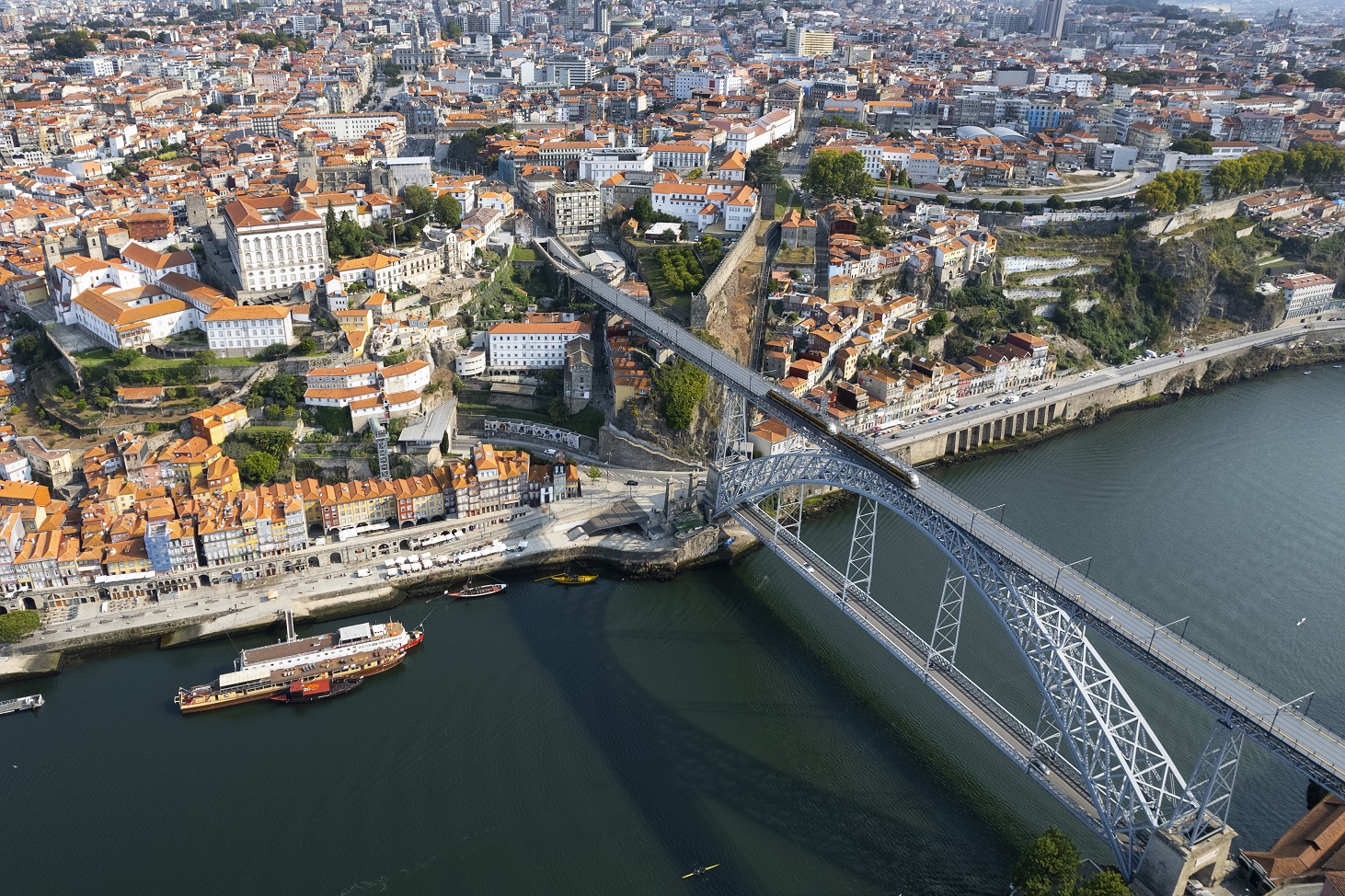
What makes Porto so compelling is the marriage of its historical authenticity with modern functionality. The city’s ancient core, with its tiled façades and narrow lanes, is beautifully preserved. The Ribeira district, hugging the riverbank beneath the iconic Dom Luís I Bridge, remains one of Europe’s most photographed neighbourhoods — a patchwork of colour, commerce, and community.
Yet beyond the postcard views, Porto has quietly become an engine of economic dynamism. The city’s university cluster, anchored by the University of Porto, ranks among Europe’s most respected centres of education and research, producing a steady stream of engineers, architects, and entrepreneurs.
The technology and start-up sectors have expanded rapidly, supported by incubators such as UPTEC and Founders Foundry, and attracting companies in software, AI, and renewable energy. This growth has not only created jobs but also driven sustained demand for housing from a new class of professionals and remote workers.
A City Built on Connectivity
Porto’s transformation has been made possible by infrastructure — both physical and digital. The city’s Francisco Sá Carneiro International Airport now handles over 12 million passengers annually, offering direct flights to major European hubs including London, Frankfurt, Paris, and Amsterdam, as well as regular transatlantic services to North America.
Porto’s public transport system — notably its metro network and efficient suburban rail links — has expanded significantly over the past decade. A new metro line connecting the city centre to the eastern suburbs and a planned link to Vila Nova de Gaia on the opposite bank of the Douro promise to enhance mobility further.
Meanwhile, Porto’s commitment to digital infrastructure is equally strong. Fibre-optic internet coverage is near-universal, a factor that has drawn international technology firms and digital nomads. The city’s appeal lies in this blend of old-world intimacy and cutting-edge convenience — a lifestyle equation that resonates with investors and homeowners alike.
Neighbourhoods of Distinction
Each corner of Porto offers a distinct personality and investment proposition.
Foz do Douro: The city’s most prestigious address, where the Douro River meets the Atlantic. Home to elegant villas, luxury apartments, and embassies, Foz commands some of the highest prices in northern Portugal. Prime sea-view properties here often exceed €1.5 million, but they offer enduring value and liquidity.
Boavista: A district of grand avenues, international schools, and high-end retail. Boavista has become a favourite among expatriate families seeking space, safety, and proximity to the city centre. Prices average around €4,000 per sqm, with demand strong for both new-build and renovated period properties.
Baixa and Cedofeita: Porto’s historical and cultural heart. Once neglected, these neighbourhoods have been transformed by careful regeneration. Apartments in refurbished townhouses start from around €350,000, attracting investors targeting short-term rentals and professionals seeking character-filled homes near cafés, galleries, and boutique hotels.
Campanhã and Bonfim: The city’s up-and-coming eastern districts. Major infrastructure investment, including a planned transport hub and green spaces, is driving interest here. Entry prices around €2,000–€2,500 per sqm make these areas attractive for investors eyeing medium-term appreciation.
The Douro Advantage
No discussion of Porto would be complete without mention of the Douro River, the city’s defining geographic and cultural feature.
Beyond its aesthetic charm, the river is an economic artery — historically linked to wine exports and now a magnet for leisure and luxury development. Riverfront properties, once industrial warehouses, have been converted into stylish apartments and boutique hotels.
Across the bridge in Vila Nova de Gaia, developers are creating high-end residential communities that marry city living with panoramic views. Prices here remain around 20% lower than comparable properties in central Porto, yet the gap is narrowing as demand intensifies.
The World of Wine (WOW) complex — a €100 million cultural and hospitality district launched recently — has further elevated Gaia’s profile, drawing visitors year-round and cementing its position as part of greater Porto’s residential core.
The Investment Case: Value and Versatility
Porto’s property market offers an unusual combination of value, yield, and appreciation potential.
Average gross rental yields range between 4% and 6%, depending on property type and location. Well-managed short-term rental units can achieve 8% or more, though licensing restrictions in the city centre mean most investors now prefer medium- and long-term tenancies, which offer stable income and lower regulatory risk.
Portugal’s Non-Habitual Resident (NHR) regime continues to attract overseas professionals and retirees by offering favourable tax treatment on certain types of income for up to ten years. Even as the scheme evolves, its core advantage — predictability within a Eurozone jurisdiction — remains intact.
For corporate investors, Porto’s affordability compared to Western Europe’s capitals makes it attractive for staff housing and development opportunities. Several international funds have entered the market, focusing on boutique residential projects and student accommodation.
Education, Healthcare, and Quality of Life
Porto consistently ranks among Europe’s most liveable cities, a fact not lost on foreign buyers relocating for lifestyle as much as investment.
The National Health Service (SNS) provides universal coverage, while private hospitals such as CUF Porto and Hospital da Luz deliver high-quality care at accessible costs. The healthcare system’s efficiency and bilingual medical professionals add to foreign confidence.
For families, Porto offers an array of international schools, including the Oporto British School and the CLIP International School, both of which follow British curricula. These institutions, combined with a strong university ecosystem, underpin the city’s reputation as a centre of learning.
Beyond the practical, Porto’s culture — its cuisine, music, and festivals — provides the intangible quality investors call the lifestyle premium. The pace of life is slower than Lisbon’s but never dull; evenings are for riverbank walks, seafood dinners, and community gatherings. This authenticity is a key differentiator, especially among younger buyers seeking a sense of place rather than polish.
The Economic Landscape
Portugal’s broader economy has proved resilient and adaptable, and Porto sits at the heart of this stability.
The city’s industrial roots have evolved into advanced manufacturing and logistics. The Leixões Port, one of Portugal’s busiest seaports, anchors international trade, while the Matosinhos oil and energy cluster continues to attract foreign investment.
Technology is the new frontier. Start-ups specialising in green tech, software development, and biotech are flourishing, supported by local universities and EU funding initiatives. Porto’s share of national GDP continues to grow, reinforcing its role as an economic counterweight to Lisbon.
Employment levels remain healthy, and a surge in international tourism — up 15% year-on-year according to Turismo de Portugal — provides additional stability to the rental and hospitality markets.
The Buying Process: Secure and Straightforward
Purchasing property in Porto follows Portugal’s standard, investor-friendly procedure. Foreign ownership is unrestricted, and the process is transparent.
Legal Representation: A bilingual lawyer (advogado) conducts due diligence, verifying property registration and ensuring no debts or encumbrances.
Promissory Contract: A Contrato de Promessa de Compra e Venda is signed with a 10% deposit, binding both parties.
Final Deed: The Escritura Pública is executed before a notary, and ownership is registered at the Conservatória do Registo Predial.
Buyers should budget for 8–10% in total acquisition costs, covering transfer tax (IMT), stamp duty, and legal fees. Annual property tax (IMI) ranges from 0.3% to 0.5% depending on location and property value.
Portugal’s double taxation treaties with over 70 countries prevent duplicated liabilities, while currency specialists can help mitigate exchange-rate risks for non-euro buyers.
Sustainability and the Future City
Porto’s property sector is aligning with Europe’s green transition. New developments prioritise energy efficiency, low-emission materials, and renewable technologies.
The Porto City Council’s Climate Action Plan targets carbon neutrality by 2030, encouraging sustainable urban design and electric mobility. Many developers now integrate solar panels, water recycling, and green roofs as standard features — innovations that both enhance comfort and protect long-term value.
For investors, this environmental shift represents opportunity. Homes with strong Energy Performance Certificates (A or A+) already command premiums of 5–10% over comparable properties lacking sustainability credentials.
Comparing Porto to Lisbon
Lisbon may remain Portugal’s economic flagship, but Porto offers a more measured proposition — less crowded, more affordable, and arguably more authentic.
Average property prices in Porto are 35–40% lower than in Lisbon, yet the yield differential is narrowing. The northern city’s smaller scale ensures less congestion and a sense of community often lost in capital markets.
Porto’s cost of living is also approximately 20% lower, while its cultural and architectural cachet continues to strengthen. For investors, the equation is clear: Porto represents Lisbon’s growth trajectory — but with more room to rise.
Long-Term Prospects
Market analysts anticipate continued growth in Porto’s housing sector, albeit at a sustainable pace. With limited developable land in central areas, demand will increasingly focus on quality refurbishment and new-build sustainability.
Infrastructure expansion — notably the metro extensions and Douro riverfront regeneration — will further enhance desirability. Foreign interest is expected to remain robust, supported by the city’s expanding flight connections and growing reputation as a cultural and tech hub.
Crucially, Portugal’s political and fiscal environment remains stable. Unlike some Mediterranean nations, it has avoided heavy-handed property taxation or abrupt regulatory changes, ensuring investor confidence.
In essence, Porto’s story is one of continuity: a city evolving without losing its essence, a market growing without overreaching.
The Verdict
Porto has arrived. Once regarded as Lisbon’s quieter sibling, it now stands as a model of balanced development — combining heritage with progress, and tradition with innovation.
For buyers and investors, Porto delivers what the modern real estate market increasingly lacks: authenticity backed by structure. Its property values are rising, but not recklessly; its economy is diversifying, but sustainably. And its lifestyle appeal — shaped by history, gastronomy, and hospitality — remains unmatched.
For those searching “Porto Portugal property for sale”, the opportunity extends beyond investment. It is a chance to participate in the story of a city that has rediscovered itself — not through transformation alone, but through refinement.
Porto’s future is not about replacing Lisbon, but complementing it. And in doing so, it has become one of Europe’s most attractive places to live, work, and invest.
Financial Disclaimer: The information provided in this article is for general informational purposes only and does not constitute financial advice. While every effort has been made to ensure the accuracy of the content, market conditions may change, and unforeseen risks may arise. The author and publisher of this article do not accept liability for any losses or damages arising directly or indirectly from the use of the information contained herein.
Copyright 2025: portugalhousesforsale.com