Author: D Walker

  • Portugal’s Forgotten Villages for Sale – The Rise of the €1 House Revolution

    Portugal’s Forgotten Villages for Sale – The Rise of the €1 House Revolution

    From the PortugalHousesForSale Property Desk

    There are still places in Europe where silence feels like a luxury, where stone cottages lie half-swallowed by ivy and almond blossoms drift through the air like a forgotten promise. These are the lost villages of Portugal — the hilltop hamlets and riverside settlements left behind by modernity, now finding themselves at the centre of an unlikely revival. From the mountains of Trás-os-Montes to the terraces of the Douro Valley, entire communities are being reborn one roof tile at a time, powered by a phenomenon once dismissed as fantasy: homes for sale from just one euro.

    The idea that property could be both symbolic and sustainable seems improbable in an era of inflated prices and speculative finance. Yet that is precisely what Portugal’s so-called “€1 house” movement has achieved. Where other nations speak of rural decline, Portugal has quietly turned abandonment into opportunity, using the market to heal what migration hollowed out. It is a story that belongs as much to demography and design as to economics — a slow-burning success that has made headlines in Brussels and beyond.

    The concept, borrowed in part from Italy’s famous Sicilian experiments, has been reinterpreted with characteristic Portuguese pragmatism. Here the transaction is not a giveaway, but a covenant. Buyers agree to restore properties to habitable condition within a defined period — typically three years — and to preserve their traditional façades. In return, municipalities waive fees, streamline permits, and, in some cases, provide technical guidance. The message is clear: what matters is not the price paid but the life returned.

    In the schist-stone villages of central Portugal, where slate roofs glint beneath pine-covered hills, the results are visible. Once-abandoned cottages now glow at dusk with warm light, their owners often young professionals from northern Europe who swapped glass towers for green valleys. Broadband connections and solar panels have replaced the mule track and kerosene lamp, yet the essential character remains. Portugal’s genius lies in modernising without erasing — in updating its heritage rather than selling it.

    For the investors behind these quiet transformations, the appeal is both emotional and mathematical. A ruined property purchased for a token euro may require €80,000 to €120,000 to restore, but the finished home could be worth two or three times that sum. Unlike coastal developments, which depend heavily on seasonal tourism, these inland assets draw long-term tenants — remote workers, retirees, and boutique holidaymakers seeking authenticity. Yields of five to eight per cent are common once renovations are complete, while capital appreciation remains steady and sustainable.

    Crucially, the market is underpinned by policy rather than speculation. The Portuguese government has made rural revitalisation a pillar of its national development strategy, aligning it with European Union sustainability targets. Programmes such as Reabilitar para Arrendar and Plano de Recuperação e Resiliência provide low-interest financing and tax breaks for properties restored to high environmental standards. Investors who integrate renewable energy systems or water-efficiency measures can claim further deductions, making rural restoration one of the few property plays that satisfies both conscience and cash flow.

    Municipalities, too, have embraced innovation. In Arganil, the local council has mapped all vacant properties and contacted heirs scattered across the diaspora, creating a digital marketplace for buyers and sellers. In Guarda, a town hall initiative offers translation services and guidance for foreign buyers navigating Portuguese bureaucracy. Even in remote Trás-os-Montes, once synonymous with isolation, co-operatives are emerging to pool resources for shared construction and maintenance. What began as a grassroots experiment now carries the quiet authority of national renewal.

    There are, of course, challenges. The paperwork of history is rarely simple. Title deeds can be fragmented across families who emigrated generations ago. Construction materials, especially traditional stone, are expensive to source and transport. Skilled masons are in short supply, and heritage restrictions can complicate modernisation. Yet for many buyers, these are not deterrents but rites of passage — the necessary work of turning nostalgia into future value.

    The scale of opportunity remains immense. Portugal’s National Statistics Institute estimates that over 700,000 dwellings across the country stand empty, with roughly a third located in rural municipalities. Not all are suitable for restoration, but even a fraction of that number represents a vast potential housing stock. Meanwhile, the rise of remote work has permanently altered migration patterns. Foreign buyers who once saw rural Portugal as a romantic retreat now view it as a viable base for year-round living, supported by high-speed internet and improved transport links.

    The human dimension of this story is equally compelling. In the village of Linhares da Beira, population 250, a handful of restored homes has revived the local café and brought back a primary school teacher. In the Douro, foreign entrepreneurs have transformed derelict hamlets into eco-lodges catering to wine tourism. In the Alentejo, where summer heat once drove people to the coast, solar energy and shaded courtyards are making year-round living practical once again. These may be micro-stories, but collectively they form a national narrative of rediscovery.

    Portugal’s rural architecture is itself a kind of investment in permanence. The schist and granite buildings that dominate the interior were designed to last centuries. Their thick walls retain cool in summer and warmth in winter. Modern restorations that add insulation and solar technology can achieve near-zero energy performance without compromising aesthetics. It is this marriage of durability and innovation that appeals to a generation disenchanted with disposable design. A restored village home is not only a dwelling; it is a declaration of values — environmental, cultural, and personal.

    For global property watchers, the comparison with Italy and Spain is instructive. Where Italian villages often attract speculative media attention, Portugal’s approach has been quieter and more credible. Prices rise slowly, regulations are clear, and communities remain cohesive. The country’s reputation for good governance and low corruption reinforces investor confidence. Unlike parts of southern Spain, where overbuilding scarred landscapes, Portugal’s planning discipline ensures that heritage comes first.

    The economics tell their own story. In the past decade, property values in rural Portugal have grown by an average of 40 per cent, compared with 25 per cent across the European Union. Yet even after this appreciation, the price per square metre remains among the lowest in Western Europe. Energy costs are modest, food is local, and healthcare is excellent. For retirees living on fixed income or digital professionals earning foreign salaries, the arithmetic is overwhelmingly in Portugal’s favour.

    It would be a mistake, however, to view this purely as an investment narrative. What draws people to these villages is a sense of continuity — the feeling of belonging to a slower, saner rhythm of life. Markets may fluctuate, but morning light falling on a cobbled street has a value no index can measure. The friendships formed in small communities, the shared harvests and festivals, the rediscovery of craft and neighbourliness — these are the real dividends of Portugal’s rural revival.

    The social impact extends beyond sentiment. Every new roof repaired supports local carpenters; every reopened bakery revives supply chains. In some towns, councils have introduced micro-grants for returning Portuguese families to encourage coexistence between newcomers and locals. The result is not gentrification but regeneration — growth that respects scale. Portugal’s smallness is its strength: villages can change character with just a dozen new households, enough to sustain a shop, a school, a post office.

    For foreign buyers, the process of purchase remains relatively straightforward. Transactions are notarised, titles registered digitally, and taxes transparent. The IMT transfer duty and IMI annual property tax are modest by European standards. English-speaking lawyers are easily found, and mortgage financing is available to non-residents at competitive rates. Restoration loans are often secured directly against the property, with disbursement tied to verified construction stages. It is, in short, a system designed for seriousness rather than speculation.

    Portugal’s success has not gone unnoticed abroad. Delegations from Ireland, France, and Greece have studied its rural policies, hoping to replicate the model. International media portray the €1 house as novelty, yet the real lesson lies in governance: how a small country used transparency and foresight to turn demographic decline into renewal. For Portugal, it is more than an economic strategy — it is a form of national therapy, a reconciliation between coast and countryside, past and future.

    As with all good stories, the ending remains unwritten. Climate change poses risks as well as opportunities. Drought and wildfire management will shape how and where rural Portugal grows. Yet the government’s commitment to renewable infrastructure and water conservation suggests preparedness. If the twenty-first century demands sustainability, these restored villages could become templates for living lightly but meaningfully on the land.

    For buyers considering entry into this niche, timing remains favourable. Prices are rising, but gradually; the market is still underpinned by lifestyle rather than speculation. The best opportunities lie in clusters where councils are proactive and access routes improving. Investors should think beyond individual homes to micro-communities — shared workshops, co-housing models, or cultural residencies. Portugal’s planning law already supports such collective restoration, recognising that survival often depends on scale.

    Ultimately, the story of Portugal’s forgotten villages is less about property than about patience. It appeals to those who see value not in rapid turnover but in slow accumulation — of friendships, traditions, and meaning. In a world of accelerating everything, Portugal’s pace feels like an act of quiet defiance. The country that once launched ships to explore the world now invites the world to rediscover its interior.

    The church bells still ring across the valleys, as they always did. The difference is that, once again, someone is listening. And for those who have bought into this unlikely renaissance — financially and emotionally — that sound is not nostalgia but promise: a reminder that sometimes the future begins exactly where the past was left behind.

    Financial Disclaimer: The information provided in this article is for general informational purposes only and does not constitute financial advice. While every effort has been made to ensure the accuracy of the content, market conditions may change, and unforeseen risks may arise. The author and publisher of this article do not accept liability for any losses or damages arising directly or indirectly from the use of the information contained herein.

    Copyright 2025: portugalhousesforsale.com
  • Vale do Lobo – Portugal Algarve’s Legendary Luxury Resort

    Vale do Lobo – Portugal Algarve’s Legendary Luxury Resort

    From the PortugalHousesForSale Property Desk

    Where Legacy Meets Lifestyle

    Among Europe’s most prestigious coastal addresses, Vale do Lobo in Portugal’s Algarve stands apart. It is more than a resort; it is an institution — a byword for refinement, exclusivity, and enduring investment value. Since its founding in the 1960s, Vale do Lobo has evolved from a pioneering golf retreat into a world-class residential community that defines the very concept of luxury living by the sea.

    For international investors, the name carries a certain weight. Vale do Lobo is not simply about buying a home in Portugal — it is about joining a tradition of elegance, privacy, and security that has stood the test of decades. The resort’s longevity is its greatest credential: through global financial cycles, shifting markets, and changing tastes, Vale do Lobo has retained both its prestige and its price resilience.

    Perched along two kilometres of golden Atlantic coastline, just a short drive from Faro International Airport, Vale do Lobo remains Portugal’s most established luxury destination. Its manicured landscapes, ocean-view villas, and championship golf courses make it instantly recognisable. Yet behind the image of tranquillity lies a robust real estate market — one that continues to attract buyers from around the world seeking a combination of lifestyle and liquidity.

    A Brief History of an Icon

    The story of Vale do Lobo is in many ways the story of the Algarve’s ascent. Conceived in the early 1960s as Portugal’s first integrated resort, it transformed a once-rugged stretch of coastline into a symbol of modern leisure. Backed by Portuguese and international visionaries, including developers and architects who saw the region’s potential, Vale do Lobo was one of the first European projects to blend residential living with resort infrastructure.

    Today, the resort covers over 450 hectares of landscaped grounds, bordered by the Ria Formosa Nature Reserve and framed by the Atlantic Ocean. It houses around 1,500 properties, from contemporary ocean-view villas and golfside homes to apartments and townhouses, each integrated into a masterplan that preserves space, greenery, and privacy.

    Unlike newer developments, Vale do Lobo’s reputation rests not on novelty but on continuity. Its infrastructure, amenities, and services have evolved with precision, ensuring that every element — from the golf greens to the spa, from the beach club to the security systems — meets international standards of excellence.

    A Market Built on Stability and Scarcity

    Vale do Lobo’s real estate market has one defining characteristic: scarcity. There is simply a finite amount of land within the resort’s boundaries, and strict planning controls ensure that development remains measured and sustainable. This natural limit on supply underpins the market’s long-term strength.

    According to local agents and analysts, average property prices within Vale do Lobo range from €1 million for two-bedroom apartments to well above €10 million for front-line villas with direct ocean views. On average, detached villas sell for €6,000 to €9,000 per square metre, reflecting the premium attached to the resort’s setting and heritage.

    Despite global fluctuations, Vale do Lobo’s property values have shown remarkable resilience. During past downturns, price corrections were modest and temporary, while recovery phases have been swift — evidence of the market’s depth and international reach.

    Rental yields also remain robust, typically between 4% and 6% annually for well-located properties, supported by consistent demand from affluent holidaymakers and seasonal residents. With year-round tourism, the Algarve’s mild climate allows owners to generate income well beyond the traditional summer season.

    The International Appeal

    The buyer demographic in Vale do Lobo mirrors its cosmopolitan atmosphere. While British and Irish buyers still form a strong contingent, the resort’s appeal has diversified considerably. Increasingly, investors from France, Germany, Scandinavia, and the Netherlands are purchasing homes, drawn by Portugal’s safety, favourable taxation, and accessibility.

    In recent years, American, Canadian, and Middle Eastern interest has grown steadily. The Algarve’s combination of European governance and global reach — supported by Faro Airport’s direct connections to major hubs such as London, Frankfurt, Amsterdam, and Paris — ensures international liquidity.

    The Non-Habitual Resident (NHR) regime and Portugal’s straightforward property laws have further encouraged foreign ownership. There are no restrictions on international buyers, and ownership rights are protected by EU legislation.

    For many, however, the attraction is less transactional and more emotional. Vale do Lobo represents the best of both worlds: European sophistication with Mediterranean warmth. It is Portugal at its most polished yet still unmistakably Portuguese — understated luxury, not ostentatious display.

    The Setting: Natural Beauty with Manicured Precision

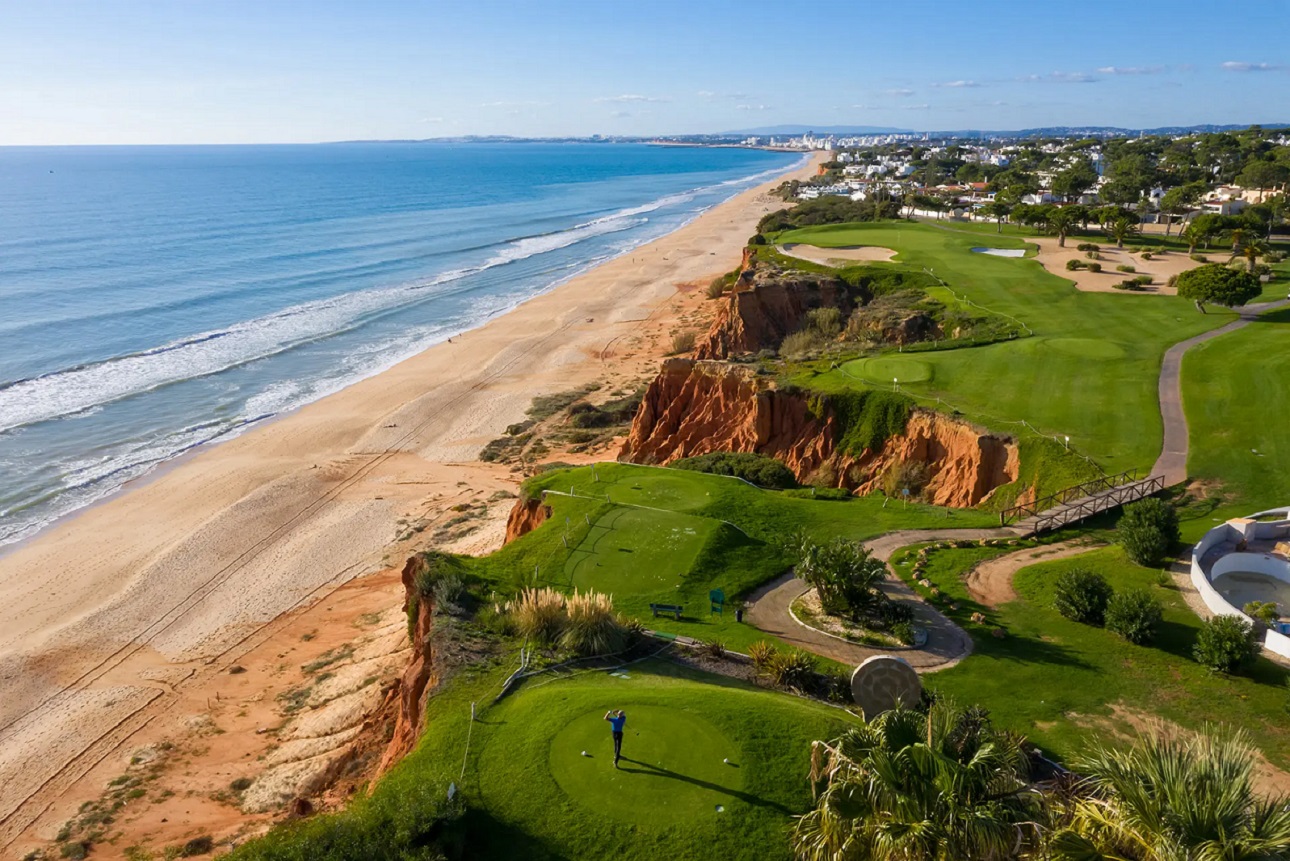
    Vale do Lobo’s geography is its enduring strength. The resort is set amid gently rolling terrain that slopes towards the Atlantic, offering panoramic sea views from many properties. Its two golf courses — the Royal Course and the Ocean Course — weave through pine forests, lakes, and cliff-top fairways that have graced countless travel magazines.

    The Royal Course’s 16th hole, which plays across a cliff-top chasm to a green framed by golden rock and turquoise surf, is perhaps the most photographed golf hole in Europe. But beyond golf, Vale do Lobo’s appeal is holistic.

    Beaches of fine white sand stretch for miles. Walking paths and cycling routes link seamlessly with neighbouring Quinta do Lago and the Ria Formosa Natural Park, offering protected landscapes for exploration. The resort’s layout — with its low-rise architecture, landscaped gardens, and absence of high-density construction — creates an atmosphere of calm exclusivity rarely found elsewhere.

    Infrastructure and Amenities: Built for Modern Luxury

    Vale do Lobo’s facilities rival those of any international resort, but what distinguishes it is the integration of these amenities into daily life. The Vale do Lobo Clubhouse, set at the heart of the resort, anchors a community of residents and visitors. Its restaurants, shops, and terraces overlook manicured greens and provide a social hub throughout the year.

    The Wellness Centre and Royal Spa offer state-of-the-art fitness facilities, swimming pools, tennis academies, and holistic therapies. Meanwhile, the Praça — the oceanfront plaza — serves as the resort’s focal point for dining and entertainment. With its mix of fine restaurants, bars, and live music venues, it brings vibrancy without compromising exclusivity.

    For families, the resort offers international-standard childcare and leisure programmes. Security, often cited as one of Vale do Lobo’s greatest strengths, is managed in-house by a 24-hour team that patrols the entire estate.

    Connectivity is another advantage: Faro International Airport is just 20 minutes away, while the A22 motorway links the Algarve to Lisbon and Spain. Fibre broadband and satellite technology ensure seamless global communication, a crucial factor for remote-working professionals who increasingly choose the Algarve as their year-round base.

    Economic and Legal Confidence

    Portugal’s transparent legal framework underpins the security of property ownership at Vale do Lobo. All transactions are registered through the Conservatória do Registo Predial (Land Registry), and the process is efficient and well-regulated. Buyers typically engage a bilingual lawyer to conduct due diligence, obtain a Portuguese tax number (NIF), and oversee contracts.

    The purchase process follows a clear structure: after signing a Promissory Contract (CPCV) and paying a 10% deposit, buyers proceed to completion before a notary. Ownership is transferred through the Escritura Pública, which is recorded immediately in the land registry.

    Acquisition costs, including IMT transfer tax, stamp duty, and legal fees, total between 8% and 10% of the property’s value — competitive by European standards. Annual property tax (IMI) ranges from 0.3% to 0.5%, depending on the municipality.

    Portugal’s banking sector offers mortgage financing to non-residents, typically covering up to 70–80% of the purchase price. Interest rates remain moderate, and financial institutions such as Novo Banco, Millennium bcp, and Santander Portugal maintain dedicated divisions for international clients.

    The Rental Market and Return on Investment

    Vale do Lobo is not only a residential paradise but also a high-performing rental market. Luxury tourism remains the Algarve’s economic cornerstone, and Vale do Lobo stands at its centre.

    With year-round flight access, a climate that encourages 12-month occupancy, and consistent corporate and family bookings, villas and apartments within the resort enjoy enviable occupancy rates. Rental yields of 4–7% are common, depending on property type, size, and management model.

    The resort’s in-house rental agency offers turnkey services, handling bookings, maintenance, and guest management, ensuring effortless ownership. For investors seeking passive income combined with capital growth, few European destinations offer such a compelling equation.

    According to Turismo de Portugal, the Algarve accounts for nearly 40% of Portugal’s total overnight tourist stays, underscoring the region’s dominance. Vale do Lobo’s occupancy metrics outperform the regional average, reflecting its position at the upper end of the market.

    Sustainability and Environmental Stewardship

    Sustainability has become integral to Vale do Lobo’s philosophy. The resort has invested heavily in renewable energy, water efficiency, and biodiversity protection.

    Solar panels supply much of its energy, while advanced irrigation systems have reduced water consumption by nearly 30% across golf courses and communal areas. Waste recycling and green waste composting are now standard, and electric mobility — including charging stations for electric cars and golf buggies — is widely available.

    Developers and homeowners alike are incorporating sustainability into new construction. Energy-efficient designs, passive cooling systems, and Class A or A+ energy certifications are increasingly the norm. These innovations not only appeal to environmentally conscious buyers but also protect long-term asset value as global standards evolve.

    Vale do Lobo’s Place in the Algarve’s Golden Triangle

    Vale do Lobo sits at the heart of the Algarve’s Golden Triangle, alongside Quinta do Lago and Vilamoura. Together, these three destinations represent the pinnacle of Portuguese real estate. Yet each has its distinct character.

    Quinta do Lago is synonymous with privacy and contemporary design — a haven for the ultra-wealthy and global business elite.

    Vilamoura offers vibrancy and convenience, centred on its world-class marina and nightlife.

    Vale do Lobo, meanwhile, embodies tradition and continuity — a community where generations of families return year after year, blending heritage with modernity.

    For investors, this positioning within the Golden Triangle is crucial. The area’s scarcity of developable land ensures continued appreciation. Unlike newer markets, it does not rely on transient trends; its value lies in reputation, infrastructure, and proven demand.

    Comparative Advantage: Portugal’s Broader Strength

    Beyond Vale do Lobo’s boundaries, Portugal itself provides a favourable environment for investment. The country ranks among Europe’s safest nations, its governance stable and its infrastructure world-class.

    Portugal’s cost of living remains approximately 30% lower than many Western European countries, yet healthcare, education, and services meet international standards. The Global Peace Index consistently ranks Portugal in the world’s top five safest nations — a key reassurance for property owners.

    Fiscal policy remains investor-friendly. Portugal’s Non-Habitual Resident (NHR) scheme continues to offer reduced tax rates on certain foreign income for up to ten years, while no wealth or inheritance taxes apply to direct family transfers.

    These macroeconomic fundamentals underpin the Algarve’s micro-markets. They provide the legal and financial bedrock upon which resorts like Vale do Lobo continue to thrive.

    The Lifestyle Factor: Serenity and Sociability

    Vale do Lobo is more than a destination — it is a way of life. The atmosphere is one of understated sophistication: a community bound by shared values rather than exclusivity alone.

    Residents enjoy a balance of privacy and conviviality. Morning golf rounds give way to leisurely lunches at beachside restaurants such as Sandbanks or Monty’s. Evenings might bring live music at the Praça or a quiet walk along the shore.

    The cultural and culinary scene has matured in parallel. Local dining options rival those of Lisbon, while nearby Loulé and Almancil offer traditional markets and Michelin-starred cuisine. The region’s vineyards and olive estates supply the resort’s restaurants, completing a circle of quality that remains resolutely local.

    For many buyers, this combination — climate, community, and culture — defines the Algarve’s unique appeal. It offers a slower pace of life, not a lesser one.

    The Outlook: Legacy, Liquidity, and Long-Term Value

    Analysts foresee continued stability in Vale do Lobo’s property market. With limited development capacity, strong brand equity, and rising global demand for lifestyle-led investment, the resort’s fundamentals remain exceptional.

    Modest annual appreciation of 4–6% is expected, alongside sustained rental yields. Crucially, Vale do Lobo’s value lies not just in numbers but in reputation. Like the Riviera or Mallorca’s exclusive enclaves, it represents permanence — a name that has weathered decades without dilution.

    For investors, that combination of legacy and liquidity is rare. For homeowners, it is priceless.

    The Verdict

    Vale do Lobo’s enduring success lies in its balance of natural beauty, built excellence, and human warmth. It is Portugal’s original luxury resort — not a trend but a tradition.

    In an age of fleeting opportunities and speculative markets, it offers something enduring: certainty, craftsmanship, and community. For investors, that means confidence; for residents, contentment.

    From its fairways to its sea cliffs, from its plazas to its private villas, Vale do Lobo remains a symbol of Portugal’s finest qualities — grace, resilience, and quiet prosperity.

    To own a property here is to own a piece of Europe’s most refined coastal story.

    Financial Disclaimer: The information provided in this article is for general informational purposes only and does not constitute financial advice. While every effort has been made to ensure the accuracy of the content, market conditions may change, and unforeseen risks may arise. The author and publisher of this article do not accept liability for any losses or damages arising directly or indirectly from the use of the information contained herein.

    Copyright 2025: portugalhousesforsale.com
  • Setúbal – Portugal’s Next Algarve? The Atlantic Coast’s Rising Star

    Setúbal – Portugal’s Next Algarve? The Atlantic Coast’s Rising Star

    From the PortugalHousesForSale Property Desk

    A Quiet Coastal Shift

    Every property cycle has its discovery moment — the time when an overlooked region begins to glow in the eyes of global investors. In Portugal, that moment now belongs to Setúbal. Long regarded as the industrious neighbour to Lisbon’s south, this handsome port city has quietly emerged as one of the country’s most compelling property stories.

    For decades, the Algarve has held an almost unassailable grip on the imagination of international buyers. With its golf resorts, golden sands and English-speaking communities, it became Portugal’s global showcase — the country’s Marbella, Cannes and Cornwall rolled into one. Yet markets mature, supply tightens, and the price of paradise inevitably climbs.

    Now, as the Algarve settles into comfortable maturity, the next chapter of Portugal’s coastal evolution appears to be unfolding on the Setúbal Peninsula. It is a region of natural drama — pine forests tumbling down to translucent bays, vineyards threading through limestone hills, dolphins playing in the Sado estuary. More importantly, it is a place where property remains attainable, infrastructure robust and demand on an unmistakably upward curve.

    The question being asked by both developers and discerning buyers is no longer “Where is Setúbal?” but rather “How long before it becomes the new Algarve?”

    A Market on the Move

    Setúbal’s transformation has not been sudden. Over the past ten years, steady investment, urban renewal and the gravitational pull of nearby Lisbon have pushed this city of 120,000 residents into the spotlight. According to data from Portugal’s national statistics agency, average property prices in Setúbal have risen by roughly two-thirds in the past decade — impressive growth by any standard, yet still leaving it far below the capital’s overheated market.

    While Lisbon’s city-centre prices hover around €5,000 to €6,000 per square metre and the Algarve’s prime coastal villas exceed €7,000, Setúbal averages a comparatively modest €2,400 per sqm. For investors, that means access to Portugal’s Atlantic splendour at less than half the cost of its better-known rivals.

    Rental returns tell a similar story of promise. Long-term lets yield between five and seven per cent annually, while short-term holiday rentals during the summer months can exceed eight or even ten per cent. These figures, coupled with Setúbal’s growing year-round population, have drawn attention from a widening pool of international buyers — from French and Dutch retirees to British families and, more recently, American remote workers searching for European sunshine within commuting distance of a major capital.

    The pattern is familiar to those who watched the Algarve’s rise in the 1980s and 1990s: undervalued property, improving infrastructure, lifestyle magnetism, and a moment of international discovery.

    Gateway to the Atlantic

    Geography alone gives Setúbal its advantage. Located forty minutes south of Lisbon, it is close enough to share the capital’s economic energy but far enough to retain its coastal calm. The A2 motorway links the two seamlessly, while the commuter train from Lisbon’s Entrecampos station takes under an hour.

    Lisbon Airport, one of Europe’s busiest gateways, lies within comfortable reach, providing direct flights to more than a hundred destinations. For international homeowners, that proximity delivers something precious — the ability to enjoy a weekend in Portugal without the marathon journey often required to reach the Algarve.

    Setúbal itself sits where the River Sado meets the Atlantic, a landscape defined by contrast: broad estuary, mountain backdrop and the glinting arc of the Tróia Peninsula across the water. The view from the marina at sunset — fishing boats gliding past as ferries shuttle towards Tróia — has become one of the most emblematic scenes in modern Portugal.

    This natural amphitheatre does more than please the eye; it underwrites the local economy. The port remains one of the country’s busiest, handling exports from Volkswagen’s AutoEuropa plant and hosting a thriving ship-repair industry. That working vitality gives Setúbal a year-round heartbeat absent from many purely touristic towns.

    From Industry to Inspiration

    For much of the twentieth century Setúbal’s identity was defined by labour and salt — shipbuilding, fish canning and cork exports. When those industries declined, the city endured the typical growing pains of post-industrial Europe. Yet over the past twenty years, Setúbal has reinvented itself with purpose and intelligence.

    The Câmara Municipal embarked on a far-reaching regeneration drive. Historic streets such as Praça do Bocage were repaved, the seafront promenade transformed, and the once-neglected old quarter restored to pastel perfection. Where warehouses once stood, cafés and boutique hotels now thrive.

    Cultural investment followed. Festivals celebrating jazz, cinema and gastronomy have turned Setúbal into a weekend escape for Lisbon’s middle class. Galleries and design studios have colonised the narrow lanes near the cathedral, while the local university and polytechnic attract a steady stream of students.

    This blend of heritage and modernity — maritime grit softened by Mediterranean charm — gives Setúbal a personality distinct from anywhere else in Portugal.

    The Tróia Connection

    Directly across the estuary lies the Tróia Peninsula, an exquisite finger of sand stretching towards Comporta. Long the preserve of Lisbon’s elite, Tróia is now on the radar of international investors who view it as Portugal’s discreet answer to the Hamptons.

    A short ferry ride from Setúbal delivers one to a world of pine-fringed beaches, modern eco-resorts and waterfront villas priced from the low millions. The Tróia Resort, developed with meticulous environmental sensitivity, has set new standards for low-impact luxury. Villas are designed to blend into the dunes, not dominate them, and planning regulations ensure space and privacy.

    The synergy between Setúbal and Tróia is fundamental. The city provides the commercial backbone — shops, services, schools — while Tróia delivers the glamour. Together they form a twin-engine market: one urban, one resort, each strengthening the other’s appeal.

    Comparing the Coastlines

    It is tempting to view Setúbal as the Algarve’s successor, but in truth it is something subtly different. The Algarve’s success was built on deliberate resort development: golf courses, gated communities, and a highly international clientele. Setúbal’s rise has been more organic — a city improving itself rather than a region designed for outsiders.

    Yet parallels are undeniable. The Algarve of forty years ago was similarly affordable, similarly blessed with natural beauty, and similarly underestimated by international capital. Investors who bought early then have since enjoyed decades of appreciation.

    Today’s Setúbal exhibits many of the same early-stage indicators: infrastructure investment, growing tourism, and a widening awareness among global buyers. Unlike the Algarve, however, Setúbal offers a real urban economy alongside its beaches — a factor that cushions it against seasonal volatility.

    Life Between Mountain and Sea

    Beyond numbers, Setúbal’s magnetism lies in its setting. To the west rises the Arrábida Natural Park, a limestone mountain range cloaked in olive and oak. Its winding roads reveal hidden coves — Portinho da Arrábida, Figueirinha, Galápos — whose emerald waters rival those of Sardinia or Croatia.

    Residents often speak of the paradox of living within a functioning city yet being minutes from nature of postcard perfection. Hikers, cyclists and sailors share the same playground, while the nearby Azeitão wine region, with its muscatel vines and artisanal cheese producers, adds rural charm to the metropolitan mix.

    The Sado estuary, home to one of Europe’s only resident pods of bottlenose dolphins, provides an eco-tourism attraction that underpins sustainable visitation rather than mass tourism. This commitment to nature and culture aligns perfectly with the priorities of modern investors seeking long-term, responsible value.

    A Flourishing Food and Wine Scene

    Portugal’s culinary revolution has not bypassed Setúbal. The city’s fish market, Mercado do Livramento, is routinely hailed as one of the best in Europe, its stalls overflowing with tuna, sea bream and oysters from nearby nurseries. The waterfront brims with seafood restaurants serving the region’s signature dish, choco frito — golden strips of fried cuttlefish best enjoyed with a chilled glass of Moscatel de Setúbal.

    Beyond the casual tavernas, a new wave of fine dining has arrived. Young chefs trained in Lisbon and abroad are opening kitchens that fuse Atlantic ingredients with cosmopolitan flair. Gastronomy, once an afterthought, is fast becoming a pillar of the region’s identity and an additional driver of tourism demand.

    The Numbers Behind the Narrative

    Behind the romantic scenery lies a sound economic story. Setúbal’s diversified base — from port logistics and car manufacturing to tourism and renewable energy — has insulated it from the boom-and-bust cycles that affect purely seasonal markets.

    Employment remains strong, and the city’s population is growing as families priced out of Lisbon seek affordable housing within commuting distance. Developers, recognising the shift, are launching mid-scale apartment projects in the city centre alongside luxury villas overlooking the park and estuary.

    Prices for renovated townhouses begin around €200,000, while modern apartments with river views command €400,000 to €600,000. Detached villas with gardens and pools in the hills of Palmela or Azeitão range between €800,000 and €1.5 million.

    Such diversity — and affordability relative to Lisbon or the Algarve — ensures a wide buyer base and healthy resale liquidity.

    Tourism and the Rental Proposition

    Setúbal’s tourism numbers tell a story of rapid ascent. The city now welcomes more than a million overnight visitors each year, many arriving on weekend breaks from Lisbon or via cruise ships docking at the port. Boutique hotels have multiplied, yet demand for short-stay apartments continues to exceed supply.

    Average daily rates for well-located rentals have risen steadily, and occupancy remains strong well beyond the summer season. Long-term corporate demand — particularly from the industrial and maritime sectors — provides further stability for investors seeking consistent income.

    Unlike resort areas that fall silent in winter, Setúbal’s year-round economy ensures a steady rhythm of tenants and visitors. It is this blend of tourism and industry that gives the city resilience and underpins its reputation as a “working paradise”.

    Regulation, Security and Ease of Ownership

    For foreign investors, Portugal’s property framework remains among the most transparent in Europe. There are no restrictions on non-resident ownership, and the buying process is both straightforward and secure.

    A Portuguese Tax Identification Number (NIF) is required, followed by legal due diligence and a Promissory Contract usually accompanied by a ten per cent deposit. Completion before a notary finalises the transaction. Total acquisition costs, including taxes and fees, average between eight and ten per cent of the purchase price.

    Annual municipal property tax, known as IMI, typically ranges from 0.3 to 0.5 per cent of the property’s rateable value. Portugal imposes no inheritance tax for direct heirs and no wealth tax. The Non-Habitual Resident regime continues to offer favourable income-tax treatment for new arrivals.

    Mortgage availability is robust, with local banks extending loans of up to eighty per cent of valuation to foreign buyers.

    Add to this Portugal’s reputation for political stability and safety — it consistently ranks among the top five nations worldwide in the Global Peace Index — and the investment case strengthens further.

    The Spirit of Sustainability

    Setúbal’s rise has coincided with Portugal’s broader commitment to sustainability. The municipality has launched ambitious green initiatives, from solar-powered public buildings to electric mobility schemes. New housing developments must meet stringent environmental standards, and energy-efficient retrofitting is actively encouraged through municipal grants.

    The city’s location between a protected mountain park and a marine reserve has instilled a culture of environmental stewardship. For investors, this matters: in an age where sustainable credentials increasingly influence property valuations, Setúbal’s eco-conscious approach provides both moral comfort and financial security.

    The Wider Region: Comporta and Beyond

    Beyond Tróia, the coastal plain unfurls southwards towards Comporta and Melides, now internationally renowned for their discreet, design-led luxury. Once rustic farming villages, these areas have drawn architects, artists and global entrepreneurs seeking privacy amid the dunes.

    Land prices there have soared accordingly, pushing many would-be buyers to look north across the estuary. Setúbal, by contrast, offers proximity without pretension — the same sunsets and sandbanks at a fraction of the price.

    This dynamic echoes the Algarve’s own evolution, where towns such as Lagos and Alvor thrived as affordable alternatives to Quinta do Lago. History, it seems, may be repeating itself — only faster.

    Investors’ Outlook

    Analysts anticipate steady appreciation in Setúbal’s property values over the coming years, fuelled by limited supply of waterfront land, a diversified economy and continued international exposure. Annual growth of four to six per cent appears sustainable — a balance between dynamism and discipline.

    Crucially, Setúbal’s fundamentals are organic rather than manufactured. It is not a speculative playground built on borrowed demand, but a functioning city gradually realising its potential. That intrinsic stability gives investors confidence to hold for the long term, reassured that value here rests on substance, not hype.

    Portugal’s macroeconomic picture reinforces that optimism. Inflation remains moderate, interest rates manageable, and the nation’s reputation as a safe European haven continues to draw capital from across continents.

    The Verdict

    Is Setúbal the next Algarve? Perhaps not in style — and that is precisely its strength. Where the Algarve offers curated luxury, Setúbal offers authenticity. It is a place where fishermen still mend nets beside a newly opened wine bar, where dolphins surface beyond the ferry wake, and where one can buy a waterfront apartment for the price of a modest townhouse in southern England.

    For investors, it represents what every mature market eventually needs: a new frontier of affordability backed by infrastructure, lifestyle and credibility. For Portugal, it symbolises balance — growth beyond the capital and glamour beyond the Algarve.

    Those who recognised the Algarve’s potential in its early years reaped the rewards for decades. Setúbal now stands at a similar crossroads. The ingredients are all present: location, momentum, and international curiosity. The only missing piece is time — and the investors bold enough to buy before everyone else does.

    Financial Disclaimer: The information provided in this article is for general informational purposes only and does not constitute financial advice. While every effort has been made to ensure the accuracy of the content, market conditions may change, and unforeseen risks may arise. The author and publisher of this article do not accept liability for any losses or damages arising directly or indirectly from the use of the information contained herein.

    Copyright 2025: portugalhousesforsale.com
  • The Stunning Algarve Europe’s Sunlit Haven for Lifestyle

    The Stunning Algarve Europe’s Sunlit Haven for Lifestyle

    From the PortugalHousesForSale Property Desk

    A Coastline That Captures the World’s Imagination

    The Algarve is one of those rare places where the idea of paradise and the reality of it are remarkably similar. Stretching for more than 150 kilometres along Portugal’s southern coast, it is a region defined by golden cliffs, whitewashed towns, and some of the most consistent sunshine in Europe. Yet beyond its postcard beauty lies something equally compelling — an economic success story built on tourism, infrastructure, and a housing market that has quietly matured into one of Europe’s most secure and attractive.

    For the discerning buyer or investor, “The Stunning Algarve” is more than a slogan; it’s a proposition grounded in real numbers and real opportunity. From world-class golf resorts to emerging inland villages, the Algarve combines lifestyle and liquidity in a way that few Mediterranean destinations can match. It is Portugal’s golden south — a place where the climate is dependable, the law transparent, and the returns both measurable and emotional.

    The Market that Never Lost Its Shine

    Portugal’s overall property market has been one of Europe’s most stable performers for more than a decade, and nowhere is that stability more evident than in the Algarve. According to the Instituto Nacional de Estatística (INE), average property prices in the region rose by around 7% over the past year, continuing a pattern of steady growth that has characterised the past decade.

    The average price per square metre in the Algarve stands at approximately €3,400, but this figure hides striking regional variations. In the central and western Algarve, prices rise dramatically in resort areas, while the eastern coastline remains more affordable yet increasingly desirable.

    Prime Algarve (Quinta do Lago, Vale do Lobo, Vilamoura): €6,000–€9,000 per sqm, depending on proximity to the coast and amenities.

    Western Algarve (Lagos, Alvor, Sagres): €3,000–€5,000 per sqm.

    Eastern Algarve (Tavira, Olhão, Cacela Velha): €2,000–€3,500 per sqm.

    Inland Algarve (Silves, Monchique): €1,800–€2,500 per sqm.

    These numbers illustrate the Algarve’s dual identity: luxury at the top end, value and space for those seeking tranquillity inland. What ties them together is consistency. The market has avoided the oversupply and speculation seen in parts of Spain and remains firmly underpinned by end-user demand rather than speculative development.

    Who’s Buying in the Algarve

    The Algarve’s appeal transcends borders. British buyers continue to represent the largest international group, drawn by familiarity, flight accessibility, and cultural comfort. But the demographic mix has broadened. Germans, French, Dutch, Scandinavians, and increasingly Americans and Canadians are investing in both primary residences and second homes.

    According to Savills Portugal and Fine & Country Algarve, international buyers account for more than 60% of all prime property transactions in the region. The majority are purchasing outright, often in cash, and many are relocating permanently rather than purchasing purely for holiday use.

    Remote working and the rise of “sunbelt migration” — professionals relocating for quality of life — have accelerated this trend. With fibre broadband and international schools across the region, the Algarve has quietly become a year-round community for those seeking sunshine without sacrificing connectivity or culture.

    The Geography of Opportunity

    One of the Algarve’s greatest strengths is its geographic diversity. The region offers multiple micro-markets, each with its own pace, personality, and price point.

    The Golden Triangle – Quintessential Luxury

    At the heart of the Algarve lies the so-called Golden Triangle, defined by Quinta do Lago, Vale do Lobo, and Vilamoura. This is where Portugal meets the world — an enclave of international sophistication where manicured golf courses roll towards the Atlantic and private villas sit behind palm-lined drives.

    Here, prices are among the highest in Portugal, with detached villas often starting from €3 million and rising to €10 million or more for ultra-prime residences. These communities offer impeccable infrastructure, private security, fine dining, and access to some of Europe’s most celebrated golf courses.

    Rental yields in the Golden Triangle remain robust. Properties with tourist licences (Alojamento Local) regularly achieve 6–8% annual returns, supported by year-round demand from both holidaymakers and corporate clients.

    Lagos and the Western Algarve – Natural Beauty and Growth

    Moving west, the Algarve becomes wilder and more dramatic. Lagos, Aljezur, and Sagres offer a more relaxed, bohemian vibe — long beaches, surf schools, and a sense of community that appeals to younger buyers and families.

    Prices are still attractive, with modern villas near Lagos marina starting from €700,000, and restored townhouses within the old walls averaging €4,000 per sqm. Demand here is strong among Northern Europeans seeking value without compromise. The region’s eco-tourism focus and protected coastlines ensure future growth without overdevelopment.

    Tavira and the Eastern Algarve – The Authentic Alternative

    To the east, the Algarve softens into salt pans and fishing towns. Tavira, Olhão, and Cacela Velha exude a traditional Portuguese character increasingly sought after by investors seeking authenticity.

    Tavira, often described as the region’s most picturesque town, offers high-end apartments and restored mansions at around €3,000–€4,000 per sqm, making it one of the Algarve’s best value propositions. The eastern coast’s proximity to Spain and its less tourist-saturated atmosphere appeal to retirees and long-term residents.

    Silves and the Interior – The Quiet Algarve

    Inland, towns like Silves, Monchique, and São Brás de Alportel deliver spacious homes, large plots, and panoramic views. Farmhouses and villas can be acquired from €400,000, many with extensive land suitable for eco-living or vineyard development.

    While not as liquid as the coast, these properties attract buyers seeking privacy, space, and connection with nature — an increasingly valued commodity in modern Europe.

    Tourism: The Region’s Economic Engine

    The Algarve is synonymous with tourism, and that’s no accident. The region consistently accounts for nearly 40% of Portugal’s total overnight stays, according to Turismo de Portugal. Visitor numbers have rebounded strongly, with hotel occupancy and short-term rental bookings surpassing pre-pandemic levels.

    Faro International Airport connects the Algarve to more than 80 destinations across Europe, including daily services from London, Manchester, Frankfurt, and Paris. The expansion of its terminal and new flight routes from North America have further cemented its global accessibility.

    Golf remains a key driver of year-round tourism, with more than 30 championship courses, including San Lorenzo, Dom Pedro Old Course, and Monte Rei in the eastern Algarve. Each acts as an anchor for high-spending visitors and international tournaments, reinforcing property demand in surrounding communities.

    Beyond golf, wellness tourism, gastronomy, and nature retreats have diversified the region’s visitor economy. Michelin-starred restaurants, boutique hotels, and marinas from Vilamoura to Lagos cater to a clientele seeking quality experiences rather than mass tourism.

    The Climate Dividend

    It is often said that in the Algarve, the weather is the best business partner an investor could hope for. With over 300 days of sunshine a year, average winter highs of 16°C, and summer temperatures that hover around 30°C, the region offers one of the most benign climates in Europe.

    This climate not only sustains tourism but also lengthens the rental season, ensuring investors enjoy consistent income throughout the year. It underpins outdoor living — infinity pools, terraces, and al fresco dining are not luxuries here, but everyday life.

    Economic and Infrastructure Strength

    Portugal’s macroeconomic stability underpins the Algarve’s local market. The country’s fiscal management and membership of the Eurozone provide predictability, while low crime and strong governance make it one of the safest places in the world to live and invest.

    Infrastructure continues to improve. The A22 motorway connects the Algarve from east to west, while the EN125 coastal road has been modernised to handle increased traffic. Broadband coverage now reaches virtually every municipality, a major boon for digital professionals relocating from northern Europe.

    Healthcare standards are high, with private hospitals in Albufeira, Lagoa, and Faro offering international-level services. Education is equally well-provisioned: international schools in Vilamoura, Lagos, and Almancil cater to English, French, and German curricula.

    Investment Climate: Secure, Transparent, and Tax-Efficient

    Portugal’s property system is among Europe’s most transparent. The purchase process is simple and well regulated. Foreign ownership faces no restrictions, and all transactions are recorded in the Conservatória do Registo Predial (Land Registry).

    Buyers typically follow a three-step process: securing a Portuguese tax number (NIF), signing a promissory contract (Contrato de Promessa de Compra e Venda) with a 10% deposit, and completing before a notary. Total purchase costs, including transfer tax and legal fees, are around 8–10% of the price.

    The Non-Habitual Resident (NHR) regime continues to offer favourable tax rates for qualifying individuals, while double taxation agreements ensure income is not taxed twice. Annual municipal property tax (IMI) ranges from 0.3% to 0.5%, modest compared to other Mediterranean markets.

    Portugal’s banking system is conservative, offering mortgages up to 80% of value for non-residents, with competitive fixed or variable interest rates. Currency exchange specialists and local brokers help overseas buyers manage transfers efficiently and securely.

    Sustainability and the Modern Algarve

    Environmental awareness has become a defining feature of the Algarve’s development. Municipalities such as Loulé, Lagos, and Tavira have adopted progressive sustainability policies, encouraging solar energy, water conservation, and eco-friendly construction.

    New-build developments now prioritise Class A or A+ energy efficiency ratings, with features such as solar panels, thermal insulation, and electric vehicle infrastructure becoming standard. Many golf resorts have reduced water usage by up to 40% through modern irrigation systems.

    Buyers increasingly view sustainability not just as a moral choice but as a financial one. Properties with strong green credentials command premiums and lower running costs, enhancing both lifestyle and resale potential.

    Comparing the Algarve to Other European Markets

    The Algarve’s combination of value, accessibility, and governance sets it apart from its Mediterranean peers.

    Spain’s Costa del Sol offers similar sunshine but suffers from regional bureaucracy and higher taxes.

    France’s Côte d’Azur remains prestigious but prohibitively expensive, with transaction costs exceeding 12%.

    Italy’s Amalfi Coast delivers romance but limited liquidity and complex ownership structures.

    The Algarve, by contrast, provides a clean, transparent, and affordable alternative — one with a track record of stability and international appeal.

    The Lifestyle Equation

    While financial metrics drive decisions, it is the Algarve’s lifestyle that seals them. Safety, simplicity, and sociability define daily life here. The pace is unhurried, the people courteous, and the cuisine exceptional.

    Fresh seafood, locally produced wine, and the Mediterranean diet are not luxuries but cultural cornerstones. From the cafés of Loulé to the marinas of Vilamoura and Lagos, life unfolds outdoors — on terraces, beaches, and golf courses.

    Crime remains among the lowest in Europe. Healthcare outcomes rival those of northern Europe, and the Global Peace Index consistently ranks Portugal in the world’s top five safest nations.

    For many international buyers, this quality of life — combined with the security of EU property ownership — represents the true return on investment.

    Outlook: Sunshine and Stability

    The Algarve’s housing market shows every sign of continuing its measured ascent. Demand remains broad and international, while supply is finite and carefully controlled.

    Analysts forecast annual growth of 4–6% in the coming years, reflecting both local confidence and global appetite for safe, high-quality real estate. Infrastructure investment, improved air links, and the enduring global shift towards remote living will continue to support this trajectory.

    Even as interest rates fluctuate, the Algarve’s fundamentals — limited land, enduring tourism, and political calm — position it as one of Europe’s most resilient markets.

    The Verdict

    The Algarve is more than a destination; it is a formula — a blend of light, law, and lifestyle that has proved remarkably durable. It offers investors what few coastal markets can: a safe haven with genuine upside.

    For buyers seeking sun and substance, Portugal’s southern coast remains unmatched. Whether it’s a villa in Vilamoura, a townhouse in Tavira, or a farmhouse in Monchique, the Algarve offers an investment that feels secure, sensual, and sustainable all at once.

    In a continent of crowded choices, the Algarve stands apart — still stunning, still strong, and still the gold standard of Mediterranean living.

    Financial Disclaimer: The information provided in this article is for general informational purposes only and does not constitute financial advice. While every effort has been made to ensure the accuracy of the content, market conditions may change, and unforeseen risks may arise. The author and publisher of this article do not accept liability for any losses or damages arising directly or indirectly from the use of the information contained herein.

    Copyright 2025: portugalhousesforsale.com
  • Portugal Retirement Property Europe’s Most Rewarding Move for Lifestyle

    Portugal Retirement Property Europe’s Most Rewarding Move for Lifestyle

    From the PortugalHousesForSale Property Desk

    The Golden Years Find Their True Home

    For decades, the dream of retiring abroad has inspired countless Britons and Europeans searching for better weather, lower living costs, and a gentler pace of life. But few destinations have fulfilled that promise quite like Portugal.

    With over 300 days of sunshine a year, a healthcare system ranked among Europe’s best, and a cost of living comfortably below the continental average, Portugal offers retirees more than just relaxation — it offers reassurance. This is not a place for a brief escape but a country where retirement becomes a new chapter of opportunity, security, and belonging.

    From the cobbled charm of Lisbon and Cascais to the sun-drenched elegance of the Algarve, Portugal’s property market continues to attract a growing community of international retirees who see in its calm landscapes and coastal villages not only beauty but long-term value.

    In a continent facing economic uncertainty and demographic change, Portugal stands apart: safe, stable, and surprisingly affordable.

    Why Portugal Tops the Retirement Shortlist

    There is a logic to Portugal’s growing reputation as Europe’s premier retirement destination. It lies not just in lifestyle but in economics and infrastructure.

    Portugal consistently ranks near the top of the Global Peace Index, a measure of safety and political stability. Its crime rates are among the lowest in Europe, its healthcare system accessible and modern, and its property laws transparent.

    For retirees coming from the UK or northern Europe, these foundations offer something priceless — peace of mind.

    At a practical level, Portugal offers simplicity. Non-EU nationals can apply for the D7 Visa, designed for individuals with regular passive income, such as pensions or dividends. The Non-Habitual Resident (NHR) programme — recently revised but still advantageous — provides up to ten years of favourable tax treatment for qualifying retirees, including reduced rates on foreign-sourced income.

    Add to this the fact that the Portuguese people are among Europe’s most welcoming, and that English is widely spoken, and it’s little wonder that an estimated 50,000 Britons and 100,000 other Europeans have already chosen to make Portugal their permanent home.

    But the real reason Portugal resonates with retirees may be more emotional than fiscal. It is a place where civility endures, where communities are intact, and where time still moves at a human pace.

    The Property Landscape: Quality and Value in Equal Measure

    For those planning retirement, property is not simply an investment — it is a foundation for daily life. Portugal’s housing market has evolved to serve this reality.

    Over the past decade, Portugal has become one of Europe’s most dynamic yet measured property markets. Prices have appreciated steadily, supported by demand from international buyers and a limited supply of new homes due to strict coastal protection and urban planning laws.

    According to Confidencial Imobiliário, average property values nationwide have risen around 8% annually over the past five years. Yet Portugal remains significantly more affordable than France, Spain, or Italy.

    In Lisbon, expect to pay €5,000–€6,000 per square metre for central apartments. In Porto, prices average €4,000, while in the Algarve — particularly near golf resorts and coastal enclaves — premium villas can range from €700,000 to over €3 million.

    Those seeking value will find it inland and along the Silver Coast. Towns like Setúbal, Lagos, and Óbidos offer elegant homes for under €400,000, often with sea views and modern amenities.

    Crucially, transaction costs are moderate, typically 8–10% of purchase price, including legal fees and transfer tax. Mortgages are available to retirees with proof of income, and fixed-rate options offer stability against future market shifts.

    For retirees, this market offers the perfect mix of value, liquidity, and long-term appreciation.

    The Algarve: Retirement’s Crown Jewel

    If Portugal is the retirement capital of Europe, the Algarve is its sunlit heart. Long celebrated for its natural beauty, it now represents the country’s most complete retirement ecosystem — part leisure, part lifestyle, part investment.

    Stretching across 150 kilometres of coastline, the Algarve offers everything retirees seek: safety, sunshine, and sophistication.

    Communities like Vilamoura, Almancil, Vale do Lobo, and Quinta do Lago blend high-end living with medical facilities, golf, and international dining. Further east, Tavira and Faro provide more traditional Portuguese charm, while the western towns of Lagos and Sagres attract those seeking quieter, more scenic retirement options.

    Property prices vary widely: apartments near Vilamoura’s marina average €6,000 per sqm, while detached villas inland may cost half that. The region’s infrastructure — including Faro International Airport — ensures that family and friends can visit easily, a factor often overlooked but crucial for retirees wanting to maintain connections.

    Crucially, the Algarve remains vibrant year-round. Golf, walking, and social clubs sustain an active expatriate community, while healthcare facilities such as the Hospital Particular do Algarve and Lusíadas Faro rank among the best in the country.

    This balance — luxury without isolation, activity without stress — explains why the Algarve consistently tops international surveys for quality of life.

    Lisbon and Cascais: For the Cultured Retiree

    Not all retirees seek the beach-and-golf lifestyle. Many prefer the cosmopolitan rhythm of a capital city combined with coastal calm — and Lisbon offers precisely that.

    Its historic neighbourhoods, tram-lined streets, and thriving cultural scene make it one of Europe’s most liveable capitals. Cafés spill into sun-dappled squares, while the Tagus River ensures cooling breezes even in summer.

    For those seeking suburban sophistication, Cascais and Estoril — a short train ride from Lisbon — deliver refined living, international schools, marinas, and golf courses. Property prices here average €5,000–€8,000 per sqm, but the investment potential remains strong.

    Retirees choosing Lisbon or Cascais gain access not only to world-class healthcare and cultural life but to Portugal’s best transport network, including direct flights to London, Paris, and New York.

    Lisbon’s hospitals, such as CUF Descobertas and Hospital da Luz, provide high-standard care with English-speaking staff — a major reassurance for older residents.

    Cascais itself has long attracted retirees from Britain, Scandinavia, and the United States, drawn by its elegant seafront and enduring sense of community.

    The Silver Coast and Beyond: Portugal’s Undiscovered Haven

    For retirees who value tranquillity over glamour, Portugal’s Silver Coast and interior regions present extraordinary opportunities.

    The stretch from Nazaré to Peniche offers pristine beaches, low-density living, and strong local communities. The nearby Óbidos Lagoon and Foz do Arelho have become magnets for retirees seeking peace, space, and affordability.

    Property prices remain highly accessible — often 30–40% lower than in the Algarve. Modern two-bedroom apartments near the coast start from €250,000, while detached villas with pools can be found for under €500,000.

    Further south, the Alentejo region offers a rural rhythm untouched by mass tourism. Its rolling landscapes, vineyards, and hilltop towns evoke the serenity of Tuscany at a fraction of the cost.

    For those seeking authenticity and community, these regions deliver exactly that — with the added comfort of Portugal’s dependable infrastructure and low crime.

    Healthcare and Wellbeing: The Bedrock of Retirement

    No factor matters more in retirement than health — and on this front, Portugal excels.

    The Serviço Nacional de Saúde (SNS) provides universal healthcare coverage, while the private sector complements it with modern hospitals, English-speaking doctors, and low costs.

    Private health insurance averages €700 to €1,200 annually, depending on coverage. Routine appointments cost a fraction of UK or US prices, and specialist care is both swift and affordable.

    Portugal’s healthcare system consistently ranks among the top 15 globally for efficiency, according to the World Health Organization. Pharmacies are plentiful and professional, while preventive medicine is widely practised.

    Equally important is lifestyle. Portugal’s Mediterranean diet — rich in olive oil, seafood, and fresh produce — supports longevity. The abundance of outdoor activities, from walking and cycling to golf and swimming, reinforces both physical and mental health.

    For retirees, this is not just about living longer — it is about living better.

    The Cost of Living: Comfortable and Predictable

    Portugal offers retirees something rare in modern Europe: predictability. Inflation remains moderate, taxation transparent, and utilities affordable.

    According to Eurostat, Portugal’s cost of living is around 30% below the EU average. Rent, utilities, groceries, and leisure all remain more affordable than in Spain or Italy.

    A couple can live comfortably — including dining out regularly and maintaining private health insurance — on €2,500 to €3,000 per month in most regions. In smaller towns, even less.

    This affordability, combined with property ownership, creates financial freedom that retirees in northern Europe often lack. It allows for a lifestyle defined by choice rather than compromise.

    Taxes, Residency, and Inheritance

    Portugal’s taxation system for retirees remains one of the most transparent and favourable in Europe.

    The Non-Habitual Resident (NHR) regime — though evolving — continues to provide relief on pensions, foreign income, and dividends for newcomers. Retirees can benefit from a flat rate of 10% on qualifying foreign pension income and exemptions on certain categories of overseas earnings.

    Importantly, Portugal imposes no inheritance tax for direct family members and no wealth tax on property holdings. Property ownership is fully recognised for non-residents, with clear title and strong legal protections.

    These policies reflect Portugal’s long-term strategy of attracting stable, financially secure foreign residents — and ensuring they remain.

    The Social Dimension: Belonging Without Barriers

    Retiring abroad can sometimes bring isolation, but Portugal’s social fabric has the opposite effect.

    The Portuguese are instinctively warm, and the country’s growing expatriate communities ensure instant connection. In the Algarve, social and sporting clubs — from bridge to bowls to book circles — abound. In Lisbon and Porto, cultural societies and volunteer groups offer easy entry into community life.

    Language is rarely a barrier; English is widely spoken, especially in coastal areas. Yet learning Portuguese, even at a conversational level, deepens the experience and earns immediate goodwill.

    Portugal’s civility, patience, and respect for tradition make integration both natural and rewarding. It is not a country that asks newcomers to conform, but one that welcomes them to belong.

    Safety, Climate, and the Intangibles of Peace

    Retirement, at its best, is about serenity — and Portugal provides it in abundance.

    It ranks among the top five safest countries in the world, ahead of most of Western Europe. Violent crime is rare, social cohesion strong, and public trust high.

    The climate is equally kind. Mild winters, low humidity, and gentle summers make Portugal particularly suitable for older residents. The Atlantic breeze moderates heat even in the Algarve, and air quality is among the best in the EU.

    Add to that a slower rhythm of daily life — markets that still pause for lunch, shopkeepers who know your name — and Portugal’s appeal becomes more than practical. It becomes emotional.

    This is a country where peace of mind is not sold as a luxury; it is part of the landscape.

    Future Outlook: Why Portugal’s Star Will Continue to Rise

    Portugal’s demographic and economic fundamentals point to continued strength in both property and lifestyle value.

    Tourism remains robust, but the country’s long-term strategy is clear: attract permanent, financially stable residents who contribute to the economy year-round. That includes retirees, remote workers, and skilled professionals seeking balance.

    Infrastructure investment continues apace — from new hospitals and renewable energy networks to high-speed rail links. The property market remains tightly regulated, ensuring sustainable growth rather than volatility.

    For retirees, these are not abstract indicators but real guarantees: that their investment, community, and lifestyle will endure.

    The Verdict

    Retirement is as much about where you live as how you live. Portugal succeeds on both counts.

    It combines beauty with value, safety with sophistication, and leisure with legacy. It offers retirees not an escape but an upgrade — a chance to live with dignity, comfort, and cultural richness.

    Its property market remains accessible, its healthcare world-class, and its communities welcoming. Its laws are transparent, its taxes fair, and its people gracious. Few countries can claim such balance.

    In an age when so many are searching for reassurance — financial, physical, and emotional — Portugal stands quietly confident. It is Europe’s best-kept promise: that the good life can still be lived, honestly, affordably, and well.

    For those planning their golden years, the equation is simple. Portugal retirement property offers not only a home but a horizon — where the sun sets gently, and the future feels secure.

    Financial Disclaimer: The information provided in this article is for general informational purposes only and does not constitute financial advice. While every effort has been made to ensure the accuracy of the content, market conditions may change, and unforeseen risks may arise. The author and publisher of this article do not accept liability for any losses or damages arising directly or indirectly from the use of the information contained herein.

    Copyright 2025: portugalhousesforsale.com
  • Quinta do Lago – Portugal’s Crown Jewel of Coastal Living

    Quinta do Lago – Portugal’s Crown Jewel of Coastal Living

    From the PortugalHousesForSale Property Desk

    Where Prestige Meets Perfection

    In the pantheon of European luxury destinations, few names command the same quiet reverence as Quinta do Lago. Situated in the heart of Portugal’s Algarve, this meticulously designed resort community has become synonymous with elegance, exclusivity, and enduring value. From its inception more than half a century ago, Quinta do Lago has been more than a property development; it has been a vision realised — a haven where architectural excellence meets natural beauty, and where investment follows lifestyle rather than speculation.

    Bordered by the Atlantic Ocean and the Ria Formosa Natural Park, Quinta do Lago represents the pinnacle of coastal sophistication. With its manicured fairways, Michelin-starred restaurants, and villas that seem to hover between sea and sky, it is not simply a place to live — it is a statement of refinement. For investors and homeowners alike, Quinta do Lago is not a fleeting trend but a timeless brand, one that continues to set benchmarks for luxury and longevity in the European property market.

    A Legacy of Vision

    The story of Quinta do Lago begins in the early 1970s, when the Algarve was still a quiet region of fishing villages and citrus groves. It was here that entrepreneur André Jordan envisaged something extraordinary: a self-contained resort that would marry the unspoilt nature of southern Portugal with the amenities of an international lifestyle destination.

    Over the decades, that vision has matured into a community spanning over 800 hectares, blending residential neighbourhoods, golf courses, and preserved green space. Today, Quinta do Lago is home to some of the most valuable real estate in Portugal and remains one of the few developments in Europe that has managed to combine exclusivity with sustainability.

    Its low-density planning — a hallmark of Jordan’s original concept — ensures that even as demand grows, the resort’s natural serenity remains untouched. Strict architectural guidelines preserve aesthetic harmony, while ongoing investment in infrastructure and amenities keeps Quinta do Lago firmly ahead of its peers.

    The Market: Luxury Defined by Demand

    Real estate within Quinta do Lago consistently ranks among the most sought-after in southern Europe. Properties here are not simply purchased; they are curated. Demand far outstrips supply, ensuring price stability even during periods of broader economic uncertainty.

    According to recent market data from leading Algarve agencies, prices within Quinta do Lago typically range from €2 million for smaller detached villas or apartments to €10 million or more for front-line golf and lagoon-view residences. The average price per square metre stands at €8,000–€10,000, with ultra-prime properties exceeding that threshold.

    Unlike speculative markets driven by transient buyers, Quinta do Lago attracts a deeply committed clientele — high-net-worth individuals and families seeking both lifestyle and legacy. The absence of high-density development ensures that values remain underpinned by scarcity rather than volatility.

    Rental returns within the resort are equally compelling. Managed luxury villas routinely achieve 5–7% annual yields, supported by strong year-round tourism and an affluent visitor base. The resort’s private rental network, operated under the Quinta do Lago brand, maintains quality control and consistency across its portfolio, reassuring investors that their assets are not just desirable but professionally managed.

    Who Buys in Quinta do Lago

    The ownership profile of Quinta do Lago reflects its international pedigree. British buyers have long been prominent, drawn by the Algarve’s accessibility and Portugal’s political stability. However, in recent years, the buyer demographic has broadened considerably.

    Purchasers now include significant numbers from Ireland, France, Germany, the Netherlands, Scandinavia, and the Middle East, along with a notable increase in North American investors seeking second homes in Europe’s sunbelt. Portugal’s reputation for safety, its favourable tax framework, and its transparent property laws make it especially appealing to global citizens seeking a secure haven for capital and family alike.

    According to Savills Portugal, more than 80% of Quinta do Lago’s real estate transactions involve international buyers, and nearly half are for permanent or semi-permanent residences rather than holiday homes. This shift towards year-round living has strengthened the local economy and ensured that the resort retains vibrancy throughout the seasons.

    The Setting: Between Sea, Sky, and Sanctuary

    Geographically, Quinta do Lago occupies an exceptional location. Nestled between the Atlantic Ocean and the Ria Formosa — a UNESCO-protected wetland reserve — the resort’s setting combines environmental tranquillity with architectural grandeur.

    The landscape unfolds in a series of natural contrasts: pine forests and salt lagoons, rolling golf fairways and sand dunes, villas and villas hidden behind lush bougainvillaea. Yet despite this luxury, there remains a remarkable sense of openness — a feeling that nature is always just beyond the garden gate.

    The Ria Formosa Nature Park not only enhances the area’s beauty but also provides a valuable ecological buffer, limiting future development and preserving property values. This protected environment is home to migratory birds, marine life, and pristine beaches — all accessible within minutes of even the most central homes.

    The Golfing Heart of the Algarve

    For many, Quinta do Lago is synonymous with golf — and for good reason. The resort’s three championship courses — the North, South, and Laranjal — rank among the finest in Europe.

    The South Course, redesigned by Beau Welling in collaboration with Ryder Cup captain Paul McGinley, has hosted the Portuguese Open multiple times. It remains the resort’s signature layout, admired for its strategy and scenery.

    The North Course, reimagined in recent years with sustainability at its core, offers a fresh challenge for both amateurs and professionals.

    The Laranjal Course, set among orange groves just outside the main estate, provides a contrasting landscape of rolling fairways and tranquil lakes.

    Together, these courses reinforce Quinta do Lago’s identity as the European epicentre of luxury golf. They also underpin property demand: homes overlooking fairways or lakes command premiums of 10–20% over similar properties elsewhere in the Algarve.

    The resort’s Paul McGinley Golf Academy and TaylorMade Performance Centre draw enthusiasts from around the world, further enhancing its global reputation.

    Infrastructure and Amenities: Excellence Without Excess

    What sets Quinta do Lago apart from conventional luxury resorts is its integration of infrastructure and lifestyle. Every detail — from roads to street lighting, security systems to landscaping — reflects a design philosophy rooted in precision and discretion.

    The resort’s private security network operates 24 hours a day, with state-of-the-art surveillance systems ensuring peace of mind. Dedicated management teams oversee maintenance, landscaping, and utilities, creating a seamless environment where homeowners can focus entirely on leisure.

    The Campus, Quinta do Lago’s multi-sport hub, encapsulates this ethos. Featuring world-class tennis courts, cycling routes, swimming facilities, and fitness centres, it attracts professional athletes and enthusiasts alike. This is not just a luxury amenity — it’s an ecosystem for wellbeing.

    Dining and leisure options match the resort’s stature. From the Michelin-starred Casa Velha to contemporary favourites like Bovino Steakhouse and Gigi’s, Quinta do Lago’s culinary scene blends international sophistication with Portuguese authenticity. The resort’s Beach Club, accessible via a scenic bridge across the Ria Formosa, offers direct access to one of the Algarve’s most pristine beaches.

    The Broader Economic and Legal Landscape

    Portugal’s macroeconomic and legal environment continues to underpin investor confidence. The nation enjoys one of Europe’s most transparent property ownership systems. All transactions are recorded in the Conservatória do Registo Predial (Land Registry), and foreign ownership is unrestricted.

    The buying process is straightforward: prospective purchasers secure a Portuguese Tax Identification Number (NIF), engage a lawyer for due diligence, and sign a Promissory Contract (Contrato de Promessa de Compra e Venda) with a typical 10% deposit. Completion follows before a notary, where the Escritura Pública finalises the transfer.

    Transaction costs, including transfer tax (IMT), stamp duty, and legal fees, total approximately 8–10%. Annual property tax (IMI) is modest, ranging from 0.3% to 0.5%.

    For non-residents, Portugal’s Non-Habitual Resident (NHR) regime offers favourable tax treatment on certain income types for ten years, while double taxation treaties prevent duplicated liabilities. There is no inheritance tax for direct family members, nor any wealth tax.

    Portugal’s stable banking sector provides mortgages up to 80% of the property’s value for qualifying non-residents, and the application process is notably efficient compared with other Mediterranean jurisdictions.

    The Rental Proposition

    Quinta do Lago’s short- and long-term rental market remains exceptionally strong. The resort’s integrated management services, combined with its global reputation, ensure consistent occupancy levels throughout the year.

    Luxury villas in prime locations generate average weekly rents of €8,000–€15,000 during peak season, while well-appointed apartments achieve €2,000–€4,000 per week. Even in winter, demand from golfers and long-stay professionals sustains profitability.

    Annualised gross yields typically range between 4% and 6%, with the potential for higher returns through strategic refurbishment or value-added amenities such as pools, gyms, or concierge services.

    Importantly, the Algarve’s tourism framework supports continuity. According to Turismo de Portugal, the region accounts for nearly 40% of all overnight stays in Portugal, a testament to its enduring global draw. Quinta do Lago, as the jewel in that crown, benefits directly from these inflows.

    Sustainability and the Future of Luxury

    Far from resting on its reputation, Quinta do Lago has embraced sustainability as central to its identity. The resort’s Environmental Sustainability Plan focuses on energy efficiency, biodiversity preservation, and water management.

    Golf courses are irrigated using recycled and desalinated water, reducing consumption by 30%. Solar panels power many communal facilities, while new residential developments are designed to meet Class A or A+ energy standards.

    This commitment to environmental stewardship adds tangible value. Sustainable properties command price premiums and lower running costs, while aligning with the expectations of today’s discerning global investors. Quinta do Lago’s blend of eco-awareness and elegance positions it not just as a luxury resort but as a forward-thinking model for responsible development.

    Comparing Quinta do Lago to Global Benchmarks

    Quinta do Lago stands shoulder to shoulder with Europe’s most exclusive enclaves — from France’s Côte d’Azur to Spain’s Marbella Golden Mile and Italy’s Lake Como. Yet, unlike those markets, it offers a unique combination of privacy, accessibility, and relative affordability.

    While a waterfront villa in the South of France might command €20 million or more, comparable properties in Quinta do Lago remain below that threshold, delivering exceptional value without compromise.

    Portugal’s governance adds another advantage. The country ranks among the safest in the world, its political climate steady, its legal system transparent. This consistency — rare in luxury markets — has become one of the Algarve’s strongest selling points.

    The Lifestyle Advantage

    At its heart, Quinta do Lago is not about extravagance but excellence. It attracts a clientele that values discretion over display, and substance over show.

    Life here is lived outdoors — early morning walks through the Ria Formosa, golf in the sun, lunches overlooking the lagoon, evenings spent with friends at beachside restaurants. It is the kind of effortless luxury that only long-established destinations can deliver.

    The community spirit is palpable. Events, sports tournaments, and cultural gatherings bring residents together, creating a sense of belonging that goes beyond ownership. In a world where many developments feel transient, Quinta do Lago feels rooted — a place of permanence and pride.

    The Outlook: Sustained Strength and Smart Growth

    The outlook for Quinta do Lago remains resolutely positive. With limited development land available and increasing global demand for lifestyle-led investments, supply constraints will continue to drive value appreciation.

    Modest yet consistent annual growth of 4–6% is projected by analysts, underpinned by rising international interest and the continued evolution of the Algarve’s premium segment.

    Portugal’s infrastructure — from its modern airports and motorways to its advanced healthcare and education systems — ensures that the Algarve remains one of Europe’s most liveable regions. As global buyers seek security, space, and sunshine, Quinta do Lago stands at the confluence of all three.

    The Verdict

    Quinta do Lago is not merely Portugal’s most prestigious address — it is one of Europe’s great lifestyle investments. It offers what few markets can: enduring desirability grounded in quality, not speculation.

    For investors, it represents a secure and appreciating asset within a stable legal and fiscal framework. For residents, it offers an existence of balance and beauty — where every day begins with sunlight and ends with serenity.

    In the Algarve’s constellation of luxury, Quinta do Lago shines brightest. It is a symbol of Portuguese excellence, a benchmark of international living, and a reminder that true luxury is timeless.

    Financial Disclaimer: The information provided in this article is for general informational purposes only and does not constitute financial advice. While every effort has been made to ensure the accuracy of the content, market conditions may change, and unforeseen risks may arise. The author and publisher of this article do not accept liability for any losses or damages arising directly or indirectly from the use of the information contained herein.

    Copyright 2025: portugalhousesforsale.com
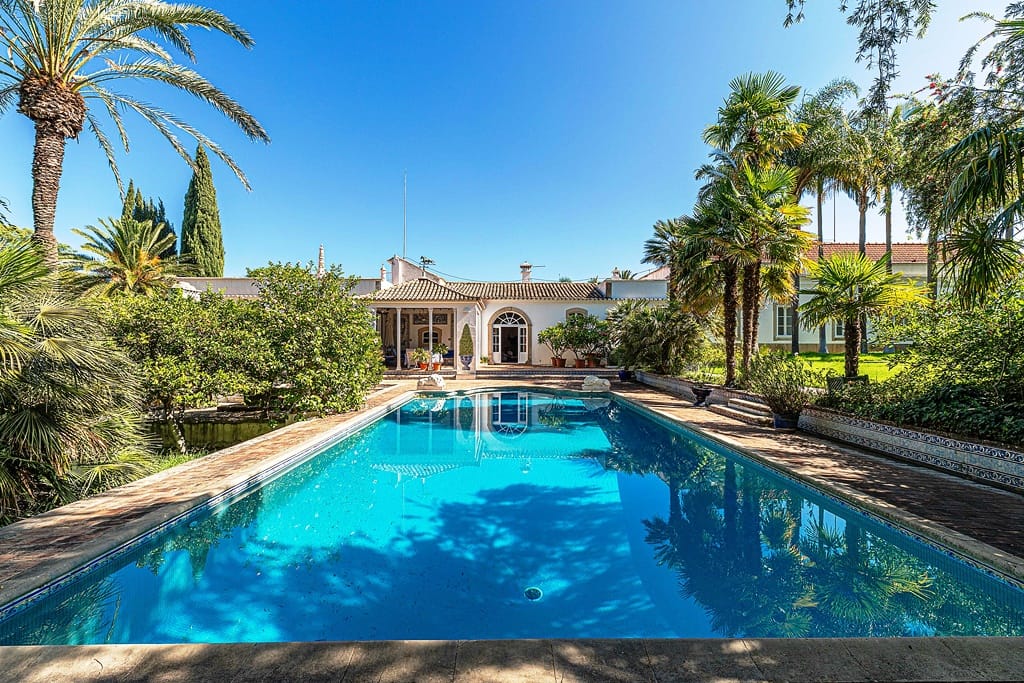
  • Portugal, Property and Golf
A Hole-in-One for Lifestyle and Investment

    Portugal, Property and Golf A Hole-in-One for Lifestyle and Investment

    From the PortugalHousesForSale Property Desk

    Where Lifestyle and Investment Meet on the Fairways of Europe

    Few countries in Europe have married leisure and property investment quite as successfully as Portugal. For more than half a century, it has been the continent’s spiritual home of golf — a place where sunshine, scenery, and sophistication converge across immaculately maintained fairways. But the Portuguese golfing story is not simply about sport; it is about real estate, tourism, and lifestyle — a combination that has made the nation one of the most coveted addresses for international buyers.

    Whether it is the manicured estates of the Algarve, the rugged coastal courses near Lisbon, or the emerging golfing developments around the Silver Coast, the link between golf and property has become a defining feature of Portugal’s modern economy. Investors who once looked to the Costa del Sol or the south of France are increasingly finding better value, better weather, and better returns on Portuguese soil.

    From Vilamoura’s manicured luxury to Comporta’s barefoot exclusivity, golf has become the common language of high-quality living — and the foundation upon which Portugal’s property success quietly rests.

    The Global Context: Golf as a Growth Asset

    Across Europe, golf communities are no longer viewed as lifestyle indulgences but as stable, long-term investments. Golf tourism contributes an estimated €20 billion annually to the European economy, with Portugal accounting for one of the largest individual shares.

    Figures from Turismo de Portugal show that golf visitors generate over two million overnight stays each year, underpinning local employment and sustaining year-round tourism revenues. More importantly for investors, golf resorts have proved remarkably resilient during market fluctuations.

    Properties within golf estates tend to maintain higher values than comparable non-golf properties, often commanding premiums of 10–25% due to location, security, and rental potential. For many buyers, the purchase is less about tee times and more about tangible, predictable returns — a safe haven of bricks, mortar, and manicured greens.

    Portugal has mastered this equation. The country now ranks consistently among the top three golf destinations worldwide, with over 90 courses, mild weather, and seamless connectivity. The result is a market where leisure and investment are not competing forces but natural partners.

    The Algarve: Europe’s Golfing Capital

    No discussion of golf and property in Portugal can begin anywhere but the Algarve. Stretching from the Spanish border to the dramatic cliffs of Sagres, this region has become synonymous with European golfing excellence.

    The Algarve’s rise began in the 1960s, when Sir Henry Cotton, a three-time Open Champion, designed the Penina Hotel & Golf Resort near Portimão. His vision sparked a transformation. Today, the region hosts over 40 championship courses, from Vilamoura’s Dom Pedro complex to Quinta do Lago, Vale do Lobo, and Monte Rei in the east.

    What makes the Algarve exceptional is its infrastructure. The region combines coastal glamour with a relaxed pace of life, supported by Faro International Airport, which welcomes direct flights from across Europe. This accessibility, coupled with its year-round sunshine, has made Algarve golf a year-round phenomenon rather than a seasonal indulgence.

    Property within the Algarve’s golf resorts remains the gold standard of Portuguese real estate.

    Quinta do Lago, an estate of over 800 acres, is widely regarded as Portugal’s most prestigious address. Its villas and apartments border fairways designed by William Mitchell and Beau Welling, with values starting around €1.5 million and often exceeding €10 million.

    Vale do Lobo, equally luxurious, offers two 18-hole courses, the Royal and Ocean, framed by villas, townhouses, and apartments that blend modern architecture with classic Mediterranean charm. Entry-level properties begin at €750,000, while sea-view villas easily reach €6 million.

    Vilamoura, by contrast, offers greater variety. Its marina, casino, and five world-class courses attract both families and investors. Apartment prices average around €6,000 per square metre, while golf-side villas start near €1 million.

    These communities are not just playgrounds for golfers but international micro-economies, complete with restaurants, spas, and schools. For homeowners, that translates into both lifestyle convenience and investment resilience.

    Beyond the Algarve: Lisbon’s Fairways of Sophistication

    While the Algarve remains the beating heart of Portugal’s golf scene, the Lisbon coast has rapidly become its cerebral counterpart — a place where design, culture, and coastal charm meet on world-class fairways.

    The Cascais–Estoril corridor, just 30 kilometres west of Lisbon, offers a cluster of elite courses set against Atlantic backdrops. The Oitavos Dunes, consistently ranked among the world’s top 100 courses, showcases Robert Trent Jones Jr.’s distinctive blend of natural dunes and modern strategy. Nearby, Penha Longa, designed by Robert Trent Jones Sr., integrates golf with 14th-century monastery ruins and five-star hotel luxury.

    Properties in Cascais and Estoril command some of Portugal’s highest prices — typically €5,000 to €8,000 per sqm — but they come with long-term stability. The area attracts diplomats, executives, and retirees seeking both cosmopolitan access and coastal serenity.

    Further north, the Silver Coast has begun to mirror the Algarve’s early trajectory. West Cliffs Golf Links, designed by Cynthia Dye, has drawn international acclaim for its raw Atlantic drama. The course sits alongside Royal Óbidos and Praia D’El Rey, creating a new golden triangle for golf tourism and property investment.

    Here, villas and apartments remain affordable by European standards, with high-quality new builds priced between €350,000 and €800,000 — a fraction of Cascais or the Algarve, but offering rental yields of 5–7% due to rising demand.

    A Lifestyle Beyond the Game

    While golf may anchor the investment case, the appeal of Portuguese golf property extends far beyond the fairways.

    Each resort is a self-contained community, blending leisure, gastronomy, and family living. Restaurants range from Michelin-starred fine dining to casual Portuguese grills. Wellness centres, equestrian facilities, and private beaches complete the offering.

    The Algarve alone hosts more than 30 five-star hotels, many integrated into golf resorts. This concentration of luxury infrastructure sustains strong tourism demand — and by extension, robust rental markets.

    For homeowners, the benefits are tangible:

    Guaranteed rental income through resort management programmes.

    On-site maintenance and concierge services ensuring hassle-free ownership.

    Capital appreciation driven by ongoing demand and limited land supply.

    What sets Portugal apart is the authenticity that underlies all this polish. Away from the resorts, local towns like Loulé, Albufeira, and Tavira provide genuine Portuguese charm — cobbled streets, morning markets, and the kind of community that complements rather than competes with luxury living.

    The Numbers That Drive Confidence

    From an investment perspective, the statistics behind Portugal’s golf property market remain compelling.

    According to Confidencial Imobiliário, properties within resort zones outperform the national average for both price growth and liquidity. Over the past five years, values in established golf developments have appreciated by an estimated 35–45%, with minimal volatility even during economic downturns.

    Rental demand is consistent. High-season weekly rents for two-bedroom apartments in Algarve resorts average €1,500–€2,500, while villas can command €4,000–€7,000 per week depending on proximity to the course and sea.

    Occupancy levels across the Algarve hover around 80–85% during the golf season (September to May), and even in summer months, resorts remain popular with family holidaymakers.

    Portugal’s tax framework further enhances returns. There is no wealth tax, no inheritance tax for direct family transfers, and relatively low annual property tax (IMI). The Non-Habitual Resident (NHR) programme continues to attract retirees and remote workers who can benefit from reduced taxation for up to ten years.

    Financing, too, is readily available, with banks offering competitive fixed and variable-rate mortgages to foreign buyers.

    Golf, Tourism, and the Broader Economy

    Golf’s contribution to Portugal’s economy extends well beyond property. The sector generates hundreds of millions of euros in direct revenue each year and supports tens of thousands of jobs in hospitality, construction, and services.

    Unlike purely seasonal industries, golf provides steady year-round demand. Courses in the Algarve, for instance, see their highest occupancy during spring and autumn — precisely when beach tourism wanes. This balance stabilises local economies and ensures continuity of employment.

    Moreover, golf developments often serve as catalysts for broader regional investment. Roads, schools, and utilities built to support resorts benefit entire communities. The Portuguese government’s commitment to sustainable tourism ensures that growth remains measured and environmentally conscious.

    Indeed, many newer courses — including Amendoeira, West Cliffs, and Ombria Resort — have earned environmental certifications for water management and ecological preservation. Sustainability is no longer an accessory but a selling point.

    A New Era: Golf Meets Sustainability

    Portugal’s modern golf resorts reflect a shift in global values. The emphasis has moved from excess to balance — from manicured perfection to natural integration.

    Developers increasingly design with ecology in mind:

    Ombria Resort in the Algarve, for example, has been built with minimal land disturbance, powered partly by geothermal energy, and surrounded by protected forest.

    West Cliffs, near Óbidos, was sculpted to work with natural dunes and flora, creating one of Europe’s most environmentally harmonious courses.

    These projects reflect the future of golf real estate: developments that complement their surroundings rather than dominate them. For investors, that means properties aligned with long-term global demand for sustainability — a crucial factor in maintaining future resale value.

    The Allure of the Golf Lifestyle

    Beyond numbers and design, the emotional pull of golf property is enduring. It offers order, beauty, and tranquillity — qualities that resonate deeply in an unsettled world.

    For retirees, it means community and health. For families, it provides safety and recreation. For investors, it ensures consistent performance underpinned by tangible lifestyle appeal.

    Portugal’s unique advantage lies in how effortlessly it combines these dimensions. Its climate allows play twelve months of the year; its culture makes visitors feel like residents; its infrastructure provides sophistication without pretension.

    A morning round at Quinta do Lago, lunch in Vilamoura’s marina, and an evening walk through Loulé’s old town capture the essence of the Portuguese golf lifestyle — grounded, graceful, and globally admired.

    Regional Highlights: Beyond the Usual Fairways

    While the Algarve and Lisbon regions dominate, other parts of Portugal are carving their place on the golfing map.

    Porto and Northern Portugal have seen the rise of courses such as Vidago Palace and Estela, attracting investors seeking cooler summers and lower entry prices. Comporta, an hour south of Lisbon, is now one of Europe’s most talked-about eco-luxury enclaves. Its soon-to-open Dunas Course, designed by David McLay Kidd, is already drawing global attention.

    Each region offers something unique — the wine-soaked hills of the Douro, the pine forests of the Alentejo, the surf breaks of Peniche. For investors, this diversification mitigates risk and opens multiple avenues for returns.

    Portugal’s Enduring Advantage

    In the global competition for high-quality living, Portugal has achieved something remarkable. It has built a luxury real estate ecosystem that feels human — a place where modern convenience coexists with cultural integrity.

    Its golf resorts are not sterile enclaves but extensions of the landscape; its residents, both Portuguese and international, form communities rather than compounds. This sense of belonging, combined with practical financial benefits, makes Portugal’s golf property sector both emotionally and economically rewarding.

    At a time when global investors seek stability and tangible value, Portugal delivers both — wrapped in sunshine, framed by fairways, and underpinned by trust.

    The Verdict

    Portugal property and golf have become inseparable elements of the same success story. Together, they define a lifestyle of balance: leisure anchored in investment, elegance rooted in authenticity.

    From the championship greens of Vilamoura to the Atlantic vistas of West Cliffs, Portugal offers not just courses but communities — places where buyers can invest confidently, live comfortably, and play contentedly.

    In an era when the line between luxury and longevity has blurred, Portugal remains ahead of the curve. It has proved that prosperity need not be loud, that luxury can coexist with simplicity, and that a small country can still lead the world in quality of life.

    For those who measure value not only in returns but in reward, Portugal is — quite simply — the ultimate hole-in-one.

    Financial Disclaimer: The information provided in this article is for general informational purposes only and does not constitute financial advice. While every effort has been made to ensure the accuracy of the content, market conditions may change, and unforeseen risks may arise. The author and publisher of this article do not accept liability for any losses or damages arising directly or indirectly from the use of the information contained herein.

    Copyright 2025: portugalhousesforsale.com
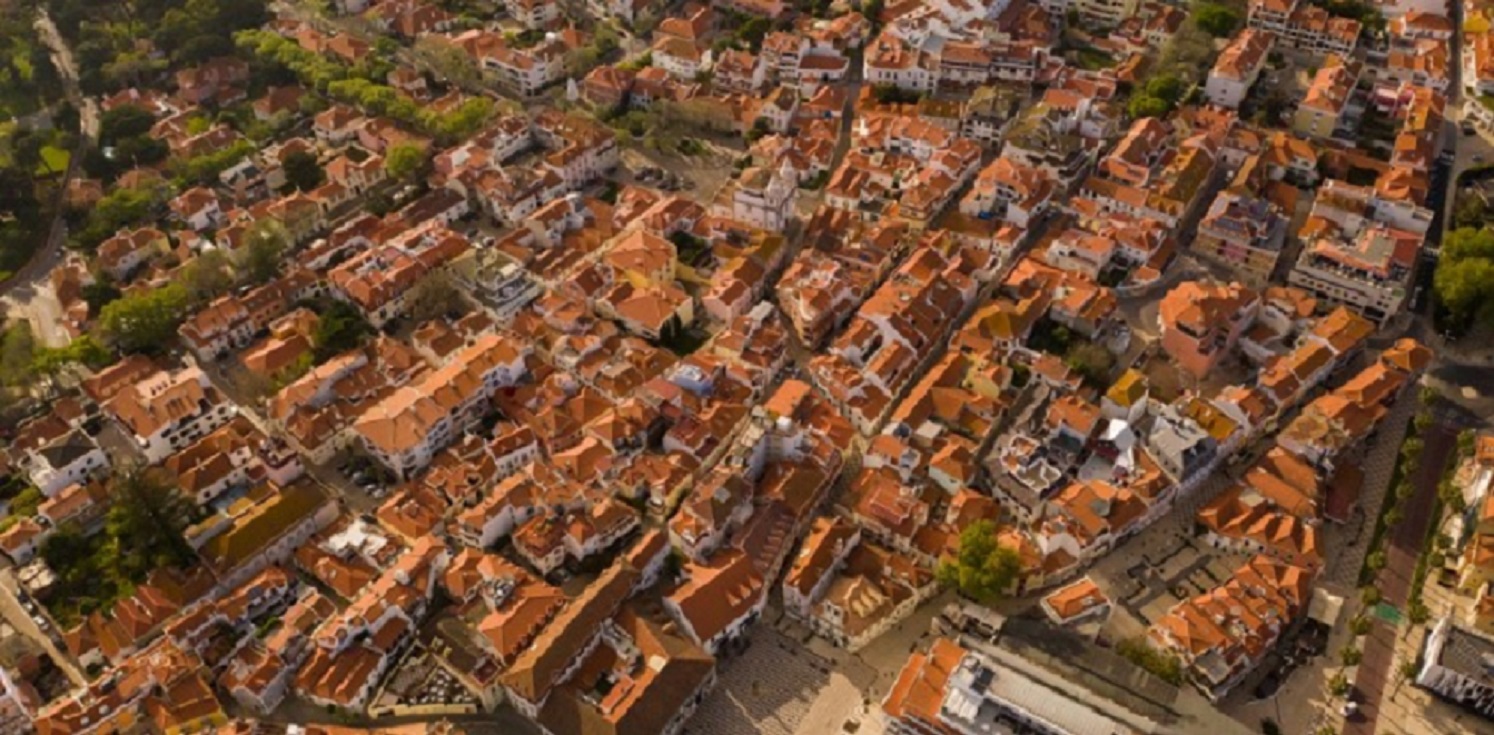
  • Cascais – Portugal’s Riviera of Refinement and Real Estate Resilience

    Cascais – Portugal’s Riviera of Refinement and Real Estate Resilience

    From the PortugalHousesForSale Property Desk

    The Atlantic’s Jewel of Stability

    Perched gracefully along Portugal’s western coast, just 30 kilometres from Lisbon, Cascais has long been the country’s most elegant expression of seaside living. Known as the Portuguese Riviera, this once-sleepy fishing town has evolved into a magnet for global investors, drawn by its coastal charm, economic stability, and cosmopolitan polish.

    For buyers, Cascais offers the ultimate combination: proximity to a world-class capital, a Mediterranean climate, and a property market that has consistently demonstrated strength, even amid broader European turbulence.

    Yet Cascais is more than a place of picturesque villas and waterfront promenades. It is a barometer for Portugal’s economic confidence — a town whose real estate performance reflects both domestic prosperity and international faith in the nation’s long-term trajectory.

    As the property market recalibrates after years of record growth, Cascais stands resilient — an enduring beacon for discerning investors who see value not in volatility but in verified stability.

    A Decade of Transformation

    The Cascais of today is a masterclass in urban reinvention. Once the summer retreat of Portuguese royalty and European aristocracy, the town has successfully merged its heritage with modern infrastructure, transforming itself into one of southern Europe’s most desirable property markets.

    According to figures from Confidencial Imobiliário and the Instituto Nacional de Estatística (INE), Cascais remains Portugal’s most expensive municipality outside Lisbon, with average residential prices exceeding €5,200 per square metre — a rise of more than 70% over the past decade.

    In premium areas such as Monte Estoril, Quinta da Marinha, and Gandarinha, prices routinely exceed €10,000 per sqm, with newly built luxury villas reaching €3–8 million. Waterfront apartments, particularly those with direct ocean views, command premiums of up to 25% above inland equivalents.

    While these figures might daunt first-time buyers, seasoned investors recognise the underlying value. Cascais has not experienced the speculative excess seen in other European luxury markets. Instead, its growth has been measured, underpinned by scarcity, infrastructure, and global demand for security and quality of life.

    Why Investors Keep Returning
    Strategic Location and Accessibility

    Cascais’s greatest advantage is geographical. A 35-minute drive along the scenic A5 motorway connects the town to Lisbon and its international airport, while the coastal train line linking Cais do Sodré station to Cascais provides a daily commute as beautiful as it is practical.

    For foreign investors, this proximity means a rare duality: a resort atmosphere without isolation, a coastal retreat within easy reach of one of Europe’s most vibrant capitals. Lisbon’s ongoing expansion — from tech investment to global tourism — has inevitably spilled westward, reinforcing Cascais’s position as both residential suburb and international destination.

    Lifestyle and Liveability

    Cascais consistently ranks among Europe’s top locations for quality of life. Its mix of cultural sophistication, mild climate, and natural beauty create a lifestyle that blends continental elegance with Atlantic openness.

    The Marina de Cascais, one of Portugal’s premier sailing ports, anchors a social scene that rivals that of Saint-Tropez or Marbella — albeit with understated Portuguese charm. Cafés and galleries line the cobbled streets, while Michelin-rated restaurants and designer boutiques serve an increasingly global clientele.

    Beyond leisure, Cascais offers world-class infrastructure: private hospitals such as CUF Cascais and Hospital da Luz, bilingual international schools including St. Julian’s and King’s College, and high-speed fibre connectivity — all of which support year-round living and remote working.

    For investors, these are not simply lifestyle embellishments; they are the backbone of sustained rental and resale demand.

    The Real Estate Landscape: Diversity and Demand

    Cascais’s property market is defined by diversity — from historic villas to ultra-modern penthouses, from ocean-view estates to gated golf communities.

    The Classic Core

    Neighbourhoods such as Gandarinha and Monte Estoril embody Cascais’s Belle Époque legacy. Here, 19th-century mansions and elegant townhouses sit amid manicured gardens and sea views. Many have been meticulously restored, offering a blend of heritage architecture and modern amenities.

    These properties, often between €2 million and €6 million, attract buyers seeking rarity and prestige — the kind of assets that appreciate steadily regardless of broader market conditions.

    The Contemporary Coast

    Further west, in areas like Quinta da Marinha and Areia, contemporary villas dominate the landscape. Gated developments with private pools, smart-home systems, and energy-efficient design cater to international buyers prioritising comfort, security, and sustainability.

    Prices here range from €1.5 million to over €10 million, depending on plot size, design, and proximity to golf courses or the sea.

    The Urban Renaissance

    Cascais’s town centre has undergone extensive regeneration, with developers focusing on boutique apartments and mixed-use projects. Modern flats within walking distance of the marina or train station typically range between €600,000 and €1.5 million, appealing to professionals, retirees, and investors targeting high-end rental yields.

    The Outlying Advantage

    For those seeking value, the outskirts of Cascais — including Carcavelos, Parede, and Alcabideche — offer excellent opportunities. Prices here are 20–40% lower than in the town’s prime zones, yet accessibility and infrastructure remain strong.

    These districts are becoming popular with younger Portuguese families and digital expatriates, creating a balanced demographic and a healthy pipeline of long-term rental demand.

    The Rental Market: Year-Round Returns

    While Cascais attracts tourists in summer, it is far from a seasonal economy. Long-term rental demand remains robust, driven by expatriates, diplomats, and corporate professionals linked to Lisbon’s international business scene.

    According to Idealista data, average monthly rents in Cascais hover around €20–€25 per square metre, with premium properties achieving upwards of €30 per sqm. A modern two-bedroom apartment in a desirable area can fetch between €2,000 and €3,500 per month, while luxury villas command €8,000–€15,000 monthly during peak season.

    Gross rental yields average 4–6%, but high-end short-term lets through licensed Alojamento Local operations can achieve 7–9%. Importantly, Cascais’s consistent international audience — from British retirees to Scandinavian remote workers — ensures stable occupancy rates throughout the year.

    With Lisbon’s urban rents soaring and remote work reshaping residential trends, Cascais now serves as a lifestyle alternative to city living — offering both capital appreciation and dependable cash flow.

    The International Buyer Base

    Cascais’s property market is one of the most cosmopolitan in Europe. While domestic buyers still represent roughly 40% of transactions, international purchasers — particularly from the United Kingdom, France, the United States, Brazil, South Africa, and Northern Europe — continue to drive the upper tier of the market.

    American interest, in particular, has surged, fuelled by Portugal’s safety, tax transparency, and comparative affordability. As luxury buyers from Los Angeles or New York increasingly look for European footholds, Cascais has become a clear contender — offering mansion-scale properties at a fraction of global metropolitan costs.

    For British and European investors, the post-Brexit landscape has only reinforced Cascais’s appeal: a stable, English-speaking environment within the EU, with year-round flights, established communities, and a predictable legal framework.

    Sustainability and Smart Development

    Unlike some Mediterranean resorts where overdevelopment has diluted value, Cascais has maintained rigorous planning standards. The Câmara Municipal de Cascais (local council) has championed sustainable growth, limiting high-density construction and prioritising green spaces, cycling networks, and renewable energy infrastructure.

    Cascais was one of the first Portuguese municipalities to adopt a Climate Action Plan, aiming for carbon neutrality within the coming decade. Solar energy, electric vehicle networks, and smart waste management systems have become defining features of new residential developments.

    For investors, this environmental stewardship translates directly into value protection. Properties with Class A or A+ energy ratings not only command premiums of 10–15% but also align with evolving buyer priorities.

    Taxation, Regulation, and Investor Confidence

    Portugal remains one of the most transparent and foreign-friendly real estate environments in the EU. There are no restrictions on foreign ownership, and all transactions are securely registered through the Conservatória do Registo Predial (Land Registry).

    The buying process is straightforward:

    Obtain a Portuguese Tax Identification Number (NIF).

    Engage a local lawyer (advogado) to verify the title and contract.

    Sign a Promissory Contract (CPCV) with a 10% deposit.

    Complete the transaction before a notary, paying transfer tax (IMT) and stamp duty.

    Total acquisition costs typically range from 8–10% of the purchase price.

    For foreign residents, Portugal’s Non-Habitual Resident (NHR) tax regime offers reduced taxation on foreign income for ten years, while there is no wealth or inheritance tax for direct family members.

    Portugal’s mortgage environment remains competitive, with local banks offering financing up to 80% of valuation for non-residents, at historically low interest rates.

    These structural advantages, combined with Portugal’s membership of the Eurozone and its high ranking on the Global Peace Index, provide rare investment security within Europe’s southern markets.

    Comparative Advantage: Cascais versus Other European Resorts

    Cascais’s appeal is often likened to that of the Côte d’Azur or Marbella, yet it offers a more measured price-to-quality ratio.

    Côte d’Azur (France): Average prime property prices exceed €20,000 per sqm — double Cascais’s equivalent.

    Marbella (Spain): Comparable sunshine and golf amenities, but higher transaction costs and slower capital appreciation.

    Lake Como (Italy): Exceptional beauty, but less accessibility and seasonal demand.

    Cascais, by contrast, provides year-round liveability, stable governance, and direct links to Lisbon — Europe’s rising financial and technological hub.

    This combination has earned Cascais a place among Europe’s top five lifestyle investment markets, as ranked by Knight Frank’s Wealth Report.

    The Long-Term Outlook

    Portugal’s real estate market continues to demonstrate resilience, and Cascais remains its bellwether. Analysts forecast annual price growth of 4–6%, sustained by constrained supply, international demand, and the town’s entrenched prestige.

    Infrastructure investment — including the Cascais Innovation District and expansion of digital and transport networks — is set to reinforce its long-term economic base. Meanwhile, ongoing tourism diversification ensures that Cascais retains year-round relevance beyond seasonal visitors.

    While short-term macroeconomic fluctuations may affect transaction volume, the fundamentals remain unshaken. In Cascais, buyers are not speculators chasing quick returns but investors purchasing legacy assets — homes designed to hold value over generations.

    The Verdict

    Cascais is not merely a destination — it is a statement. It represents the intersection of heritage, prosperity, and sustainability, standing as proof that luxury and longevity can coexist.

    For investors, it offers a secure foothold in one of Europe’s most stable and transparent markets. For homeowners, it promises an enviable quality of life, anchored by sun, sea, and sophistication.

    In a global market often defined by uncertainty, Cascais continues to deliver one rare commodity: confidence. And in real estate, confidence is the truest measure of value.

    Financial Disclaimer: The information provided in this article is for general informational purposes only and does not constitute financial advice. While every effort has been made to ensure the accuracy of the content, market conditions may change, and unforeseen risks may arise. The author and publisher of this article do not accept liability for any losses or damages arising directly or indirectly from the use of the information contained herein.

    Copyright 2025: portugalhousesforsale.com
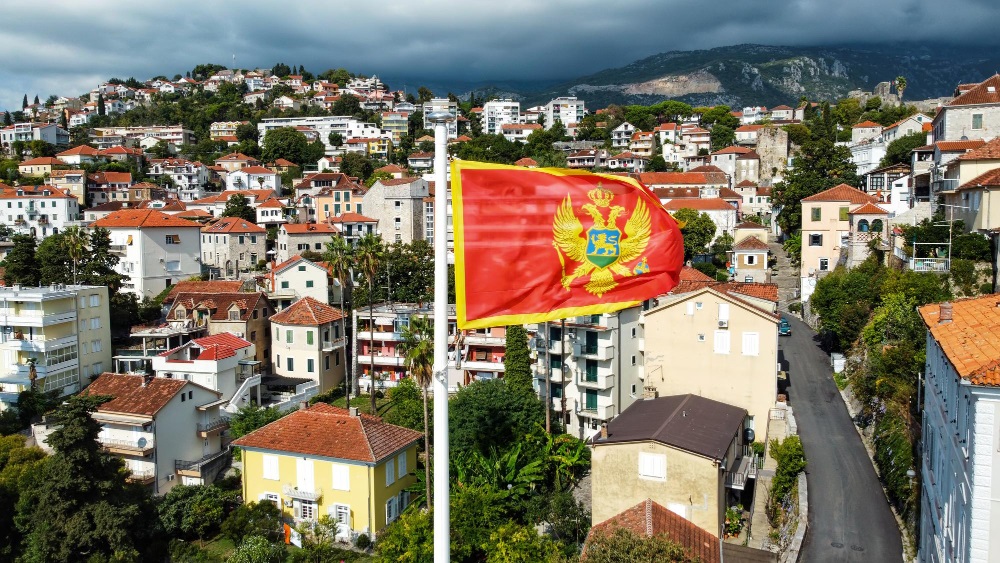
  • Almancil- The Beating Heart of Portugal’s Algarve Property Market

    Almancil- The Beating Heart of Portugal’s Algarve Property Market

    The Centre of the Algarve’s Golden Triangle

    Tucked discreetly between the shimmering Atlantic and the inland hills of southern Portugal, Almancil is the understated cornerstone of one of Europe’s most desirable coastal regions. To the uninitiated, it may appear a small, charming Algarve town; to those who know the region, it is the linchpin that connects Quinta do Lago, Vale do Lobo, and the surrounding countryside — collectively known as the Algarve’s Golden Triangle.

    For discerning investors and international buyers, Almancil has become synonymous with privilege and potential. It combines proximity to luxury, access to infrastructure, and authentic Portuguese character in equal measure. It’s where the Algarve’s global class shops, dines, and signs its property contracts — the functional and cultural hub of a coast renowned for sophistication.

    Unlike the flashier enclaves that orbit it, Almancil has managed to preserve a genuine community atmosphere, even as it supports some of the most valuable real estate in southern Europe. This delicate balance — between authenticity and affluence — lies at the heart of its enduring appeal.

    A Market Defined by Stability and Value

    Portugal’s Algarve has enjoyed more than a decade of sustained growth, and Almancil has been central to that momentum. According to data from the Instituto Nacional de Estatística (INE), average residential prices in Almancil stand at approximately €4,800 per square metre, a figure that rises sharply for luxury villas and new developments closer to Quinta do Lago or Vale do Lobo.

    Detached homes within a short drive of the coast command between €1.5 million and €3.5 million, while ultra-prime villas — particularly those with sea views or golf-front locations — can exceed €8 million. Modern apartments and townhouses within Almancil’s town centre or nearby developments such as The Crest or Almancil Villas typically range between €400,000 and €800,000.

    Crucially, the market’s price evolution has been steady rather than speculative. Annual appreciation of 5–7% has become typical, underpinned by organic demand rather than opportunistic short-term investors. International buyers account for over 75% of property transactions, led by British, Irish, French, Dutch, and Scandinavian nationals, followed more recently by Americans and Canadians seeking stability and lifestyle within the Eurozone.

    Connectivity: The Algarve’s Strategic Centre

    Almancil’s strategic location is central to its property market resilience. Faro International Airport lies just 15 minutes away, offering direct flights to major European and transatlantic hubs, including London, Paris, Frankfurt, Amsterdam, and New York. The A22 motorway, connecting Spain to western Portugal, passes nearby, linking Almancil effortlessly to the entire region.

    For residents, this means seamless access — not only to the Algarve’s beaches and golf courses but to the rest of Europe. For investors, it ensures year-round liquidity and rental potential.

    Beyond its physical connectivity, Almancil sits at the intersection of luxury and logistics. Its proximity to the Algarve’s most exclusive resorts means it hosts the infrastructure that sustains them — from international schools and gourmet supermarkets to bespoke interior designers and financial advisors.

    This dual identity — practical hub and prestige postcode — gives Almancil an advantage few destinations can match.

    The Pulse of the Golden Triangle

    To understand Almancil is to understand the Golden Triangle, an area that encompasses Quinta do Lago, Vale do Lobo, and parts of Vilamoura. Collectively, these neighbourhoods represent the Algarve’s most affluent corridor — a pocket of consistent sunshine, manicured golf courses, and oceanfront villas.

    Almancil provides the essential link between these resorts. Its roads connect their gated communities to the rest of the Algarve, its shops and services cater to their residents, and its local government supports their infrastructure.

    Within a few kilometres of Almancil’s centre lie some of the Algarve’s most famous amenities:

    Quinta Shopping – an elegant retail and dining complex frequented by international visitors.

    Apollonia Supermarket – the region’s most comprehensive luxury grocery and delicatessen.

    Apolónia Wine Cellar – a showcase of Portuguese and international vintages.

    Escola Internacional de Vale Verde and Nobel Algarve British International School – top-tier education options serving expatriate families.

    In short, Almancil is the working heart of the Algarve’s luxury ecosystem.

    Architecture and Ambience

    While Quinta do Lago and Vale do Lobo may boast modernist architecture and coastal vistas, Almancil itself retains a distinctly Portuguese identity. Whitewashed houses, traditional tiles (azulejos), and cobbled streets evoke a time before the tourism boom, yet contemporary design increasingly punctuates its skyline.

    Boutique developers are blending old and new — refurbishing 20th-century villas into sleek family homes with solar panels, landscaped gardens, and private pools. Sustainable architecture is now a hallmark of Almancil’s new projects.

    According to local estate agencies, properties with Class A or A+ energy ratings command 10–15% premiums over standard homes. Solar energy systems, heat pumps, and EV charging stations have become standard features in modern builds.

    This architectural evolution has not erased Almancil’s soul. Rather, it has elevated it — preserving authenticity while meeting international expectations.

    The Local Economy: Luxury with Longevity

    Unlike many resort towns that ebb and flow with the tourist season, Almancil’s economy operates year-round. It is home to hundreds of service businesses, from property management firms and legal consultancies to design studios and construction companies.

    This stability creates a self-sustaining local ecosystem that supports long-term residency — a factor that gives investors confidence. Employment remains steady, skilled trades are in demand, and the municipality continues to invest in public amenities.

    Tourism remains vital, of course. Almancil benefits directly from its proximity to the Algarve’s most famous golf courses, beaches, and hotels. The region welcomes over five million international visitors annually, and many of them pass through Almancil en route to their accommodation. The steady flow of high-spending visitors ensures a thriving rental market for both short- and long-term stays.

    Rental yields typically range from 4% to 6%, climbing to 8% for premium holiday properties during peak months.

    Lifestyle: The Best of Both Worlds

    Living in Almancil offers a rare blend of convenience and culture. Within ten minutes’ drive, residents can move from coastal glamour to rustic tranquillity. The town itself provides everything required for daily life: international healthcare, gourmet dining, boutiques, and art galleries — yet it retains the warmth of a Portuguese provincial community.

    For dining, Almancil punches above its weight. It is home to two Michelin-starred restaurants — Vila Joya and Henrique Leis — along with dozens of celebrated local eateries serving Algarvean seafood and regional wines.

    Beaches such as Praia do Garrão, Praia do Ancão, and Praia da Quinta do Lago are minutes away, accessible via winding roads that pass orange groves and pine forests. Outdoor living defines the local rhythm — golf, tennis, cycling, and sailing are year-round pursuits.

    Healthcare is first-rate. Private clinics and hospitals, including Hospital Particular do Algarve, operate within 20 minutes of the town centre. The Algarve’s healthcare system is widely regarded as among Europe’s best, a key draw for retirees.

    Education, too, is exceptional. The Nobel Algarve British International School and Vale Verde International School provide English curricula, while local bilingual schools offer Portuguese and European education standards.

    Sustainability and the Future

    Almancil’s municipal council, part of the Loulé municipality, has been at the forefront of sustainability initiatives in Portugal. The region’s master plans now prioritise green building, water conservation, and environmental protection.

    Developments are required to include eco-friendly systems, from solar water heating to greywater recycling. The area’s golf courses — often criticised elsewhere for their environmental impact — have undergone extensive adaptation, introducing low-water grass species and modern irrigation.

    Loulé Municipality’s Climate Adaptation Strategy aims to make Almancil and its surroundings carbon-neutral within the next decade. Infrastructure projects include expanded cycling paths, electric vehicle networks, and investment in solar-powered public buildings.

    For investors, sustainability is not merely a moral concern; it is a value driver. Homes with advanced energy efficiency now sell faster and command higher resale values, reflecting changing global preferences.

    The Buying Process: Transparent and Efficient

    Portugal’s property laws remain among the most transparent in Europe, and Almancil’s real estate market is particularly well-organised.

    The process is straightforward:

    Obtain a Portuguese Tax Identification Number (NIF).

    Engage a local lawyer (advogado) to conduct due diligence and confirm title.

    Sign a Promissory Contract (CPCV) with a 10% deposit, which legally binds both buyer and seller.

    Complete the transaction at a public notary (Escritura Pública) and register ownership with the Conservatória do Registo Predial (Land Registry).

    Purchase costs total around 8–10% of the agreed price, covering transfer tax (IMT), stamp duty, and legal fees.

    Annual municipal property tax (IMI) is modest, averaging 0.3–0.5% of the property’s rateable value. For investors, Portugal’s Non-Habitual Resident (NHR) regime remains highly attractive, offering preferential tax treatment on certain income streams for up to ten years.

    Foreign Ownership and Market Confidence

    There are no restrictions on foreign ownership in Portugal. This openness, combined with political stability, transparent governance, and EU membership, provides confidence rarely found in southern Europe.

    Portugal’s economy continues to outperform expectations, supported by strong tourism, renewable energy exports, and foreign investment. Its Global Peace Index ranking among the world’s top five safest countries reinforces its reputation as a secure destination for both capital and family life.

    International investors are further reassured by Portugal’s extensive double taxation treaties, protecting income earned abroad. Financing options are readily available, with banks such as Millennium bcp, Novo Banco, and Santander Portugal offering competitive mortgage packages to non-residents — typically up to 80% of valuation.

    Comparative Advantage: Why Almancil Stands Apart

    While its coastal neighbours command the limelight, Almancil offers the kind of value and versatility that appeals to serious investors.

    Accessibility: Immediate proximity to Faro Airport and the A22 motorway ensures unparalleled connectivity.

    Authenticity: A living Portuguese town with year-round activity, unlike purely resort-based communities.

    Diversity: From modern apartments to sprawling estates, the property stock caters to a full spectrum of buyers.

    Resilience: Prices are underpinned by genuine demand, not speculative cycles.

    Infrastructure: Outstanding healthcare, education, and security enhance both lifestyle and asset security.

    Where Quinta do Lago and Vale do Lobo represent exclusivity, Almancil represents accessibility — the entry point into the Algarve’s most prestigious lifestyle, but with its own identity and vibrancy.

    The Broader Market Outlook

    The Algarve continues to attract global capital, and Almancil’s central role ensures it will remain at the forefront of this momentum. Analysts expect property prices in the area to grow at a sustainable 4–6% annually, driven by limited supply and enduring international demand.

    New development is carefully controlled, focusing on design integrity and environmental impact. This constraint reinforces scarcity — and in property, scarcity underpins value.

    Meanwhile, the digital transformation of the region’s economy — from high-speed internet expansion to remote-working infrastructure — has opened new opportunities. Professionals relocating from northern Europe increasingly view Almancil as a practical year-round base.

    With the Algarve’s population growing and infrastructure investments accelerating, the fundamentals remain firmly in place for steady appreciation.

    The Lifestyle Premium

    Ultimately, the Algarve’s success — and Almancil’s particular strength — lies in quality of life. Residents enjoy over 300 days of sunshine annually, clean air, low crime, and a pace of life that blends sophistication with serenity.

    Yet this is not an isolated paradise. It is a connected, cultured, and confident region that balances European modernity with Portuguese tradition. Almancil embodies that balance perfectly — offering the amenities of a cosmopolitan centre within the tranquillity of a small town.

    As one local agent recently remarked, “Almancil isn’t where the Algarve begins or ends — it’s where everything comes together.” For investors and buyers alike, that convergence represents opportunity, security, and a sense of place.

    The Verdict

    For half a century, Almancil has been the Algarve’s quiet cornerstone — the place where the region’s luxury lifestyle meets its local heart. It has adapted gracefully to global trends, attracting international attention without losing authenticity.

    For investors, Almancil offers all the advantages of the Algarve’s prestige markets — from strong yields to capital growth — but with greater flexibility and year-round depth. For homeowners, it delivers comfort, convenience, and community.

    As Portugal’s property market continues to attract global acclaim, Almancil stands poised not just to benefit but to lead. It remains the heartbeat of the Algarve’s golden coast — and the smart investor’s choice for beauty, stability, and long-term value.

    Financial Disclaimer: The information provided in this article is for general informational purposes only and does not constitute financial advice. While every effort has been made to ensure the accuracy of the content, market conditions may change, and unforeseen risks may arise. The author and publisher of this article do not accept liability for any losses or damages arising directly or indirectly from the use of the information contained herein.
    Copyright 2025: portugalhousesforsale.com
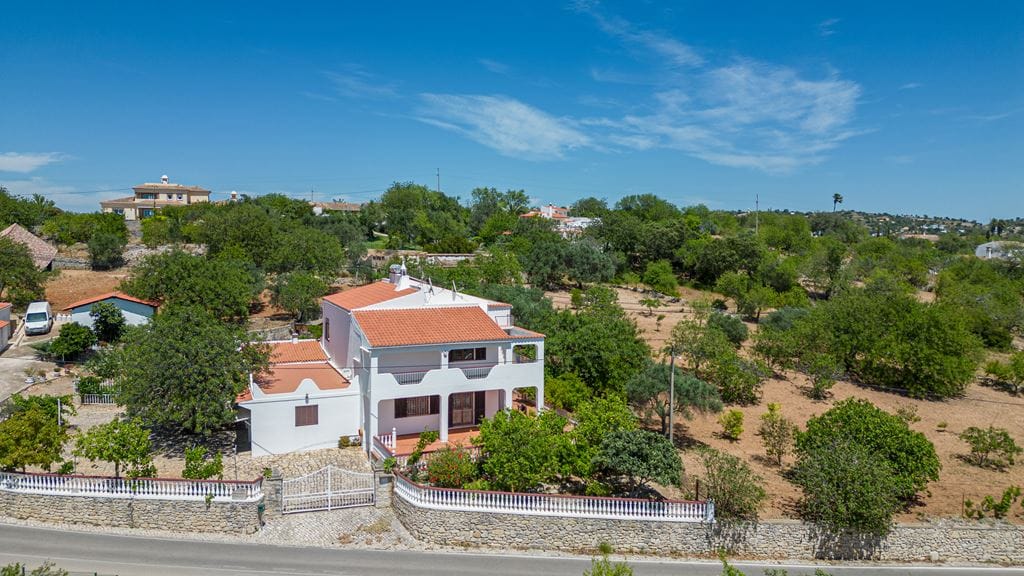
  • Portugal Houses for Sale: The Golden Opportunity in Europe’s Most Reliable Property Market

    Portugal Houses for Sale: The Golden Opportunity in Europe’s Most Reliable Property Market

    By Portugalhoussesforsale Property Desk

    Portugal’s Enduring Allure for the International Buyer

    Among Europe’s sun-washed nations, Portugal has emerged as a quietly triumphant story in global property. The phrase “Portugal houses for sale” now conjures not simply visions of coastal retreats or whitewashed cottages, but a byword for stability, lifestyle, and secure capital preservation.

    For the international investor or the buyer with an eye for value, Portugal has assumed a stature that goes beyond its postcard beauty. The country’s deft balance between affordability and aspiration, its political stability within the Eurozone, and its commitment to sustainable growth have made it one of the most trusted real estate markets in Europe.

    From the cosmopolitan avenues of Lisbon to the honeyed hills of the Algarve and the surf-lined villages of the Silver Coast, Portugal’s housing landscape offers range, reliability, and return. And as global investors pivot towards quality of life and tangible assets in an uncertain economic era, the Portuguese house has become both a refuge and a prudent investment.

    A Market Underpinned by Confidence

    The strength of Portugal’s housing market lies in its fundamentals. According to the Instituto Nacional de Estatística (INE), average residential property prices increased steadily over the past year, a continuation of the disciplined rise that has characterised the past decade. Unlike the speculative surges witnessed elsewhere in southern Europe, Portugal’s growth has been measured — organic rather than inflated.

    Across the country, the average price per square metre stands at around €2,300, but this is a broad figure encompassing everything from urban apartments to countryside homes. In practice, buyers encounter a diverse landscape of values:

    In Lisbon, modernised family houses or terraced townhomes in sought-after districts such as Campo de Ourique or Estrela average €5,000–€7,000 per sqm, while larger detached houses in Cascais or Sintra can reach €6,000–€8,000 per sqm.

    In Porto, Portugal’s cultural second city, characterful properties along the Douro or in Foz do Douro fetch between €3,000 and €4,500 per sqm, often renovated to a high contemporary standard.

    Along the Algarve, detached homes in prime coastal zones such as Quinta do Lago or Vale do Lobo frequently exceed €7,000–€9,000 per sqm, while inland or lesser-known towns offer substantial houses from €2,000 per sqm upwards.

    That range of entry points — from modest townhouses in historic settings to grand coastal villas — is precisely what makes Portugal’s market so broad-based. It is simultaneously accessible and aspirational.

    Who’s Buying: An International Cast

    Portugal’s appeal transcends national boundaries. While British and French buyers remain prominent, they now share the stage with investors from Germany, Sweden, the Netherlands, Canada, and the United States.

    Figures from Savills Portugal and Fine & Country suggest that foreign purchasers account for roughly 15–20% of all property transactions nationally, and a far higher proportion in Lisbon and the Algarve. The broadening profile of buyers — from retirees to remote professionals and institutional investors — underscores Portugal’s transformation from a niche market to a global one.

    The end of the original Golden Visa programme for property investors has not dampened enthusiasm. Portugal’s fundamental advantages — safety, climate, rule of law, and low comparative cost of living — remain intact. The country’s ongoing Non-Habitual Resident (NHR) regime, although refined, still offers attractive fiscal conditions for new residents, particularly retirees and entrepreneurs.

    Lisbon: The Economic Engine and Cultural Heart

    Lisbon’s property market remains the country’s bellwether. Once undervalued, the city has ascended into Europe’s premier league, joining the ranks of Barcelona and Milan for lifestyle buyers and global investors alike.

    The capital’s rejuvenation has been remarkable. From the revitalised riverfront of Alcântara to the café-lined streets of Príncipe Real, Lisbon has become an epicentre of design, tech, and tourism. Its architectural mix — tiled façades, wrought-iron balconies, and modern refurbishments — has proved irresistible to investors seeking both charm and yield.

    Average prices across Lisbon have stabilised after years of double-digit growth. Apartments in historic Alfama or Chiado hover around €6,000 per sqm, while houses in Cascais or Estoril, 30 minutes west of the capital, can exceed €1.5 million.

    Rental demand remains robust, particularly in the corporate and expatriate sectors. Yields of 4–6% are typical, with higher returns possible in well-managed, short-term rental properties. Lisbon’s steady flow of tourism, international business, and digital nomads has cemented its role as Portugal’s commercial and cultural anchor.

    Porto: Heritage and Momentum

    Further north, Porto’s property market reflects a different rhythm — gentler perhaps, but increasingly compelling. Known for its riverside charm, baroque architecture, and wine cellars, Porto has become a magnet for investors seeking authenticity coupled with growth potential.

    Prices here remain competitive: the city average sits at €3,500 per sqm, rising to €4,500 in prime areas such as Foz do Douro. Renovated houses in the central Baixa district attract international buyers who appreciate the blend of old-world charm and modern amenity.

    The city’s expanding university and tech sectors underpin steady domestic demand, while improved infrastructure — including an upgraded airport and metro extensions — supports long-term growth. For those seeking capital appreciation without Lisbon’s price tag, Porto represents a solid, well-grounded choice.

    The Algarve: A Sun-Kissed Stronghold

    If Lisbon and Porto provide urban vitality, the Algarve offers pure escapism. Yet beneath the postcard-perfect beaches and golf courses lies one of Europe’s most resilient housing markets.

    The Algarve’s appeal endures not merely because of its climate — over 300 days of sunshine annually — but because of its consistency. Its limited building zones and strong municipal planning controls have prevented overdevelopment. As a result, quality housing remains finite, and prices hold firm.

    According to Turismo de Portugal, the Algarve accounts for nearly 40% of all overnight tourist stays in the country, making it a powerhouse of year-round rental income. Villas and detached houses near Albufeira, Vilamoura, and Lagos routinely achieve rental yields of 5–7%, while luxury estates in the Golden Triangle maintain near-permanent occupancy in summer months.

    Prices vary dramatically across the region:

    Prime coastal zones (Quinta do Lago, Vale do Lobo, Vilamoura): €3 million–€10 million for luxury houses.

    Mid-range areas (Lagos, Alvor, Carvoeiro): €500,000–€1.5 million.

    Inland Algarve (Silves, Monchique): €300,000–€600,000.

    What unites these sub-markets is resilience. Even during global downturns, the Algarve’s combination of limited supply and global appeal has sustained its reputation as Europe’s sunshine investment capital.

    The Silver Coast and Alentejo: The Smart Alternatives

    Beyond the Algarve’s established glamour, Portugal’s Silver Coast and Alentejo have quietly come into their own. Stretching north from Lisbon, the Silver Coast’s Atlantic views, charming towns, and cultural depth offer an emerging investment frontier.

    Here, towns like Nazaré, Peniche, and Óbidos present an appealing blend of affordability and authenticity. Average house prices remain around €2,000–€2,500 per sqm, roughly one-third below comparable Algarve listings. Yet infrastructure is improving, and tourism is on the rise, making this an attractive prospect for mid-term capital growth.

    Meanwhile, Alentejo, known for its rolling vineyards and traditional villages, has begun to attract lifestyle buyers seeking privacy and space. Restored farmhouses (herdades) on expansive plots sell from €400,000 upwards, while eco-conscious developments near Comporta command much higher prices, driven by Lisbon-based buyers and international design investors.

    Legal Clarity and Ownership Protection

    One of Portugal’s quiet advantages is its property system’s simplicity. The country’s legal framework ensures full ownership rights for both residents and foreigners. Transactions are conducted transparently under the supervision of bilingual lawyers and licensed notaries.

    A typical purchase follows a well-defined path: after legal checks, both parties sign a promissory contract (Contrato de Promessa de Compra e Venda), accompanied by a 10% deposit. Completion takes place before a notary, when the deed (Escritura Pública) is registered at the Conservatória do Registo Predial (Land Registry).

    Buyers should budget 8–10% in total transaction costs, which include property transfer tax (IMT), stamp duty, and legal fees. The annual municipal tax (IMI) averages 0.3–0.5%, depending on the location.

    Non-resident financing is readily available through Portuguese banks such as Novo Banco, Millennium bcp, and Banco Santander, which typically lend up to 70–80% of the property’s value. Interest rates remain competitive, and official online tools such as the Bank of Portugal’s mortgage simulator help buyers plan effectively.

    Sustainability and the Modern Buyer

    Portugal’s housing sector is increasingly defined by its environmental consciousness. Energy performance certifications (EPCs) are mandatory, and buyers now actively seek properties with Class A or A+ ratings.

    Developers have embraced renewable technologies, from solar heating and heat pumps to rainwater collection and thermal insulation. In sun-drenched regions like the Algarve and Alentejo, solar energy integration has become commonplace, reducing both emissions and long-term costs.

    Municipalities including Cascais, Lagos, and Loulé offer incentives for sustainable construction and retrofitting. These initiatives not only appeal to eco-minded investors but also enhance long-term resale value.

    The Fiscal Landscape: Transparency and Favourable Conditions

    Portugal’s taxation system is clear and internationally competitive. The Non-Habitual Resident (NHR) regime, while evolving, still offers reduced taxation on foreign-sourced income for qualifying residents.

    Capital gains tax is applied only on realised profits, with exemptions for reinvestment in another principal residence. There are no restrictions on repatriating funds abroad, and inheritance laws are relatively straightforward compared to neighbouring jurisdictions.

    Portugal’s double taxation treaties with the UK, US, Canada, and most EU nations ensure that foreign investors avoid paying tax twice on the same income. Combined with moderate transaction costs and low annual ownership expenses, this framework continues to position Portugal among Europe’s most investor-friendly property markets.

    Economic Context: A Country in its Prime

    Behind the steady rise of Portugal’s property market lies a stable and diversifying economy. Over the past decade, Portugal has evolved from a tourism-dependent destination into a hub for technology, renewable energy, and creative industries.

    Lisbon’s start-up ecosystem — often dubbed “the new Berlin of the Atlantic” — has attracted international capital and talent, while Porto’s manufacturing and logistics base continues to expand. The Algarve, traditionally leisure-oriented, is diversifying into wellness, health, and sustainable tourism.

    This broadening of the economic base provides the housing market with durability. Jobs attract residents, residents create demand, and demand sustains value. Portugal’s ability to maintain this virtuous cycle has made it a standout performer in southern Europe.

    Comparing Portugal with Other European Markets

    For international investors weighing Mediterranean options, Portugal continues to offer an enviable equation.

    In France, high transaction and inheritance taxes can deter buyers. In Italy, bureaucracy remains cumbersome. Spain, while robust, has seen greater regional fluctuations.

    Portugal, by contrast, delivers reliability with charm. It combines accessible pricing, straightforward legal processes, and a strong sense of community. Its property market is transparent, its infrastructure modern, and its international reputation spotless.

    For those seeking a home rather than a headline, Portugal provides both.

    The Lifestyle Dividend

    Portugal’s appeal transcends balance sheets. The climate, cuisine, and culture confer a lifestyle return that amplifies every financial calculation.

    The country enjoys one of Europe’s highest sunshine counts — over 300 days annually in the south — alongside some of its lowest crime rates. The Global Peace Index consistently ranks Portugal among the top five safest nations worldwide.

    Healthcare, through the Serviço Nacional de Saúde (SNS) and a robust private system, is efficient and affordable. Education, including a growing network of international schools, makes relocation viable for families. English is widely spoken, easing integration for foreign residents.

    Perhaps most importantly, the Portuguese temperament — understated, welcoming, and courteous — fosters a sense of belonging that money alone cannot buy.

    The Outlook: Measured Growth, Long-Term Value

    Analysts predict Portugal’s housing market will continue its steady upward trajectory. With limited land supply in key regions, expanding global recognition, and consistent foreign interest, the country’s fundamentals remain exceptionally sound.

    Price growth is expected to moderate slightly, reflecting maturity rather than fatigue. Yet rental demand, infrastructure improvements, and rising international migration suggest a continued positive slope for both capital and yield.

    Portugal’s path forward looks reassuringly predictable — and in an unpredictable world, that predictability is itself a luxury.

    The Verdict

    Portugal has achieved what many nations aspire to: a housing market that is both aspirational and attainable, profitable yet principled.

    For investors, it offers clarity and resilience; for homeowners, lifestyle and legacy. Its balance between beauty and bureaucracy — a Mediterranean aesthetic within a northern European rule-of-law framework — is precisely what has propelled Portugal from hidden gem to headline act.

    In the global property landscape, few phrases carry as much quiet authority as “Portugal houses for sale.” They signify a market where sunshine meets substance, and where ownership remains one of life’s more rewarding certainties.

    Financial Disclaimer: The information provided in this article is for general informational purposes only and does not constitute financial advice. While every effort has been made to ensure the accuracy of the content, market conditions may change, and unforeseen risks may arise. The author and publisher of this article do not accept liability for any losses or damages arising directly or indirectly from the use of the information contained herein.

    Copyright 2025: portugalhousesforsale.com