From the PortugalHousesForSale Property Desk
A Nation Where Quality of Life Meets Financial Sense
There are few countries in Europe today that manage to balance economic stability, lifestyle appeal, and investment opportunity quite as elegantly as Portugal. Once a well-kept secret for retirees and holiday homeowners, it has in recent years evolved into one of the world’s most desirable places to live — a magnet not only for sun-seekers but for digital entrepreneurs, families, and investors searching for security in an uncertain global landscape.
To live in Portugal today is to enjoy a rare blend of advantages: a safe society, a mild climate, a modern infrastructure, and a cost of living that remains among the most competitive in Western Europe. Add to this the country’s stable economy, welcoming residency policies, and resilient property market, and it becomes clear why Portugal’s appeal is as financial as it is emotional.
While much of Europe wrestles with rising costs, political division, or social fatigue, Portugal continues to project calm confidence. It is not just a place to holiday, but a place to put down roots — and for many, a place to begin again.
A European Beacon of Stability
Portugal’s reputation for stability is more than image; it is measurable. The Global Peace Index consistently ranks it among the five safest countries in the world, placing it ahead of traditional “safe havens” like Switzerland and Canada. For investors and families alike, that statistic has tangible meaning: a country where property, business, and everyday life can flourish without fear of sudden upheaval.
Crime rates are among the lowest in Europe. Political institutions function predictably. The judiciary is transparent, and property rights are rigorously upheld. That combination — order, safety, and clarity — has become the bedrock of Portugal’s attraction.
It is also reflected in its economy. Portugal has emerged from the austerity of the early 2010s to become one of the eurozone’s quiet success stories. Growth is steady, debt manageable, and exports strong. Lisbon and Porto have established themselves as centres of innovation and tech investment, drawing talent and capital from across Europe.
For those seeking a home abroad, the message is simple: Portugal offers security not only of lifestyle but of investment.
Sunshine, Sea and Space
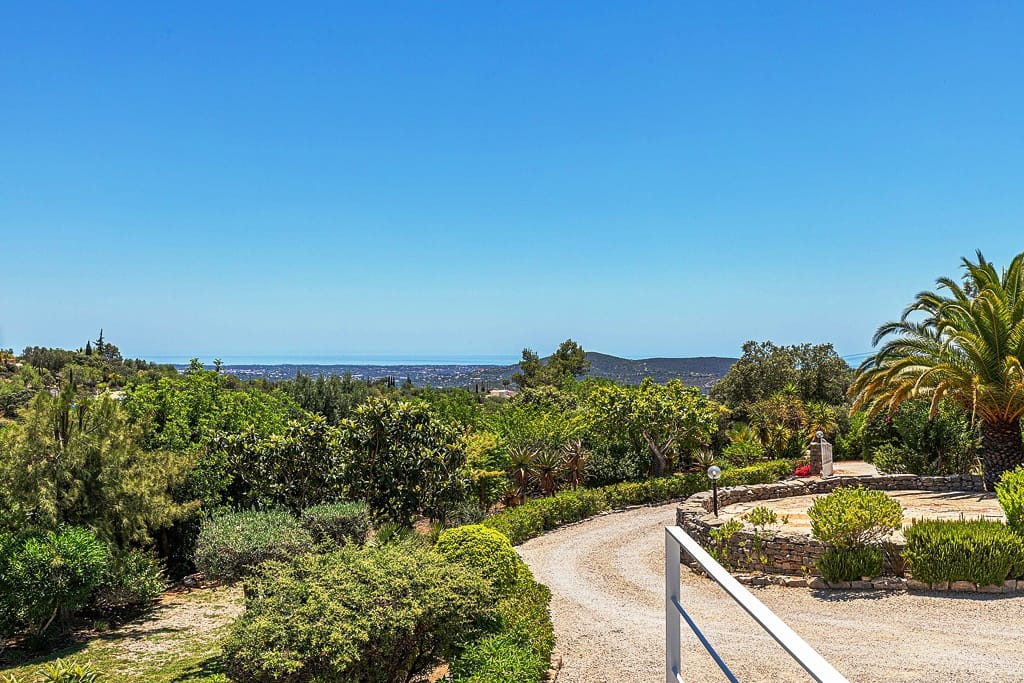
If numbers tell one story, Portugal’s landscape tells another. The country enjoys over 300 days of sunshine a year, an Atlantic light that softens everything it touches. Summers are long and golden; winters mild enough to make outdoor living possible year-round.
From north to south, Portugal’s geography offers astonishing variety. The Algarve is synonymous with sun-kissed beaches, whitewashed villages, and luxury golf estates. Lisbon perches elegantly above the Tagus River, a capital with the soul of a seaside town. Porto, in the north, mixes historic grandeur with a youthful creative pulse. Inland, the Alentejo rolls out a tapestry of cork forests and olive groves, while the Douro Valley carves one of Europe’s most beautiful wine landscapes.
For those escaping northern climates, this is a revelation. The ability to swim in the Atlantic in October, dine outdoors in February, or walk through vineyards in March changes the rhythm of life completely.
Even more important, space is plentiful. With a population of just over ten million and a land area comparable to England and Wales combined, Portugal rarely feels crowded. Here, quality of life is measured not by luxury, but by room to breathe.
A Warm Welcome for Newcomers
Portugal’s reputation for hospitality is well earned. The Portuguese are instinctively kind and respectful, greeting foreigners not as outsiders but as future neighbours.
For decades, the country has cultivated immigration and residency policies that reflect this openness. Non-EU residents can obtain visas through the D7 programme (for passive income earners), the Digital Nomad Visa (for remote professionals), or the restructured Golden Visa (now focused on non-residential investment).
Perhaps the most influential initiative has been the Non-Habitual Resident (NHR) scheme. Designed to attract foreign retirees and skilled professionals, it offers significant tax advantages on foreign income for ten years, alongside exemptions on certain pensions and capital gains. Even with proposed reforms, Portugal remains among Europe’s most fiscally welcoming destinations.
The bureaucratic process, while thorough, is relatively straightforward compared with other EU states. English-speaking lawyers and estate agents are readily available, and local councils are accustomed to dealing with international residents.
The result is a community where integration feels natural. Today, Portugal hosts thriving expatriate populations from Britain, France, the Netherlands, Germany, and increasingly, the United States. Walk through a café in Cascais or Tavira, and you’ll hear a dozen accents sharing the same easy rhythm of life.
A Property Market Built on Substance
The Portuguese property market has become a cornerstone of the nation’s success — dynamic yet disciplined, international yet grounded.
According to data from the Instituto Nacional de Estatística (INE), average property prices have risen steadily for over a decade, typically between 8 and 10 per cent per year. Crucially, this growth has been driven by genuine demand rather than speculation.
Lisbon remains the priciest market, with city-centre homes averaging €5,000–€6,000 per square metre. The Algarve’s coastal hotspots — Quinta do Lago, Vilamoura, Vale do Lobo — can exceed €7,000 per sqm, while Porto averages around €4,000. In contrast, the Silver Coast and inland Alentejo remain affordable, with prices as low as €1,800 per sqm in some towns.
Financing remains accessible. Portuguese banks routinely lend up to 80% of property value to foreign buyers, often with favourable interest rates and long repayment terms. Transaction costs, including legal fees, stamp duty, and transfer tax (IMT), typically total 8–10% of the purchase price.
Property taxes are moderate, annual council rates (IMI) average 0.3–0.5% of assessed value, and there is no inheritance tax for direct family members.
In short, it is a market that rewards prudence. Prices grow at a sustainable pace, rental yields remain solid, and liquidity is supported by a deep pool of international buyers.
Cost of Living: Europe’s Value Leader
Portugal offers a standard of living that far outstrips its costs. According to Eurostat, the cost of living here is roughly 30% below the European Union average.
A comfortable life — housing, dining, healthcare, and leisure — can be maintained on half of what one might spend in northern Europe. A good local restaurant meal rarely exceeds €20 per person, a coffee is under €2, and utilities remain among the lowest in Western Europe.
Public transport is efficient and inexpensive, with monthly metro and bus passes in Lisbon costing around €40. Groceries, domestic services, and insurance are similarly affordable.
Even property-related costs — from council taxes to maintenance — are moderate compared with those in France, Spain, or Italy. For retirees and remote workers on fixed incomes, this economic balance is transformative. It allows for comfort without compromise — a luxury in itself.
Healthcare and Education Excellence
Portugal’s public healthcare system, the Serviço Nacional de Saúde (SNS), provides universal coverage and is widely regarded as efficient and accessible. Wait times can be longer in rural areas, but private healthcare options are plentiful and affordable.
A comprehensive private insurance policy costs between €600 and €1,200 per year, offering access to modern hospitals and English-speaking doctors in all major cities. Facilities such as CUF, Hospital da Luz, and Lusíadas Saúde meet international standards.
Education, too, is strong. Lisbon, Porto, and the Algarve boast a growing number of international schools offering British, American, and IB curricula. Universities such as Nova School of Business and Economics and the University of Porto are globally recognised, attracting international students and faculty.
For families relocating to Portugal, these systems provide continuity and confidence. The combination of low crime, good schooling, and excellent healthcare makes the country one of the safest and smartest choices in Europe for raising children.
Digital Portugal: A Nation Reinvented
While many still picture Portugal through the lens of tradition — cobbled streets, fishing villages, Fado music — it is increasingly a country of innovation.
Lisbon has become one of Europe’s fastest-growing tech hubs, hosting Web Summit, the continent’s largest technology conference. Porto has established a thriving start-up ecosystem, bolstered by university research and government-backed incubators.
Remote working has accelerated this transformation. Portugal’s Digital Nomad Visa allows professionals earning from abroad to live and work locally. Regions like Madeira, Ericeira, and Lagos have built communities catering specifically to digital professionals seeking connectivity and climate.
For investors, this influx of talent and entrepreneurship reinforces housing demand, particularly in mid-range urban markets. For residents, it means living in a country that combines heritage with modern ambition.
Culture, Cuisine and the Joy of the Everyday
Portugal’s cultural appeal is rooted in authenticity. It is a nation that modernised without losing its manners.
From the tiled façades of Lisbon to the azulejo-covered churches of Porto, history is omnipresent — but so is innovation. Contemporary art galleries, film festivals, and design collectives thrive alongside family-run bakeries and local wine cooperatives.
Food and wine are part of the rhythm of life. Every region has its specialities: Algarve seafood, Alentejo’s slow-cooked stews, Lisbon’s bacalhau à Brás, Porto’s famous francesinha. The country’s wines — Vinho Verde, Douro reds, Alentejo blends, and Port — now compete with the world’s best, yet remain remarkably affordable.
Markets remain central to daily life. The Mercado do Livramento in Setúbal, the Mercado da Ribeira in Lisbon, and dozens of smaller local markets provide fresh produce at prices that make home cooking a pleasure.
For many, this is the essence of the Portuguese experience — not luxury defined by excess, but by quality of living.
Regional Appeal: Choosing Your Portugal
Portugal’s charm lies in its diversity. Each region offers a different version of the good life.
Lisbon is cosmopolitan, sophisticated, and dynamic — perfect for professionals and investors seeking city life with sea views. Cascais, its elegant coastal neighbour, combines luxury villas with international schools and a marina lifestyle.
The Algarve, with its golden beaches and golf estates, remains the favourite among retirees and second-home owners. Towns like Lagos, Tavira, and Albufeira balance natural beauty with modern convenience.
Porto and the Douro Valley appeal to those drawn to architecture, wine, and authenticity. The Silver Coast, stretching from Nazaré to Peniche, is fast emerging as a family-friendly alternative to the Algarve.
Further south, the Alentejo coast and Setúbal Peninsula are now attracting international attention for their unspoiled beaches, vineyards, and proximity to Lisbon — often dubbed “the next Algarve.”
This breadth of choice means that every lifestyle finds its home here — from remote rural tranquillity to vibrant coastal sophistication.
Sustainability and the Future
Portugal has become a European leader in sustainability. Over half of its electricity now comes from renewable sources — primarily wind, hydro, and solar. Cities like Lisbon and Porto have introduced electric trams, bike networks, and low-emission zones.
In real estate, energy efficiency is now standard. Newly built homes must achieve Class A or better ratings, and developers are integrating solar panels, rainwater harvesting, and natural materials as part of mainstream design.
This environmental commitment is more than virtue; it’s value protection. Buyers increasingly prioritise sustainable homes, knowing that energy-efficient properties command higher resale prices and lower operating costs.
In a world where environmental consciousness shapes investment, Portugal’s green leadership enhances its credibility as a future-proof destination.
The Human Factor
Beyond policy, prices, and property, the real secret of Portugal’s appeal is emotional. It is found in the way life feels.
The Portuguese are measured in pace but rich in civility. Time here is still something to be savoured — whether over a morning espresso, a beach walk, or a glass of wine at sunset. The noise and rush that dominate much of modern Europe seem to dissipate on Portuguese soil.
This slower rhythm is not laziness but balance — a recognition that well-being lies not in having more, but in needing less.
That ethos seeps into everything: the architecture, the meals, the markets, even the way strangers greet you in the street. For newcomers, it is both refreshing and restorative.
The Verdict
Portugal’s story is no longer one of discovery but of confirmation. What was once whispered among travellers has now become a global consensus: Portugal is the best place in Europe to live, invest, and retire.
Its appeal rests on substance: political stability, safety, sunshine, affordability, and a deeply civilised way of life. Its property market offers reliable appreciation and rental opportunity. Its infrastructure supports both leisure and business. And its people embody the warmth that turns a destination into a home.
For investors, Portugal offers security with upside. For families, it offers opportunity with safety. For retirees, it offers comfort with dignity. And for everyone, it offers something increasingly rare — peace of mind.
In an age defined by uncertainty, Portugal stands quietly, confidently, as Europe’s calm corner — a nation where the benefits of living are both measurable and immeasurable.
Financial Disclaimer: The information provided in this article is for general informational purposes only and does not constitute financial advice. While every effort has been made to ensure the accuracy of the content, market conditions may change, and unforeseen risks may arise. The author and publisher of this article do not accept liability for any losses or damages arising directly or indirectly from the use of the information contained herein.
Copyright 2025: portugalhousesforsale.com