By Portugalhoussesforsale Property Desk
Portugal’s Enduring Allure for the International Buyer
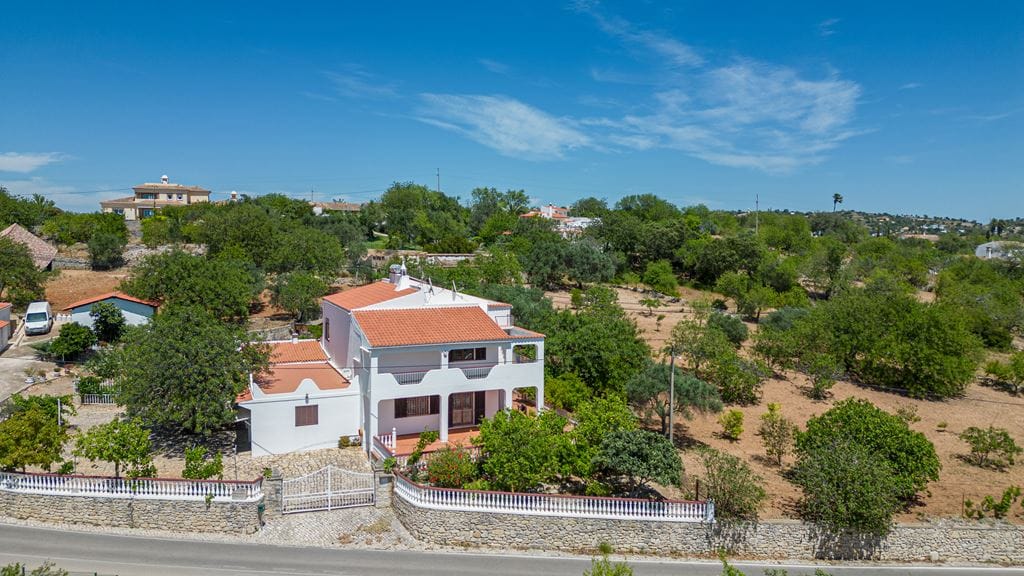
Among Europe’s sun-washed nations, Portugal has emerged as a quietly triumphant story in global property. The phrase “Portugal houses for sale” now conjures not simply visions of coastal retreats or whitewashed cottages, but a byword for stability, lifestyle, and secure capital preservation.
For the international investor or the buyer with an eye for value, Portugal has assumed a stature that goes beyond its postcard beauty. The country’s deft balance between affordability and aspiration, its political stability within the Eurozone, and its commitment to sustainable growth have made it one of the most trusted real estate markets in Europe.
From the cosmopolitan avenues of Lisbon to the honeyed hills of the Algarve and the surf-lined villages of the Silver Coast, Portugal’s housing landscape offers range, reliability, and return. And as global investors pivot towards quality of life and tangible assets in an uncertain economic era, the Portuguese house has become both a refuge and a prudent investment.
A Market Underpinned by Confidence
The strength of Portugal’s housing market lies in its fundamentals. According to the Instituto Nacional de Estatística (INE), average residential property prices increased steadily over the past year, a continuation of the disciplined rise that has characterised the past decade. Unlike the speculative surges witnessed elsewhere in southern Europe, Portugal’s growth has been measured — organic rather than inflated.
Across the country, the average price per square metre stands at around €2,300, but this is a broad figure encompassing everything from urban apartments to countryside homes. In practice, buyers encounter a diverse landscape of values:
In Lisbon, modernised family houses or terraced townhomes in sought-after districts such as Campo de Ourique or Estrela average €5,000–€7,000 per sqm, while larger detached houses in Cascais or Sintra can reach €6,000–€8,000 per sqm.
In Porto, Portugal’s cultural second city, characterful properties along the Douro or in Foz do Douro fetch between €3,000 and €4,500 per sqm, often renovated to a high contemporary standard.
Along the Algarve, detached homes in prime coastal zones such as Quinta do Lago or Vale do Lobo frequently exceed €7,000–€9,000 per sqm, while inland or lesser-known towns offer substantial houses from €2,000 per sqm upwards.
That range of entry points — from modest townhouses in historic settings to grand coastal villas — is precisely what makes Portugal’s market so broad-based. It is simultaneously accessible and aspirational.
Who’s Buying: An International Cast
Portugal’s appeal transcends national boundaries. While British and French buyers remain prominent, they now share the stage with investors from Germany, Sweden, the Netherlands, Canada, and the United States.
Figures from Savills Portugal and Fine & Country suggest that foreign purchasers account for roughly 15–20% of all property transactions nationally, and a far higher proportion in Lisbon and the Algarve. The broadening profile of buyers — from retirees to remote professionals and institutional investors — underscores Portugal’s transformation from a niche market to a global one.
The end of the original Golden Visa programme for property investors has not dampened enthusiasm. Portugal’s fundamental advantages — safety, climate, rule of law, and low comparative cost of living — remain intact. The country’s ongoing Non-Habitual Resident (NHR) regime, although refined, still offers attractive fiscal conditions for new residents, particularly retirees and entrepreneurs.
Lisbon: The Economic Engine and Cultural Heart
Lisbon’s property market remains the country’s bellwether. Once undervalued, the city has ascended into Europe’s premier league, joining the ranks of Barcelona and Milan for lifestyle buyers and global investors alike.
The capital’s rejuvenation has been remarkable. From the revitalised riverfront of Alcântara to the café-lined streets of Príncipe Real, Lisbon has become an epicentre of design, tech, and tourism. Its architectural mix — tiled façades, wrought-iron balconies, and modern refurbishments — has proved irresistible to investors seeking both charm and yield.
Average prices across Lisbon have stabilised after years of double-digit growth. Apartments in historic Alfama or Chiado hover around €6,000 per sqm, while houses in Cascais or Estoril, 30 minutes west of the capital, can exceed €1.5 million.
Rental demand remains robust, particularly in the corporate and expatriate sectors. Yields of 4–6% are typical, with higher returns possible in well-managed, short-term rental properties. Lisbon’s steady flow of tourism, international business, and digital nomads has cemented its role as Portugal’s commercial and cultural anchor.
Porto: Heritage and Momentum
Further north, Porto’s property market reflects a different rhythm — gentler perhaps, but increasingly compelling. Known for its riverside charm, baroque architecture, and wine cellars, Porto has become a magnet for investors seeking authenticity coupled with growth potential.
Prices here remain competitive: the city average sits at €3,500 per sqm, rising to €4,500 in prime areas such as Foz do Douro. Renovated houses in the central Baixa district attract international buyers who appreciate the blend of old-world charm and modern amenity.
The city’s expanding university and tech sectors underpin steady domestic demand, while improved infrastructure — including an upgraded airport and metro extensions — supports long-term growth. For those seeking capital appreciation without Lisbon’s price tag, Porto represents a solid, well-grounded choice.
The Algarve: A Sun-Kissed Stronghold
If Lisbon and Porto provide urban vitality, the Algarve offers pure escapism. Yet beneath the postcard-perfect beaches and golf courses lies one of Europe’s most resilient housing markets.
The Algarve’s appeal endures not merely because of its climate — over 300 days of sunshine annually — but because of its consistency. Its limited building zones and strong municipal planning controls have prevented overdevelopment. As a result, quality housing remains finite, and prices hold firm.
According to Turismo de Portugal, the Algarve accounts for nearly 40% of all overnight tourist stays in the country, making it a powerhouse of year-round rental income. Villas and detached houses near Albufeira, Vilamoura, and Lagos routinely achieve rental yields of 5–7%, while luxury estates in the Golden Triangle maintain near-permanent occupancy in summer months.
Prices vary dramatically across the region:
Prime coastal zones (Quinta do Lago, Vale do Lobo, Vilamoura): €3 million–€10 million for luxury houses.
Mid-range areas (Lagos, Alvor, Carvoeiro): €500,000–€1.5 million.
Inland Algarve (Silves, Monchique): €300,000–€600,000.
What unites these sub-markets is resilience. Even during global downturns, the Algarve’s combination of limited supply and global appeal has sustained its reputation as Europe’s sunshine investment capital.
The Silver Coast and Alentejo: The Smart Alternatives
Beyond the Algarve’s established glamour, Portugal’s Silver Coast and Alentejo have quietly come into their own. Stretching north from Lisbon, the Silver Coast’s Atlantic views, charming towns, and cultural depth offer an emerging investment frontier.
Here, towns like Nazaré, Peniche, and Óbidos present an appealing blend of affordability and authenticity. Average house prices remain around €2,000–€2,500 per sqm, roughly one-third below comparable Algarve listings. Yet infrastructure is improving, and tourism is on the rise, making this an attractive prospect for mid-term capital growth.
Meanwhile, Alentejo, known for its rolling vineyards and traditional villages, has begun to attract lifestyle buyers seeking privacy and space. Restored farmhouses (herdades) on expansive plots sell from €400,000 upwards, while eco-conscious developments near Comporta command much higher prices, driven by Lisbon-based buyers and international design investors.
Legal Clarity and Ownership Protection
One of Portugal’s quiet advantages is its property system’s simplicity. The country’s legal framework ensures full ownership rights for both residents and foreigners. Transactions are conducted transparently under the supervision of bilingual lawyers and licensed notaries.
A typical purchase follows a well-defined path: after legal checks, both parties sign a promissory contract (Contrato de Promessa de Compra e Venda), accompanied by a 10% deposit. Completion takes place before a notary, when the deed (Escritura Pública) is registered at the Conservatória do Registo Predial (Land Registry).
Buyers should budget 8–10% in total transaction costs, which include property transfer tax (IMT), stamp duty, and legal fees. The annual municipal tax (IMI) averages 0.3–0.5%, depending on the location.
Non-resident financing is readily available through Portuguese banks such as Novo Banco, Millennium bcp, and Banco Santander, which typically lend up to 70–80% of the property’s value. Interest rates remain competitive, and official online tools such as the Bank of Portugal’s mortgage simulator help buyers plan effectively.
Sustainability and the Modern Buyer
Portugal’s housing sector is increasingly defined by its environmental consciousness. Energy performance certifications (EPCs) are mandatory, and buyers now actively seek properties with Class A or A+ ratings.
Developers have embraced renewable technologies, from solar heating and heat pumps to rainwater collection and thermal insulation. In sun-drenched regions like the Algarve and Alentejo, solar energy integration has become commonplace, reducing both emissions and long-term costs.
Municipalities including Cascais, Lagos, and Loulé offer incentives for sustainable construction and retrofitting. These initiatives not only appeal to eco-minded investors but also enhance long-term resale value.
The Fiscal Landscape: Transparency and Favourable Conditions
Portugal’s taxation system is clear and internationally competitive. The Non-Habitual Resident (NHR) regime, while evolving, still offers reduced taxation on foreign-sourced income for qualifying residents.
Capital gains tax is applied only on realised profits, with exemptions for reinvestment in another principal residence. There are no restrictions on repatriating funds abroad, and inheritance laws are relatively straightforward compared to neighbouring jurisdictions.
Portugal’s double taxation treaties with the UK, US, Canada, and most EU nations ensure that foreign investors avoid paying tax twice on the same income. Combined with moderate transaction costs and low annual ownership expenses, this framework continues to position Portugal among Europe’s most investor-friendly property markets.
Economic Context: A Country in its Prime
Behind the steady rise of Portugal’s property market lies a stable and diversifying economy. Over the past decade, Portugal has evolved from a tourism-dependent destination into a hub for technology, renewable energy, and creative industries.
Lisbon’s start-up ecosystem — often dubbed “the new Berlin of the Atlantic” — has attracted international capital and talent, while Porto’s manufacturing and logistics base continues to expand. The Algarve, traditionally leisure-oriented, is diversifying into wellness, health, and sustainable tourism.
This broadening of the economic base provides the housing market with durability. Jobs attract residents, residents create demand, and demand sustains value. Portugal’s ability to maintain this virtuous cycle has made it a standout performer in southern Europe.
Comparing Portugal with Other European Markets
For international investors weighing Mediterranean options, Portugal continues to offer an enviable equation.
In France, high transaction and inheritance taxes can deter buyers. In Italy, bureaucracy remains cumbersome. Spain, while robust, has seen greater regional fluctuations.
Portugal, by contrast, delivers reliability with charm. It combines accessible pricing, straightforward legal processes, and a strong sense of community. Its property market is transparent, its infrastructure modern, and its international reputation spotless.
For those seeking a home rather than a headline, Portugal provides both.
The Lifestyle Dividend
Portugal’s appeal transcends balance sheets. The climate, cuisine, and culture confer a lifestyle return that amplifies every financial calculation.
The country enjoys one of Europe’s highest sunshine counts — over 300 days annually in the south — alongside some of its lowest crime rates. The Global Peace Index consistently ranks Portugal among the top five safest nations worldwide.
Healthcare, through the Serviço Nacional de Saúde (SNS) and a robust private system, is efficient and affordable. Education, including a growing network of international schools, makes relocation viable for families. English is widely spoken, easing integration for foreign residents.
Perhaps most importantly, the Portuguese temperament — understated, welcoming, and courteous — fosters a sense of belonging that money alone cannot buy.
The Outlook: Measured Growth, Long-Term Value
Analysts predict Portugal’s housing market will continue its steady upward trajectory. With limited land supply in key regions, expanding global recognition, and consistent foreign interest, the country’s fundamentals remain exceptionally sound.
Price growth is expected to moderate slightly, reflecting maturity rather than fatigue. Yet rental demand, infrastructure improvements, and rising international migration suggest a continued positive slope for both capital and yield.
Portugal’s path forward looks reassuringly predictable — and in an unpredictable world, that predictability is itself a luxury.
The Verdict
Portugal has achieved what many nations aspire to: a housing market that is both aspirational and attainable, profitable yet principled.
For investors, it offers clarity and resilience; for homeowners, lifestyle and legacy. Its balance between beauty and bureaucracy — a Mediterranean aesthetic within a northern European rule-of-law framework — is precisely what has propelled Portugal from hidden gem to headline act.
In the global property landscape, few phrases carry as much quiet authority as “Portugal houses for sale.” They signify a market where sunshine meets substance, and where ownership remains one of life’s more rewarding certainties.
Financial Disclaimer: The information provided in this article is for general informational purposes only and does not constitute financial advice. While every effort has been made to ensure the accuracy of the content, market conditions may change, and unforeseen risks may arise. The author and publisher of this article do not accept liability for any losses or damages arising directly or indirectly from the use of the information contained herein.
Copyright 2025: portugalhousesforsale.com