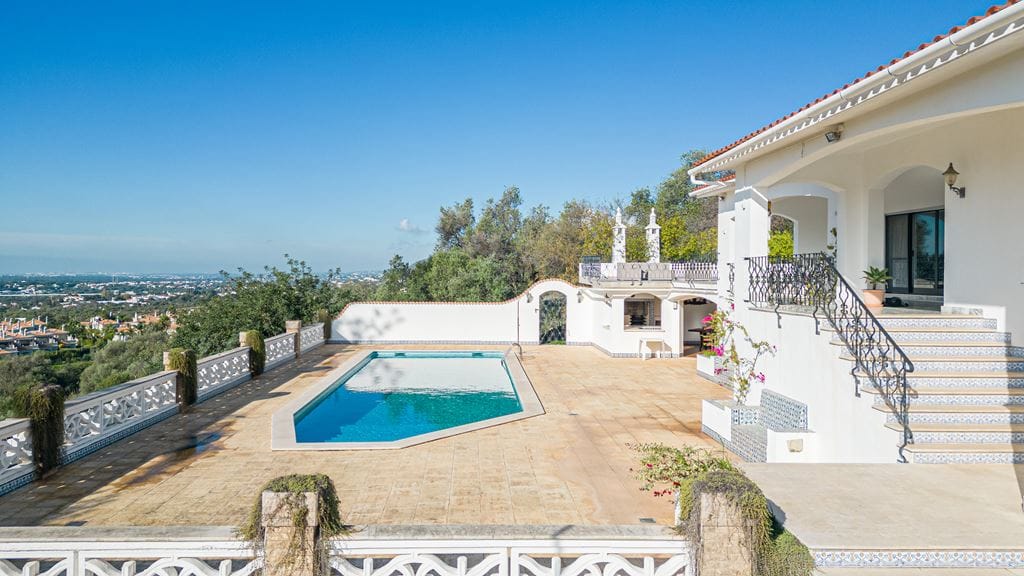
From the PortugalHousesForSale Property Desk
The Golden Years Find Their True Home
For decades, the dream of retiring abroad has inspired countless Britons and Europeans searching for better weather, lower living costs, and a gentler pace of life. But few destinations have fulfilled that promise quite like Portugal.
With over 300 days of sunshine a year, a healthcare system ranked among Europe’s best, and a cost of living comfortably below the continental average, Portugal offers retirees more than just relaxation — it offers reassurance. This is not a place for a brief escape but a country where retirement becomes a new chapter of opportunity, security, and belonging.
From the cobbled charm of Lisbon and Cascais to the sun-drenched elegance of the Algarve, Portugal’s property market continues to attract a growing community of international retirees who see in its calm landscapes and coastal villages not only beauty but long-term value.
In a continent facing economic uncertainty and demographic change, Portugal stands apart: safe, stable, and surprisingly affordable.
Why Portugal Tops the Retirement Shortlist
There is a logic to Portugal’s growing reputation as Europe’s premier retirement destination. It lies not just in lifestyle but in economics and infrastructure.
Portugal consistently ranks near the top of the Global Peace Index, a measure of safety and political stability. Its crime rates are among the lowest in Europe, its healthcare system accessible and modern, and its property laws transparent.
For retirees coming from the UK or northern Europe, these foundations offer something priceless — peace of mind.
At a practical level, Portugal offers simplicity. Non-EU nationals can apply for the D7 Visa, designed for individuals with regular passive income, such as pensions or dividends. The Non-Habitual Resident (NHR) programme — recently revised but still advantageous — provides up to ten years of favourable tax treatment for qualifying retirees, including reduced rates on foreign-sourced income.
Add to this the fact that the Portuguese people are among Europe’s most welcoming, and that English is widely spoken, and it’s little wonder that an estimated 50,000 Britons and 100,000 other Europeans have already chosen to make Portugal their permanent home.
But the real reason Portugal resonates with retirees may be more emotional than fiscal. It is a place where civility endures, where communities are intact, and where time still moves at a human pace.
The Property Landscape: Quality and Value in Equal Measure
For those planning retirement, property is not simply an investment — it is a foundation for daily life. Portugal’s housing market has evolved to serve this reality.
Over the past decade, Portugal has become one of Europe’s most dynamic yet measured property markets. Prices have appreciated steadily, supported by demand from international buyers and a limited supply of new homes due to strict coastal protection and urban planning laws.
According to Confidencial Imobiliário, average property values nationwide have risen around 8% annually over the past five years. Yet Portugal remains significantly more affordable than France, Spain, or Italy.
In Lisbon, expect to pay €5,000–€6,000 per square metre for central apartments. In Porto, prices average €4,000, while in the Algarve — particularly near golf resorts and coastal enclaves — premium villas can range from €700,000 to over €3 million.
Those seeking value will find it inland and along the Silver Coast. Towns like Setúbal, Lagos, and Óbidos offer elegant homes for under €400,000, often with sea views and modern amenities.
Crucially, transaction costs are moderate, typically 8–10% of purchase price, including legal fees and transfer tax. Mortgages are available to retirees with proof of income, and fixed-rate options offer stability against future market shifts.
For retirees, this market offers the perfect mix of value, liquidity, and long-term appreciation.
The Algarve: Retirement’s Crown Jewel
If Portugal is the retirement capital of Europe, the Algarve is its sunlit heart. Long celebrated for its natural beauty, it now represents the country’s most complete retirement ecosystem — part leisure, part lifestyle, part investment.
Stretching across 150 kilometres of coastline, the Algarve offers everything retirees seek: safety, sunshine, and sophistication.
Communities like Vilamoura, Almancil, Vale do Lobo, and Quinta do Lago blend high-end living with medical facilities, golf, and international dining. Further east, Tavira and Faro provide more traditional Portuguese charm, while the western towns of Lagos and Sagres attract those seeking quieter, more scenic retirement options.
Property prices vary widely: apartments near Vilamoura’s marina average €6,000 per sqm, while detached villas inland may cost half that. The region’s infrastructure — including Faro International Airport — ensures that family and friends can visit easily, a factor often overlooked but crucial for retirees wanting to maintain connections.
Crucially, the Algarve remains vibrant year-round. Golf, walking, and social clubs sustain an active expatriate community, while healthcare facilities such as the Hospital Particular do Algarve and Lusíadas Faro rank among the best in the country.
This balance — luxury without isolation, activity without stress — explains why the Algarve consistently tops international surveys for quality of life.
Lisbon and Cascais: For the Cultured Retiree
Not all retirees seek the beach-and-golf lifestyle. Many prefer the cosmopolitan rhythm of a capital city combined with coastal calm — and Lisbon offers precisely that.
Its historic neighbourhoods, tram-lined streets, and thriving cultural scene make it one of Europe’s most liveable capitals. Cafés spill into sun-dappled squares, while the Tagus River ensures cooling breezes even in summer.
For those seeking suburban sophistication, Cascais and Estoril — a short train ride from Lisbon — deliver refined living, international schools, marinas, and golf courses. Property prices here average €5,000–€8,000 per sqm, but the investment potential remains strong.
Retirees choosing Lisbon or Cascais gain access not only to world-class healthcare and cultural life but to Portugal’s best transport network, including direct flights to London, Paris, and New York.
Lisbon’s hospitals, such as CUF Descobertas and Hospital da Luz, provide high-standard care with English-speaking staff — a major reassurance for older residents.
Cascais itself has long attracted retirees from Britain, Scandinavia, and the United States, drawn by its elegant seafront and enduring sense of community.
The Silver Coast and Beyond: Portugal’s Undiscovered Haven
For retirees who value tranquillity over glamour, Portugal’s Silver Coast and interior regions present extraordinary opportunities.
The stretch from Nazaré to Peniche offers pristine beaches, low-density living, and strong local communities. The nearby Óbidos Lagoon and Foz do Arelho have become magnets for retirees seeking peace, space, and affordability.
Property prices remain highly accessible — often 30–40% lower than in the Algarve. Modern two-bedroom apartments near the coast start from €250,000, while detached villas with pools can be found for under €500,000.
Further south, the Alentejo region offers a rural rhythm untouched by mass tourism. Its rolling landscapes, vineyards, and hilltop towns evoke the serenity of Tuscany at a fraction of the cost.
For those seeking authenticity and community, these regions deliver exactly that — with the added comfort of Portugal’s dependable infrastructure and low crime.
Healthcare and Wellbeing: The Bedrock of Retirement
No factor matters more in retirement than health — and on this front, Portugal excels.
The Serviço Nacional de Saúde (SNS) provides universal healthcare coverage, while the private sector complements it with modern hospitals, English-speaking doctors, and low costs.
Private health insurance averages €700 to €1,200 annually, depending on coverage. Routine appointments cost a fraction of UK or US prices, and specialist care is both swift and affordable.
Portugal’s healthcare system consistently ranks among the top 15 globally for efficiency, according to the World Health Organization. Pharmacies are plentiful and professional, while preventive medicine is widely practised.
Equally important is lifestyle. Portugal’s Mediterranean diet — rich in olive oil, seafood, and fresh produce — supports longevity. The abundance of outdoor activities, from walking and cycling to golf and swimming, reinforces both physical and mental health.
For retirees, this is not just about living longer — it is about living better.
The Cost of Living: Comfortable and Predictable
Portugal offers retirees something rare in modern Europe: predictability. Inflation remains moderate, taxation transparent, and utilities affordable.
According to Eurostat, Portugal’s cost of living is around 30% below the EU average. Rent, utilities, groceries, and leisure all remain more affordable than in Spain or Italy.
A couple can live comfortably — including dining out regularly and maintaining private health insurance — on €2,500 to €3,000 per month in most regions. In smaller towns, even less.
This affordability, combined with property ownership, creates financial freedom that retirees in northern Europe often lack. It allows for a lifestyle defined by choice rather than compromise.
Taxes, Residency, and Inheritance
Portugal’s taxation system for retirees remains one of the most transparent and favourable in Europe.
The Non-Habitual Resident (NHR) regime — though evolving — continues to provide relief on pensions, foreign income, and dividends for newcomers. Retirees can benefit from a flat rate of 10% on qualifying foreign pension income and exemptions on certain categories of overseas earnings.
Importantly, Portugal imposes no inheritance tax for direct family members and no wealth tax on property holdings. Property ownership is fully recognised for non-residents, with clear title and strong legal protections.
These policies reflect Portugal’s long-term strategy of attracting stable, financially secure foreign residents — and ensuring they remain.
The Social Dimension: Belonging Without Barriers
Retiring abroad can sometimes bring isolation, but Portugal’s social fabric has the opposite effect.
The Portuguese are instinctively warm, and the country’s growing expatriate communities ensure instant connection. In the Algarve, social and sporting clubs — from bridge to bowls to book circles — abound. In Lisbon and Porto, cultural societies and volunteer groups offer easy entry into community life.
Language is rarely a barrier; English is widely spoken, especially in coastal areas. Yet learning Portuguese, even at a conversational level, deepens the experience and earns immediate goodwill.
Portugal’s civility, patience, and respect for tradition make integration both natural and rewarding. It is not a country that asks newcomers to conform, but one that welcomes them to belong.
Safety, Climate, and the Intangibles of Peace
Retirement, at its best, is about serenity — and Portugal provides it in abundance.
It ranks among the top five safest countries in the world, ahead of most of Western Europe. Violent crime is rare, social cohesion strong, and public trust high.
The climate is equally kind. Mild winters, low humidity, and gentle summers make Portugal particularly suitable for older residents. The Atlantic breeze moderates heat even in the Algarve, and air quality is among the best in the EU.
Add to that a slower rhythm of daily life — markets that still pause for lunch, shopkeepers who know your name — and Portugal’s appeal becomes more than practical. It becomes emotional.
This is a country where peace of mind is not sold as a luxury; it is part of the landscape.
Future Outlook: Why Portugal’s Star Will Continue to Rise
Portugal’s demographic and economic fundamentals point to continued strength in both property and lifestyle value.
Tourism remains robust, but the country’s long-term strategy is clear: attract permanent, financially stable residents who contribute to the economy year-round. That includes retirees, remote workers, and skilled professionals seeking balance.
Infrastructure investment continues apace — from new hospitals and renewable energy networks to high-speed rail links. The property market remains tightly regulated, ensuring sustainable growth rather than volatility.
For retirees, these are not abstract indicators but real guarantees: that their investment, community, and lifestyle will endure.
The Verdict
Retirement is as much about where you live as how you live. Portugal succeeds on both counts.
It combines beauty with value, safety with sophistication, and leisure with legacy. It offers retirees not an escape but an upgrade — a chance to live with dignity, comfort, and cultural richness.
Its property market remains accessible, its healthcare world-class, and its communities welcoming. Its laws are transparent, its taxes fair, and its people gracious. Few countries can claim such balance.
In an age when so many are searching for reassurance — financial, physical, and emotional — Portugal stands quietly confident. It is Europe’s best-kept promise: that the good life can still be lived, honestly, affordably, and well.
For those planning their golden years, the equation is simple. Portugal retirement property offers not only a home but a horizon — where the sun sets gently, and the future feels secure.
Financial Disclaimer: The information provided in this article is for general informational purposes only and does not constitute financial advice. While every effort has been made to ensure the accuracy of the content, market conditions may change, and unforeseen risks may arise. The author and publisher of this article do not accept liability for any losses or damages arising directly or indirectly from the use of the information contained herein.
Copyright 2025: portugalhousesforsale.com