By Portugalhousesforsale.com property research desk
A New Chapter in Portugal’s Property Story
Portugal’s property market has grown from a localised Mediterranean favourite to a global benchmark for lifestyle investment. The phrase “Portugal homes for sale” now resonates far beyond the Iberian Peninsula — from London and Stockholm to New York and Dubai — capturing the attention of investors and buyers who see the country not only as a place of beauty, but of stability and value.
The secret is no longer secret. Portugal offers the rarest of combinations: sunshine, safety, affordability, and a well-regulated property market inside the Eurozone. It is a country that continues to evolve, modernise, and attract international capital without losing its authenticity.
From Lisbon’s elegant boulevards to the vine-covered hills of the Douro Valley and the sun-drenched villas of the Algarve, the market for Portuguese homes remains one of Europe’s most compelling stories. Unlike the overheated markets of Paris, London, or even parts of Spain, Portugal offers accessible entry points and genuine prospects for long-term growth.
A Market Built on Fundamentals
Recent figures from the Instituto Nacional de Estatística (INE) show that Portugal’s residential property prices rose steadily over the past year, supported by sustained foreign demand and limited supply. The average cost of housing nationwide now hovers around €2,300 per square metre, though this varies widely by region.
In Lisbon, average prices exceed €5,000 per sqm in premium neighbourhoods such as Chiado and Príncipe Real, while in Porto, figures typically range between €3,000 and €4,000 per sqm. Along the Algarve, one of the country’s most sought-after areas for international buyers, luxury villas in Quinta do Lago or Vale do Lobo regularly surpass €7,000 per sqm, while apartments in coastal towns such as Lagos or Albufeira can still be found between €2,500 and €3,500 per sqm.
What distinguishes Portugal is its balance between value and quality. The country’s rigorous planning system prevents the kind of overdevelopment that has eroded property prices elsewhere in Southern Europe. Demand remains strong across both the domestic and international markets, bolstered by tourism, digital migration, and lifestyle relocations.
Why Portugal Still Wins on Lifestyle and Logic
Portugal’s magnetism lies in its ability to combine emotional and financial appeal. Buyers come for the sun and sea but stay for the lifestyle and long-term stability.
The country enjoys more than 300 days of sunshine annually, a Mediterranean diet that ranks among the world’s healthiest, and a reputation for hospitality that extends naturally to its real estate industry. Portugal is also one of the safest countries in the world, consistently ranking in the top ten of the Global Peace Index.
From an investment standpoint, Portugal benefits from Eurozone stability, modern infrastructure, and competitive tax policies. Property ownership rights are strong, bureaucracy has been streamlined, and the cost of maintaining a home — from local taxes to utility bills — remains notably lower than in France or Italy.
The IMI (municipal property tax), for example, averages between 0.3% and 0.5% of the property’s taxable value per year, depending on the municipality. Stamp duty and transfer taxes at purchase are clear and predictable, typically totalling 8–10% of the sale price.
Meanwhile, Portugal’s Non-Habitual Resident (NHR) regime, although evolving, continues to provide favourable tax treatment for foreign retirees and professionals who choose to make Portugal their home.
Lisbon: The Beating Heart of Modern Portugal
Lisbon has transformed from a charming backwater capital into one of Europe’s most dynamic cities. Its pastel façades now overlook a cosmopolitan landscape of entrepreneurs, digital nomads, and global investors.
The Lisbon Metropolitan Area attracts a broad spectrum of buyers — from those seeking pied-à-terres in historic Alfama or Baixa, to institutional investors funding entire developments in the riverside district of Parque das Nações.
According to Confidencial Imobiliário, Lisbon saw foreign buyers account for roughly 35% of all transactions in the prime market, with Americans, French, and British leading the charge. Average asking prices in central Lisbon now exceed €6,000 per sqm, with new-build luxury apartments reaching beyond €8,000 per sqm.
Rental yields remain robust, typically 4–6% in the city centre, fuelled by a healthy mix of long-term tenants and corporate relocations. Demand for serviced apartments and co-living spaces is on the rise, particularly among international professionals working in Lisbon’s fast-growing tech and finance sectors.
Lisbon’s continued regeneration, coupled with strong transport links — including direct flights to major international cities — ensures its place as Portugal’s economic engine and property showcase.
Porto: Culture, Heritage, and Growing International Appeal
Further north, Porto combines tradition with investment potential. Once viewed primarily as Lisbon’s quieter sibling, the city has emerged as a serious alternative for buyers seeking authenticity and value.
The UNESCO-listed old town, Ribeira, has become a magnet for boutique developers, while neighbourhoods like Foz do Douro and Boavista offer elegant villas and apartments overlooking the Atlantic. Prices are climbing, but remain competitive by European standards — averaging around €3,500 per sqm.
Major international brands such as Savills and Knight Frank report that Porto’s mix of cultural appeal, business expansion, and infrastructure upgrades continues to draw attention from both investors and lifestyle buyers. The local university scene, combined with the growth of tech start-ups, sustains rental demand and underpins long-term value.
For investors, Porto represents balance: solid returns, manageable entry prices, and an urban rhythm that’s less saturated than Lisbon.
The Algarve: Portugal’s Sunlit Investment Capital
If Lisbon is Portugal’s heart and Porto its soul, then the Algarve is undoubtedly its golden face. Stretching more than 150 kilometres from west to east, this southern coastline embodies Portugal’s international property identity.
Demand here remains high, driven by British, French, Dutch, and Scandinavian buyers, as well as growing interest from Canada and the United States. According to Turismo de Portugal, the Algarve accounts for nearly 40% of all overnight tourist stays in the country, confirming its position as a perennial draw for investors targeting short-term rental income.
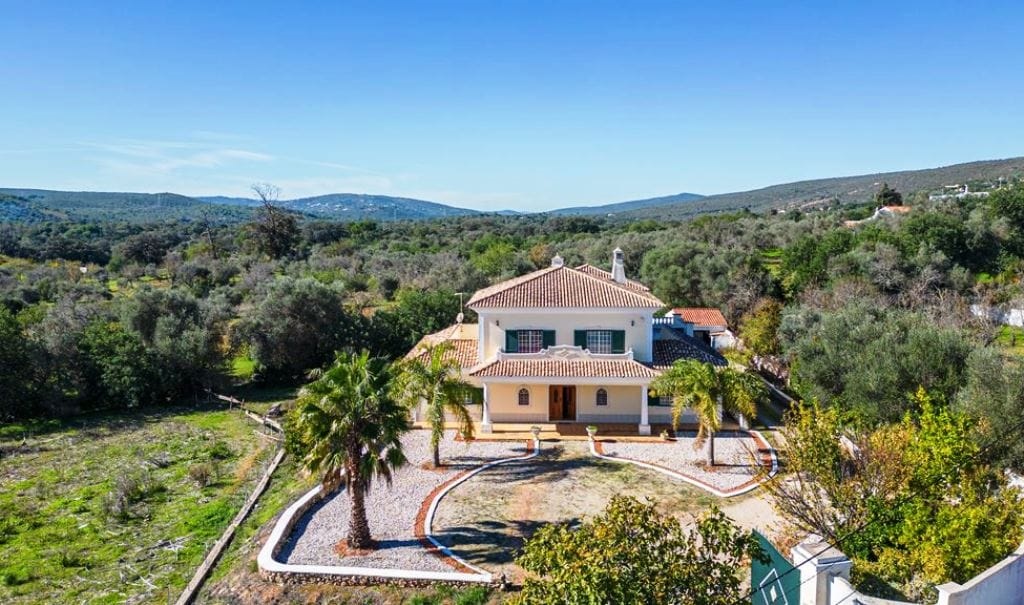
Homes range from modern sea-view apartments in Albufeira to hillside farmhouses in Silves and luxury villas in Quinta do Lago. The region’s average property price of around €3,400 per sqm hides vast variation between coastal and inland areas.
Rental yields for well-located properties average 5–7%, rising during peak summer months. With year-round sunshine, top-tier golf courses, Michelin-starred dining, and an airport at Faro connecting directly to London, Dublin, Frankfurt, and Paris, the Algarve’s property market has matured into a robust, long-term investment destination.
Silver Coast and Beyond: The Quiet Contenders
Beyond Portugal’s well-known centres, other regions are quietly gaining momentum. The Silver Coast, stretching from Nazaré to Peniche and Óbidos, offers oceanfront living at a fraction of Algarve prices. Properties average €2,000–€2,500 per sqm, and the area’s surfing reputation and proximity to Lisbon make it an emerging hotspot for younger buyers and digital entrepreneurs.
Further inland, regions such as Évora, Coimbra, and Tomar blend heritage and affordability. These areas are drawing increasing attention from remote workers and eco-conscious investors seeking sustainable lifestyles without premium coastal pricing.
The Portuguese government’s investment in digital infrastructure and high-speed broadband has also made rural and mid-size towns more viable for long-term residence — a factor that continues to diversify housing demand.
The Practicalities: Buying Safely and Smartly
Portugal’s property market is one of the most transparent in Southern Europe, but foreign buyers should proceed with care and professional guidance.
Reputable estate agents such as Spot Blue International Property, Portugal Sotheby’s International Realty, and Fine & Country Portugal recommend buyers engage a bilingual lawyer early in the process. Legal representation ensures all property documentation — including land registry records and planning permissions — is verified before contracts are signed.
The purchasing process typically begins with a Contrato de Promessa de Compra e Venda (promissory contract), accompanied by a deposit of around 10% of the agreed price. Completion then takes place before a notary, when the deed (Escritura) is signed and ownership officially transferred.
Buyers must obtain a Portuguese tax number (NIF), which can be arranged through legal representation, and should budget 8–10% in total acquisition costs. Mortgage finance for non-residents is available from Portuguese and international banks, generally requiring deposits of 20–30% and offering fixed or variable Euro-denominated rates.
For due diligence, official tools such as the Bank of Portugal’s mortgage simulator and the IMT tax calculator on the government’s Portal das Finanças site provide transparent guidance before purchase.
Portugal’s Broader Economic Climate
Portugal’s macroeconomic outlook provides a reassuring backdrop for property investors. Economic growth remains steady, supported by exports, renewable energy, and tourism — which continues to represent roughly 15% of GDP.
Public finances are considered sound within the Eurozone context, and the country’s banking sector is relatively conservative compared to its southern European peers. This financial discipline contributes to housing market stability.
Lisbon’s rise as a tech hub and Porto’s expansion in advanced manufacturing have further diversified the economy, reducing dependency on tourism alone. These factors, combined with political stability and infrastructure investment, have reinforced international confidence in Portugal’s housing sector.
Sustainability: The Future of Homeownership
Portugal’s property market is increasingly defined by its environmental awareness. New developments emphasise renewable energy, insulation efficiency, and sustainable materials.
Energy Performance Certificates (EPCs) are mandatory for all property transactions, and homes with Class A or A+ energy ratings attract higher demand and faster sales. Solar power systems, particularly in the Algarve and Alentejo, are now mainstream rather than niche.
Municipalities such as Loulé and Cascais have adopted carbon-neutral building goals, while local councils offer incentives for retrofitting older properties with eco-friendly technology. For investors, these trends signal not just environmental responsibility but long-term asset durability and appeal.
Taxation and Ownership Transparency
One of Portugal’s great strengths lies in its straightforward tax structure. Unlike some Mediterranean countries, Portugal imposes no restrictions on foreign ownership, and property rights are fully protected under law.
Annual property taxes (IMI) are relatively low, typically 0.3–0.5% of a property’s taxable value, and there is no separate wealth tax. Capital gains tax for non-residents is applied only on realised profit, with allowances for reinvestment.
The country also maintains double taxation treaties with numerous nations, preventing duplicate taxation for foreign investors. Combined with transparent land registration and digitalised bureaucratic systems, these factors make Portugal one of Europe’s most user-friendly property jurisdictions.
The Human and Emotional Return
Beyond data and regulation lies Portugal’s intangible advantage: a sense of belonging. Whether in Lisbon’s tiled alleyways, Porto’s café terraces, or the Algarve’s Atlantic breeze, buyers frequently remark that Portugal feels both European and uniquely welcoming.
The nation’s measured pace, low crime rate, and strong community ties create a rare environment in modern Europe. For many investors, this emotional return — the comfort of owning a piece of Portugal’s tranquillity — often outweighs any financial metric.
Looking Forward: Portugal’s Next Decade
Analysts expect Portugal’s housing market to continue its upward trajectory. With limited new construction, expanding international demand, and a government committed to sustainable growth, the conditions for continued appreciation appear solid.
While price growth may moderate in line with broader European trends, long-term prospects remain firmly positive. The key factors driving demand — lifestyle, safety, climate, and governance — show no sign of waning.
Portugal is not chasing speculative spikes; it is nurturing gradual, grounded growth. That steady hand makes it particularly attractive to investors seeking balance between opportunity and stability.
The Verdict
Portugal stands as Europe’s quiet success story — an economy and housing market built not on hype, but on consistency. For those searching “Portugal homes for sale,” the appeal extends beyond bricks and mortar. It is an investment in quality of life, political stability, and the enduring charm of a country that continues to modernise without losing its soul.
From Lisbon’s skyline to the vineyards of the Douro and the beaches of the Algarve, Portugal offers investors and homebuyers something increasingly rare: confidence. In an age of global flux, that might just be the most valuable asset of all.
Financial Disclaimer: The information provided in this article is for general informational purposes only and does not constitute financial advice. While every effort has been made to ensure the accuracy of the content, market conditions may change, and unforeseen risks may arise. The author and publisher of this article do not accept liability for any losses or damages arising directly or indirectly from the use of the information contained herein.
Copyright 2025: portugalhousesforsale.com