From the PortugalHousesForSale Property Desk
Faro – The City That Connects Continents
Faro has long been the Algarve’s quiet achiever — a city often seen merely as the region’s transport hub but, in reality, one of its most dynamic, investable, and globally connected centres. As the Algarve’s capital and the administrative heart of southern Portugal, Faro is far more than a landing strip for holidaymakers; it is a place where Portugal meets the world.
For international investors and buyers, Faro’s growing appeal lies in its balance of lifestyle, logistics, and long-term value. It is both the entry point to one of Europe’s most popular coastal regions and an increasingly attractive place to live, work, and invest in its own right.
While neighbouring resort towns capture the postcard moments, Faro offers something arguably more substantial: year-round life, real economic infrastructure, and an urban environment that is both authentically Portuguese and globally accessible. For anyone seeking “Portugal property for sale in the Algarve,” Faro represents the best of both worlds — cosmopolitan convenience and coastal charm.
A City on the Rise
Faro’s transformation from a sleepy provincial capital into a modern, connected city has been both deliberate and impressive. Once regarded mainly as a transit point, it is now an urban hub with a thriving university, growing tech and healthcare sectors, and a residential market that has come into its own.
According to the Instituto Nacional de Estatística (INE), the average price per square metre in Faro currently stands at approximately €2,900, reflecting a steady year-on-year increase of around 8%. Prime areas within the city centre, particularly those near the marina, old town (Cidade Velha), and university district, command prices between €3,500 and €4,500 per sqm, while properties on the outskirts — such as Montenegro and Gambelas — remain more affordable, ranging between €2,000 and €2,800 per sqm.
These figures place Faro well below the prices seen in nearby resort markets like Vilamoura or Quinta do Lago, where values can exceed €8,000 per sqm. For buyers, that price gap offers compelling value, especially when paired with Faro’s strong rental demand and urban infrastructure.
The Gateway Advantage: Faro International Airport
Faro’s true global relevance lies in its role as the Algarve’s aviation and logistical hub. Faro International Airport (FAO) is one of Portugal’s busiest, handling over 10 million passengers annually, connecting the region to more than 90 international destinations.
Direct flights operate daily to major European cities including London, Manchester, Dublin, Paris, Frankfurt, Stockholm, Amsterdam, and Zurich, as well as seasonal routes to North America. Airlines such as TAP Air Portugal, British Airways, easyJet, and Ryanair have made Faro a cornerstone of their southern European networks.
Recent infrastructure upgrades, including the airport’s expanded terminal, new runway systems, and enhanced passenger capacity, reflect the region’s sustained growth. A proposed high-speed rail link between Lisbon and Faro — part of Portugal’s national mobility plan — promises to cut travel time between the capital and the Algarve to under two hours, further strengthening connectivity.
For property investors, these developments have tangible implications. Accessibility is a key determinant of property value, and Faro’s transport infrastructure underpins its role as the Algarve’s commercial and residential engine.
The Real Estate Market: Value, Variety, and Vision
Faro’s property market combines value with variety, offering something for almost every investor profile.
Historic Centre: The cobbled streets and terracotta roofs of Faro’s Old Town are among the city’s most recognisable features. Renovated townhouses and boutique apartments here attract both locals and expatriates, with prices between €3,000 and €4,500 per sqm. Investors targeting short-term holiday lets find consistent demand thanks to the area’s proximity to the marina and the ferry links to the Ria Formosa islands.
Modern Residential Zones: Areas such as Gambelas, Montenegro, and Bom João offer newer apartment developments catering to young professionals, students, and healthcare workers. Prices here start from around €200,000, with strong rental yields in the 5–7% range.
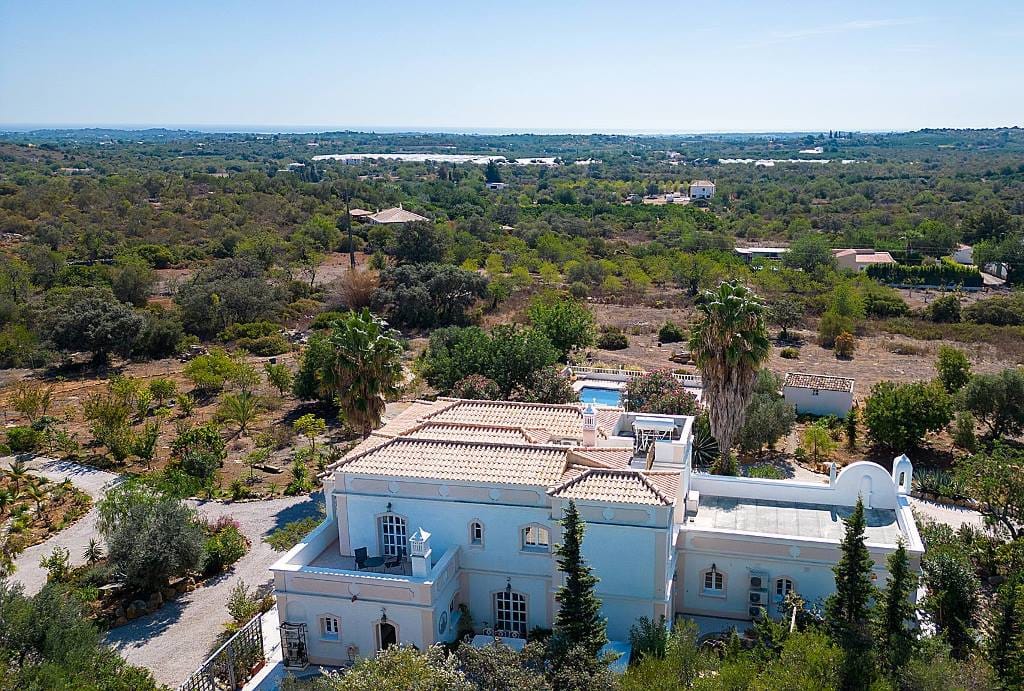
Suburban and Coastal Communities: The outskirts of Faro, including Santa Bárbara de Nexe and Conceição e Estoi, feature larger villas and traditional farmhouses set amid olive groves and hillsides. Properties with panoramic views or land plots for redevelopment start from around €450,000, appealing to buyers seeking privacy within easy reach of the city and airport.
A Hub for Education and Innovation
Faro’s economy has diversified far beyond tourism. The city is home to the University of the Algarve (UAlg), a leading institution with over 8,000 students, many from overseas. The university’s focus on marine sciences, renewable energy, and digital innovation has anchored Faro’s reputation as a regional knowledge centre.
This academic base has also spurred business growth. Start-ups in biotech, ocean research, and sustainability sectors are establishing operations in the area, supported by EU funding and Portugal’s broader push towards green technology.
The Gambelas University Campus has become a focal point for innovation, while Faro’s Tech Hub Algarve initiative aims to attract international entrepreneurs and digital nomads by offering flexible workspaces, fibre connectivity, and support services.
For property investors, the presence of a year-round academic community translates into consistent demand for long-term rentals — a factor that sets Faro apart from purely seasonal resort markets.
Ria Formosa: Nature Meets Neighbourhood
Just beyond Faro’s marina lies one of Europe’s ecological treasures — the Ria Formosa Natural Park. This protected lagoon system, stretching 60 kilometres along the Algarve’s coast, forms a living backdrop to the city.
The Ria Formosa is not only a sanctuary for migratory birds and marine life but also a recreational haven for residents. Boat tours, paddleboarding, and kayaking through the channels have become integral to Faro’s outdoor lifestyle.
Properties overlooking the Ria Formosa — particularly in the Montenegro and Quinta do Eucalipto districts — command premiums of up to 15–20% over similar homes elsewhere in the city. The appeal is simple: views of water and wilderness within minutes of an international airport are rare anywhere in Europe.
Infrastructure and Liveability
Faro combines the convenience of a modern city with the intimacy of a regional capital. It has a robust infrastructure — healthcare, education, transport, and digital connectivity — that supports both full-time living and investment.
The Centro Hospitalar Universitário do Algarve (CHUA) provides advanced medical care, while private facilities such as Hospital Lusíadas Faro offer international-standard healthcare services. The presence of these institutions attracts medical professionals and retirees alike, supporting the city’s population growth.
Public transport links across the Algarve are reliable, with Faro serving as the hub for regional rail and coach networks. The A22 motorway connects the city to Spain within 45 minutes and to Lisbon within two and a half hours.
The city’s commitment to sustainability is evident in its Smart Faro initiative — a municipal programme integrating digital technology into urban management, energy efficiency, and public services. Solar energy projects, electric mobility infrastructure, and green public spaces reflect Faro’s modern outlook.
The Tourism and Rental Economy
Tourism remains a key pillar of Faro’s economy, but its evolution has been marked by diversification and quality rather than volume.
Faro’s marina has become a boutique attraction, with new restaurants, hotels, and waterfront promenades drawing a more refined visitor demographic. The Old Town, with its Roman walls and Gothic cathedral, has been sensitively restored, combining cultural tourism with contemporary leisure.
While the wider Algarve attracts over 5 million international visitors annually, Faro’s distinct advantage lies in its year-round occupancy. The city benefits from academic, administrative, and professional populations that sustain demand outside the summer months.
Average rental yields in Faro stand at 5–6% for long-term leases and 7–9% for short-term lets, according to market data from Idealista and Savills Portugal. With low vacancy rates and increasing air connectivity, Faro’s buy-to-let potential continues to strengthen.
Foreign Investment and Market Confidence
Portugal’s open and transparent property market remains one of Europe’s most investor-friendly. There are no restrictions on foreign ownership, and all transactions are securely registered through the Conservatória do Registo Predial (Land Registry).
The buying process is straightforward:
Obtain a Portuguese Tax Identification Number (NIF).
Engage a local lawyer to conduct due diligence and verify property records.
Sign a Promissory Contract (CPCV) with a 10% deposit.
Complete the sale before a notary (Escritura Pública).
Total acquisition costs, including transfer tax (IMT), stamp duty, and legal fees, average 8–10% of the property price.
Portugal’s Non-Habitual Resident (NHR) scheme continues to attract international professionals and retirees by offering favourable tax treatment on certain foreign income for up to ten years. Furthermore, there is no inheritance tax for direct family members, and capital gains are taxed only on realised profits, with exemptions for reinvestment.
These policies, combined with Portugal’s political stability and Eurozone membership, make Faro an ideal entry point for investors seeking both security and growth.
Comparative Advantage: Faro versus Other Algarve Cities
While glamorous destinations like Quinta do Lago, Vale do Lobo, and Vilamoura dominate headlines, Faro offers a subtler — and arguably more balanced — proposition.
Affordability: Property prices in Faro are, on average, 40–50% lower than in the central Algarve luxury triangle, creating strong potential for value appreciation.
Connectivity: As the region’s transport hub, Faro enjoys unmatched access to Europe and beyond.
Diversity: Faro combines urban life, coastal proximity, and ecological beauty — a trio few cities can match.
Community: With year-round residents and less reliance on seasonal tourism, Faro offers stability.
For investors seeking steady returns and long-term growth without the volatility of purely luxury markets, Faro stands out as a strategic choice.
Sustainability and Future Development
The next phase of Faro’s evolution will be defined by sustainable growth. The municipality’s Urban Regeneration Plan targets key areas for development, including the waterfront, marina zone, and university corridor.
Mixed-use projects are emerging, blending residential, commercial, and cultural spaces. The Faro Marina Expansion, set to introduce new berths, boutique hotels, and leisure amenities, will enhance the city’s international profile.
The government’s green urban mobility initiatives — expanding pedestrian routes, electric public transport, and cycle paths — position Faro as a model for sustainable southern European cities.
Crucially, these improvements are being managed without sacrificing the city’s identity. Faro remains recognisably Portuguese — a blend of Moorish architecture, maritime tradition, and contemporary energy.
The Lifestyle Proposition
Life in Faro is an invitation to balance. It is a city where the rhythm of the Atlantic meets the refinement of a European capital. Cafés spill onto sunlit squares, fishermen unload catches beside modern yachts, and evenings unfold to the sound of live fado music echoing through the old streets.
The Algarve’s 300 days of sunshine per year, combined with Faro’s modest cost of living — roughly 25–30% lower than Lisbon — create an environment where quality of life is tangible. Healthcare is excellent, crime is minimal, and the local community remains welcoming.
For families, international schools such as Colégio Bernardette Romeira and Nobel Algarve British International School provide multilingual education. For retirees, healthcare and climate advantages combine with fiscal benefits to create one of Europe’s most comfortable retiree environments.
Whether as a base for exploration or a permanent home, Faro’s lifestyle proposition is deeply persuasive: accessible, authentic, and enduringly human.
Investment Outlook: The Power of Access
As global investors look for stable, well-connected markets, Faro stands in a category of its own. Its international airport, central geography, and robust local economy make it not only the Algarve’s gateway but its future growth driver.
Analysts forecast property price increases of 4–6% annually, driven by rising international demand, infrastructure investment, and the city’s expanding resident population. As the Algarve continues to attract remote professionals, retirees, and entrepreneurs, Faro’s position as both the logistical and cultural heart of the region will only strengthen.
For investors, the message is clear: Faro represents access — to markets, to lifestyle, and to long-term value.
The Verdict
Faro’s rise is one of the Algarve’s most compelling stories. Once overlooked, it has emerged as the linchpin of Portugal’s southern prosperity — a city where connectivity, culture, and capital converge.
For property investors, it offers the reassurance of real infrastructure and the promise of sustainable growth. For homeowners, it offers a quality of life that remains enviable yet attainable.
In an era when access defines opportunity, Faro is Portugal’s open door — and it’s wide open to those who recognise its potential.
Financial Disclaimer: The information provided in this article is for general informational purposes only and does not constitute financial advice. While every effort has been made to ensure the accuracy of the content, market conditions may change, and unforeseen risks may arise. The author and publisher of this article do not accept liability for any losses or damages arising directly or indirectly from the use of the information contained herein.
Copyright 2025: portugalhousesforsale.com